
The Maserati Ghibli is the cheapest ticket into the Trident world today: a saloon with Ferrari-built engines that trades hands for less than many German estates. Importing one from Japan is not a play on price, though; it is a play on condition and mileage. We walk through the three generations, check median starting prices and mileages from our auction data, list the typical faults and run the import numbers, where the excise rate can drop from 18.6% to 1.55%.
Maserati Ghibli: an Italian saloon for German-estate money
The Maserati Ghibli (type M157) is an E-segment sports saloon built from 2013 until December 2023, with petrol V6 and V8 engines assembled by Ferrari. Our catalog of Japanese auctions currently lists 176 published cars with a median starting price of 1,180,000 yen and a median mileage of 44,000 km.
The name is older than the saloon itself. The first Ghibli, the AM115 grand tourer, debuted at the Turin Motor Show in late 1966, its shape drawn by a young Giorgetto Giugiaro. By 1973 Maserati had built 1,170 coupes and 125 open Spyders, cars that collectors chase today. In 1992 the name returned on the compact Ghibli II coupe, designed by Marcello Gandini on architecture derived from the Biturbo family; just over two thousand were made until 1998. The third act premiered in Shanghai in April 2013, and it is the one this guide is about.
The M157 sits on a shortened platform from the Maserati Quattroporte and had one goal: to take the brand into the E-segment ruled by the BMW 5 Series, the Mercedes E-Class and the Audi A6. The nearly five-metre saloon (4.97 m long on a 2.99 m wheelbase) started strong, with 4,644 new Ghiblis registered in Europe in the 2015 peak year. Demand then faded steadily, down to 898 cars in 2022, yet the scale of the project was still unprecedented for Maserati: on 24 September 2019 the 100,000th car rolled off the line in Grugliasco. The manufacturer listed the model's main markets that day, and next to the USA, China, Italy and Germany stood Japan. Which is exactly why Japanese auctions are such a good source for this car today.
Engines and versions: from the diesel to the Trofeo
The heart of the range is the three-litre twin-turbo V6, type F160, developed by Maserati Powertrain together with Ferrari Powertrain and built by Ferrari; according to Maserati's press material the unit is made in Maranello. The base version started at 330 hp (0-100 km/h in 5.6 seconds), grew to 350 hp after an update, while the S went from 410 hp to 430 hp and 580 Nm after the facelift; the all-wheel-drive S Q4 does the sprint in 4.8 seconds. The Ghibli was also the first diesel Maserati in history: a three-litre V6 based on a VM Motori design with 275 hp and 600 Nm (the earliest years 570 Nm), consuming under 6.0 l/100 km per manufacturer data, which carried a large share of European sales. In 2020 a mild hybrid replaced the diesel: a 2.0 four-cylinder of 1,998 cc with a 48 V system and an eBooster compressor, rated at 330 hp. That displacement matters for Polish taxes, and we will come back to it in the import maths.
At the top of the range sits the 2020-2023 Trofeo: a 3.8-litre F154 V8 built by Ferrari in Maranello, with 580 hp, 730 Nm and a top speed of 326 km/h. The send-off was the limited 334 Ultima of 2023: 103 cars, a number echoing the 103 units of the 5000 GT from 1959, a top speed of 334 km/h and 0-100 km/h in 3.9 seconds. It is the last Maserati with a V8 engine.
| Version | Years | Engine | Power | Torque |
|---|---|---|---|---|
| Ghibli | from 2013 | V6 2,979 cc twin-turbo | 330 hp | 500 Nm |
| Ghibli (updated) | to 2023 | V6 2,979 cc twin-turbo | 350 hp | 500 Nm |
| Ghibli S | from 2013 | V6 2,979 cc twin-turbo | 410 hp | 550 Nm |
| Ghibli S (facelift) | to 2023 | V6 2,979 cc twin-turbo | 430 hp | 580 Nm |
| Ghibli Diesel | 2013-2020 | V6 2,987 cc (VM Motori) | 275 hp | 600 Nm (early cars 570) |
| Ghibli Hybrid | from 2020 | R4 1,998 cc mHEV 48 V | 330 hp | 450 Nm |
| Ghibli Trofeo | 2020-2023 | V8 3,799 cc twin-turbo | 580 hp | 730 Nm |
| Ghibli 334 Ultima | 2023 (103 units) | V8 3,799 cc twin-turbo | 580 hp | 730 Nm |
Ghibli prices at auction: what our data says
As of mid-July 2026 our catalog holds 176 published Ghiblis from Japanese auctions, 167 of them with a starting price. The median of that price is 1,180,000 yen, the median model year is 2017 and the median mileage is 44,000 km. The Ghibli is also a rare case of mixed supply: roughly every third car is left-hand drive, because Japanese buyers of European luxury cars often ordered the continental layout. Every figure in the tables is a starting price, the point where bidding begins, not a sale price: treat it as the lower anchor of your budget.
The mileages are the most interesting part of this data. The median for model year 2019 is 37,000 km, and for 2021 just 20,500 km; in our July sample of Polish classifieds the 2019 cars ranged from 47 to 96 thousand kilometres. On top of that, every car at Japanese car auctions carries an independent inspection sheet with a grade and a body-defect map, so you know the condition before the bidding, not after delivery. Left-hand-drive cars show a median starting price of 1,200,000 yen at a median mileage of 43,000 km, practically the same as the rest: there is no premium for the European layout here.
Maserati z Japonii na aukcji

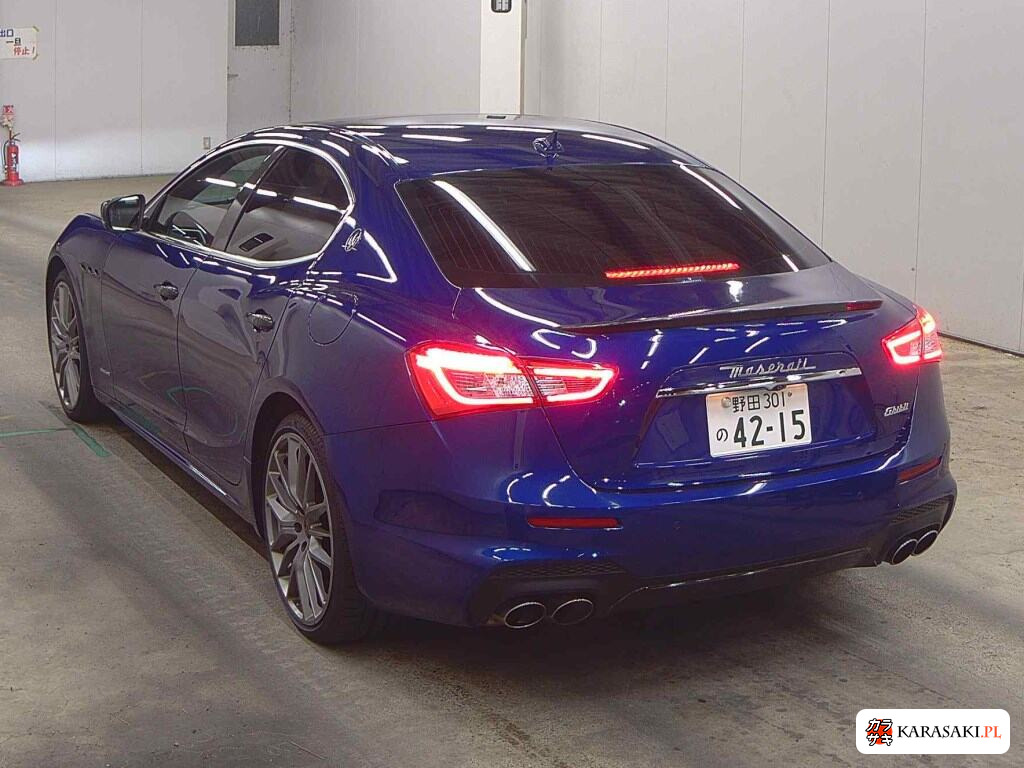
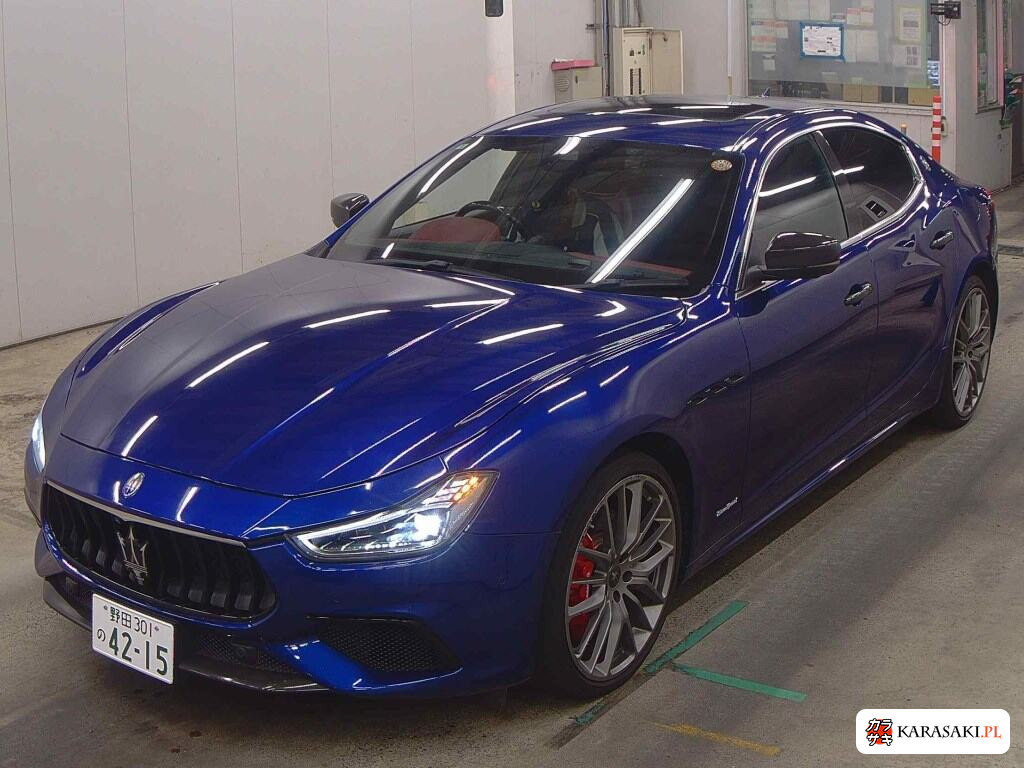
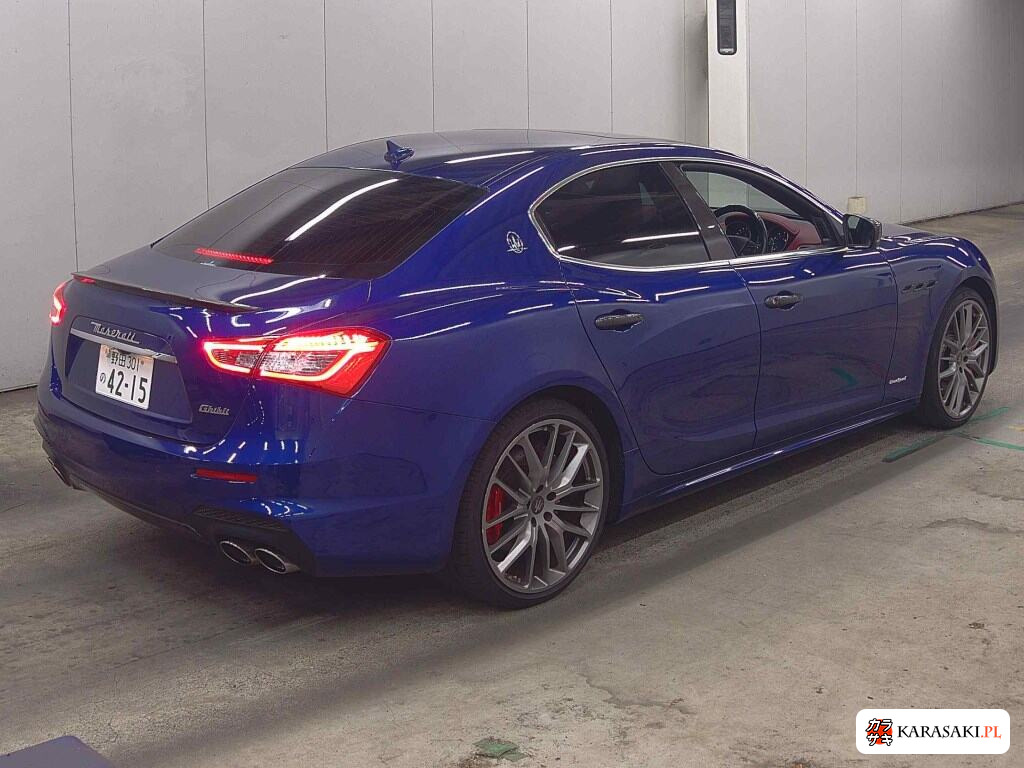
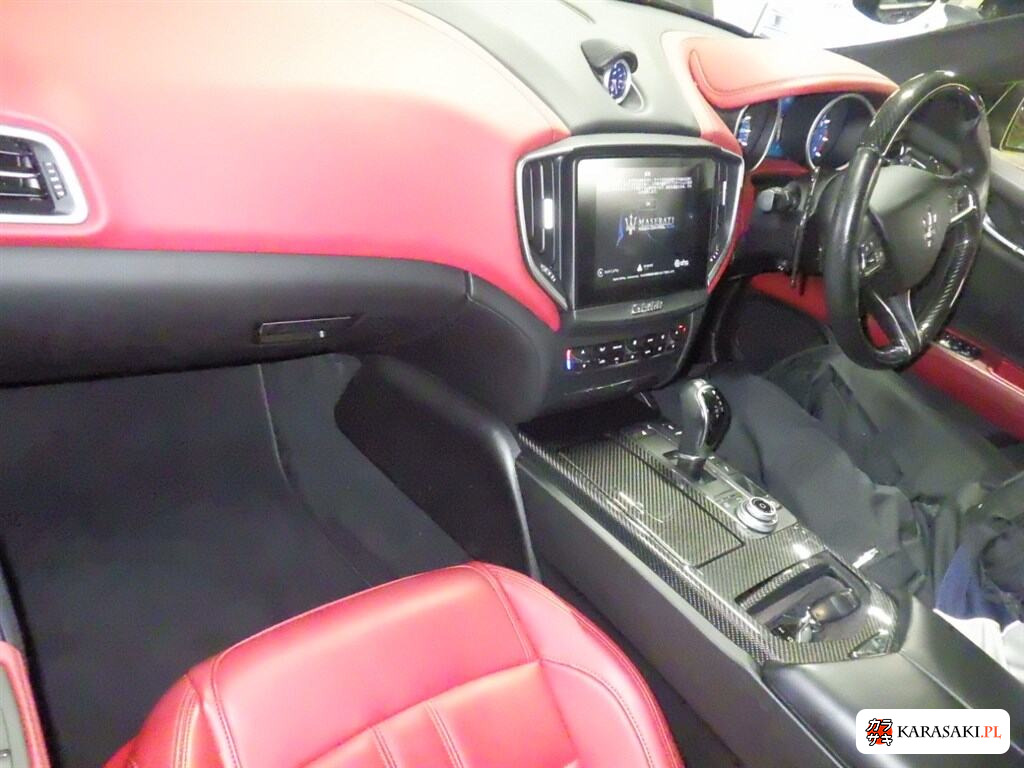
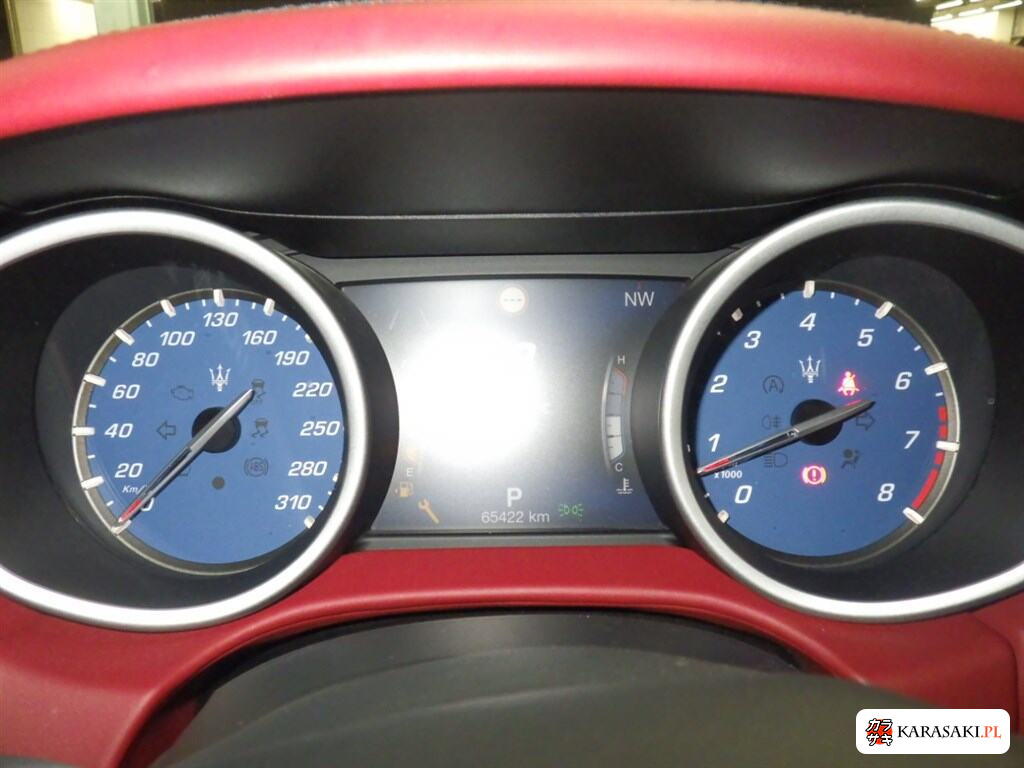
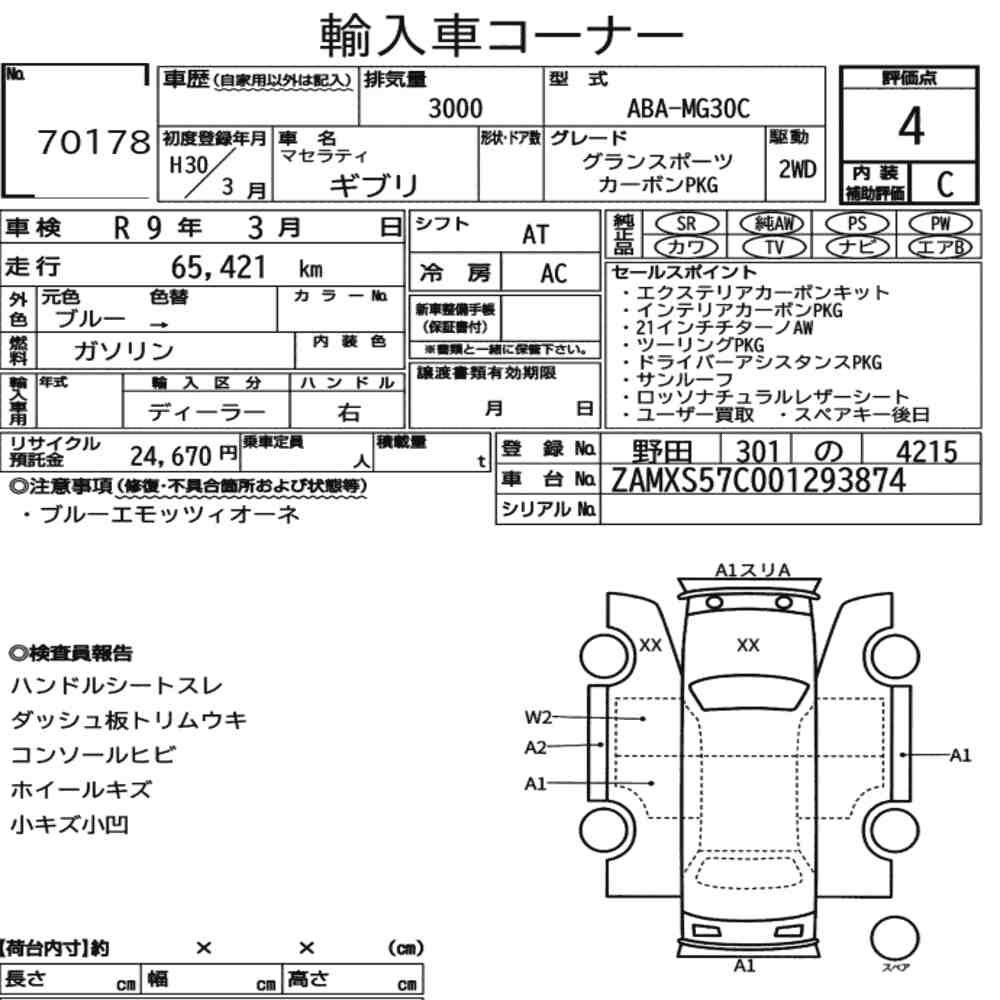

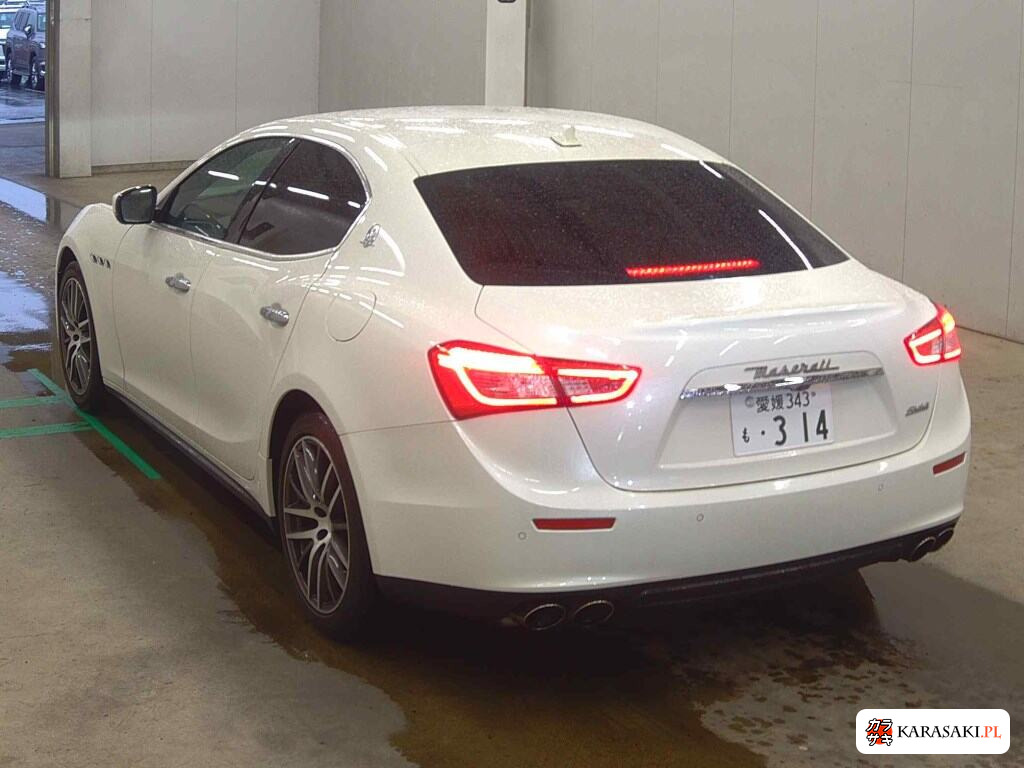
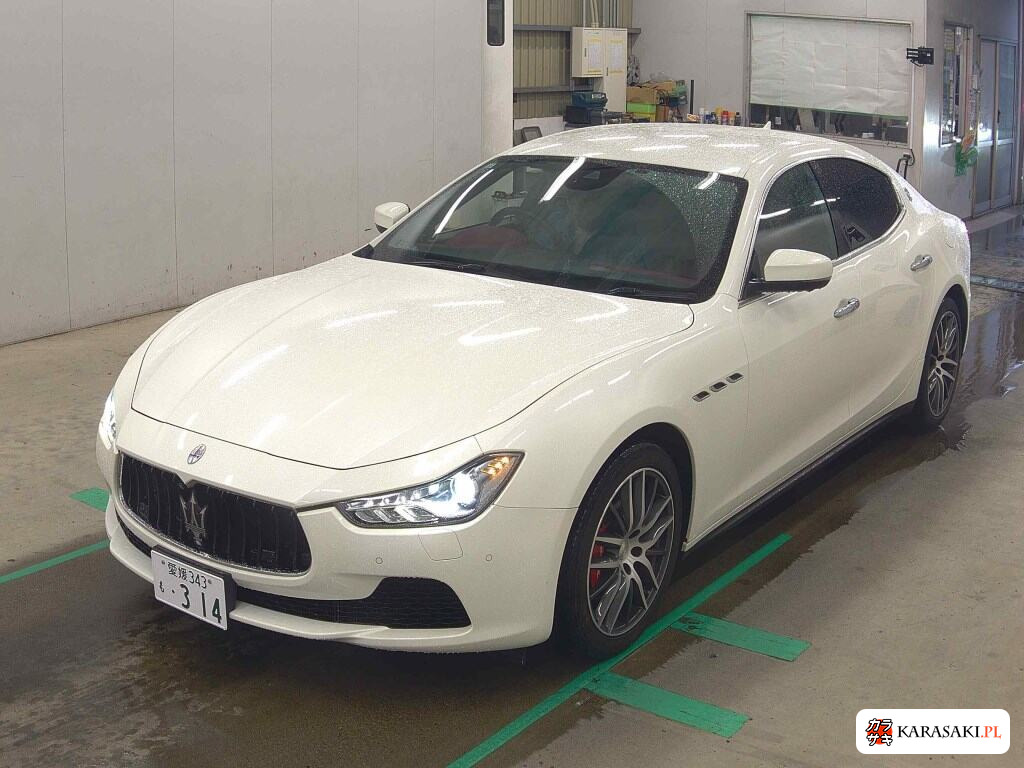
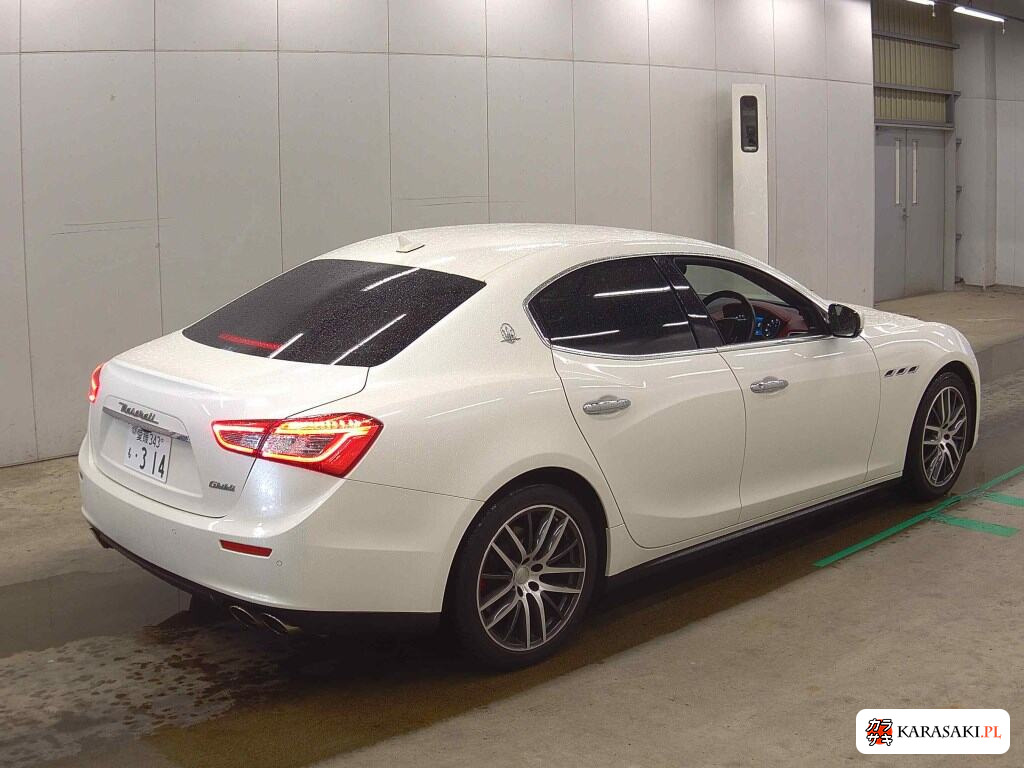
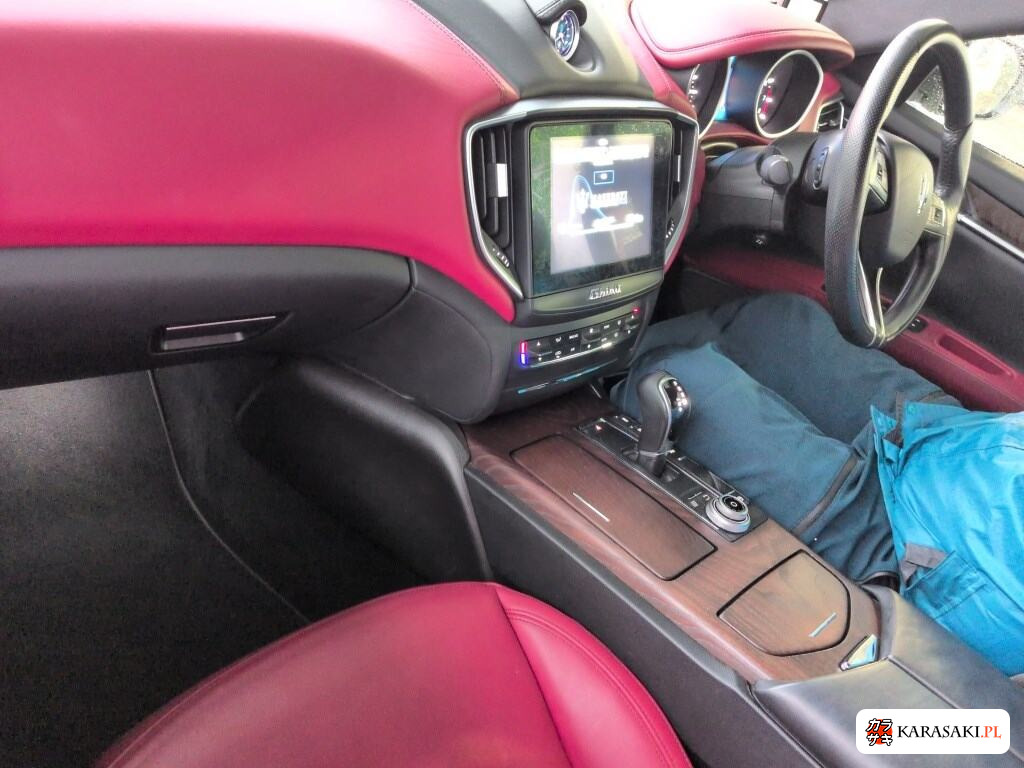
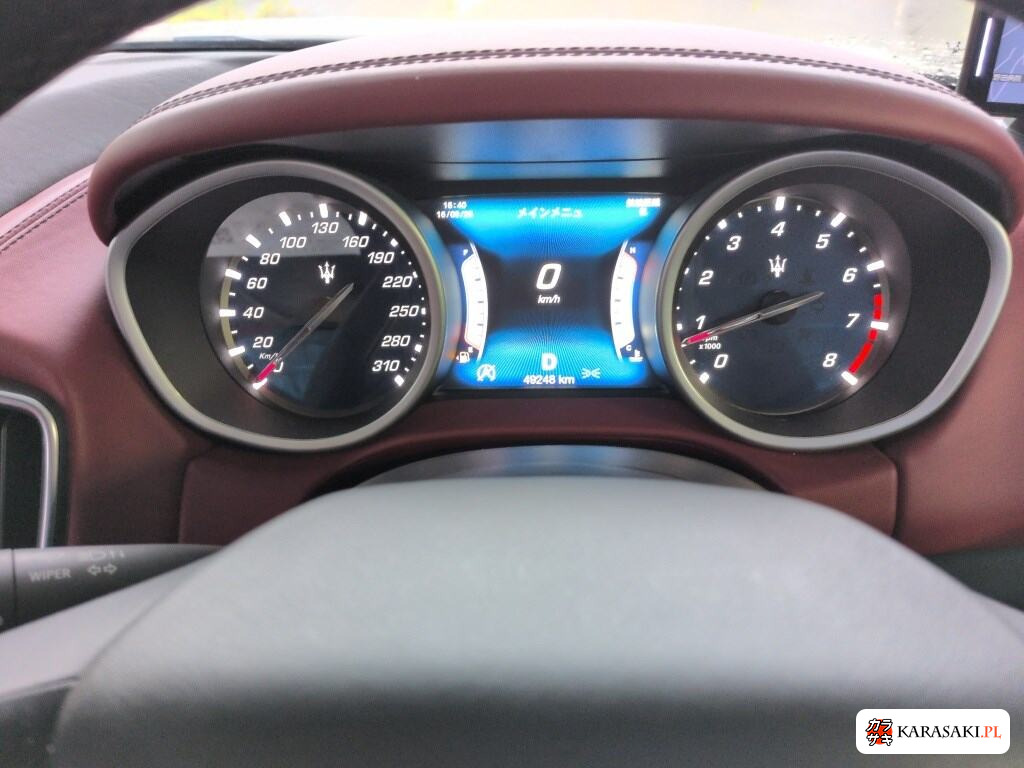
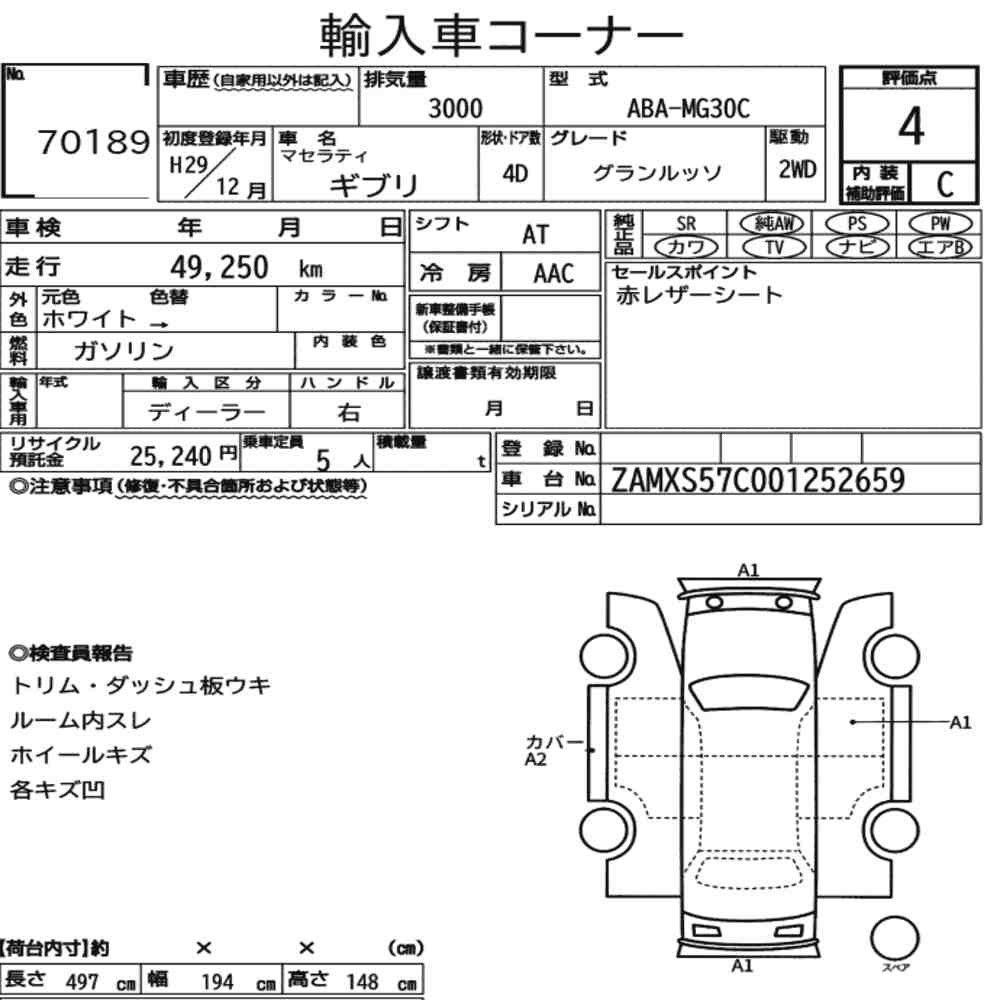

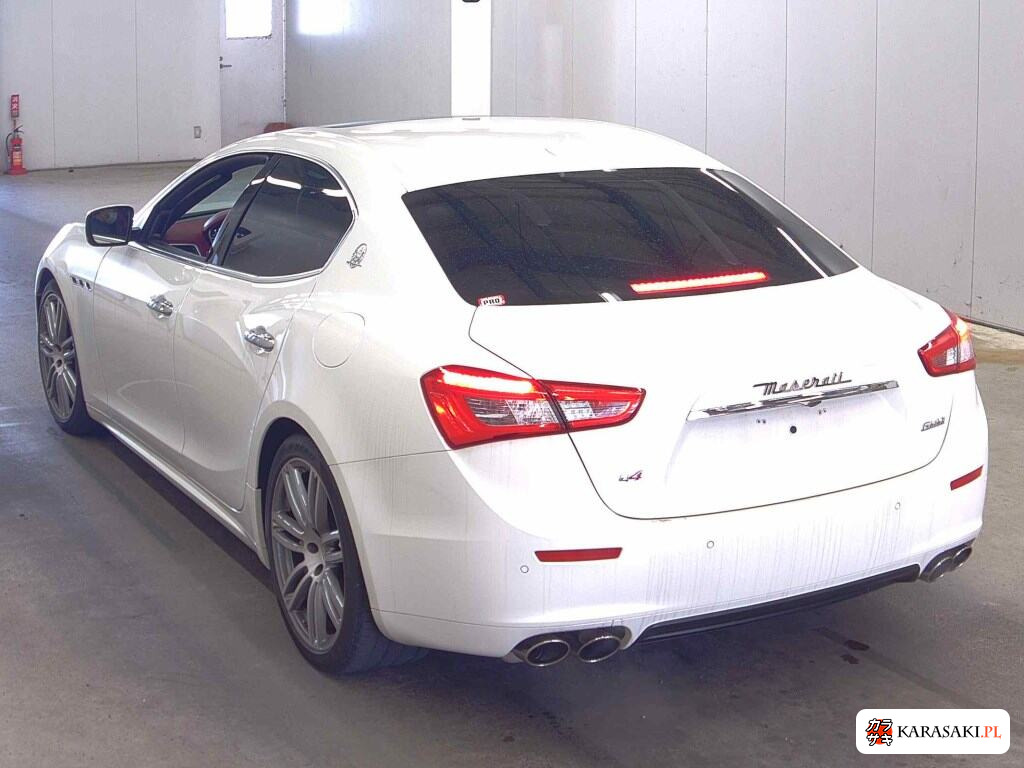
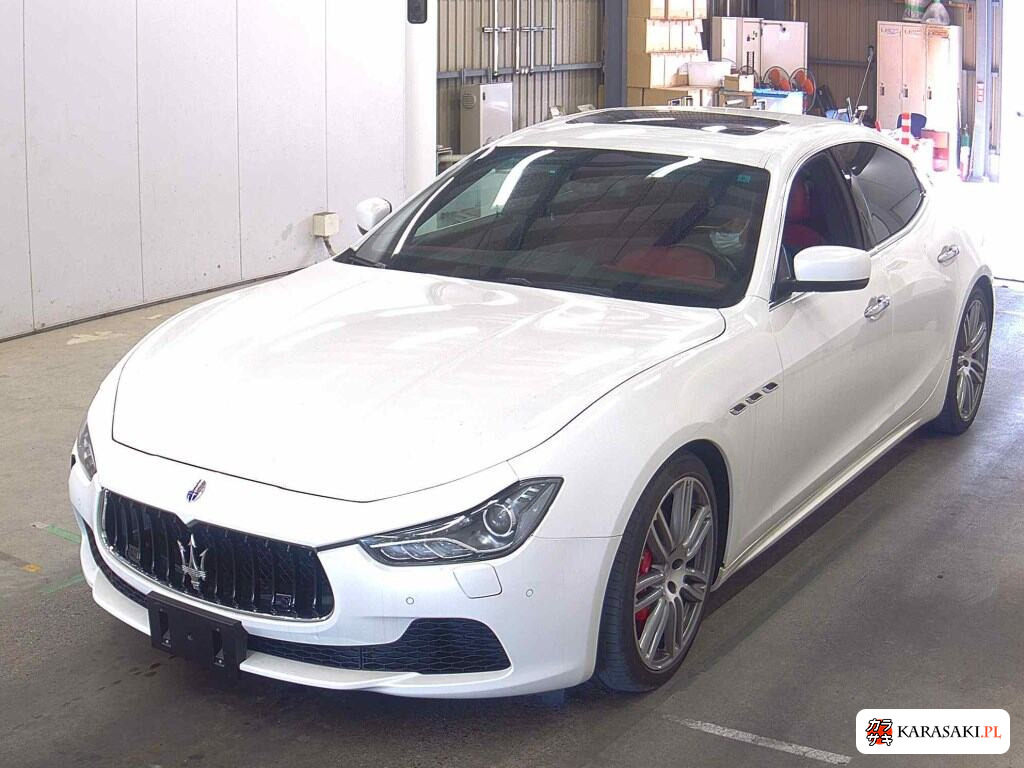
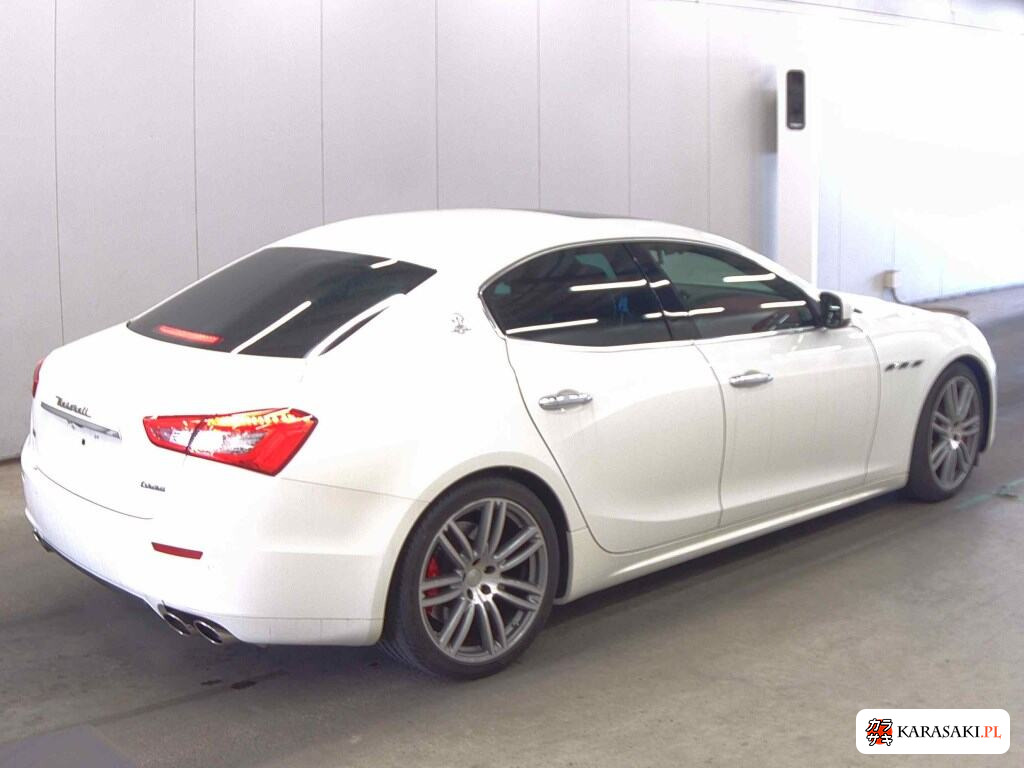
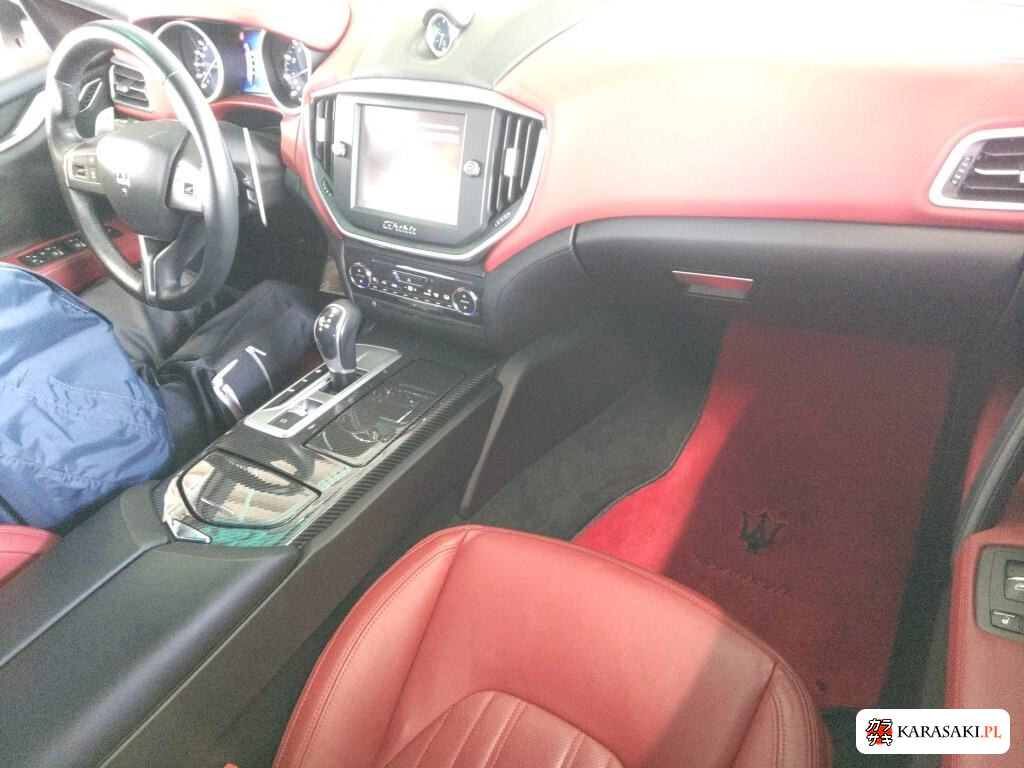
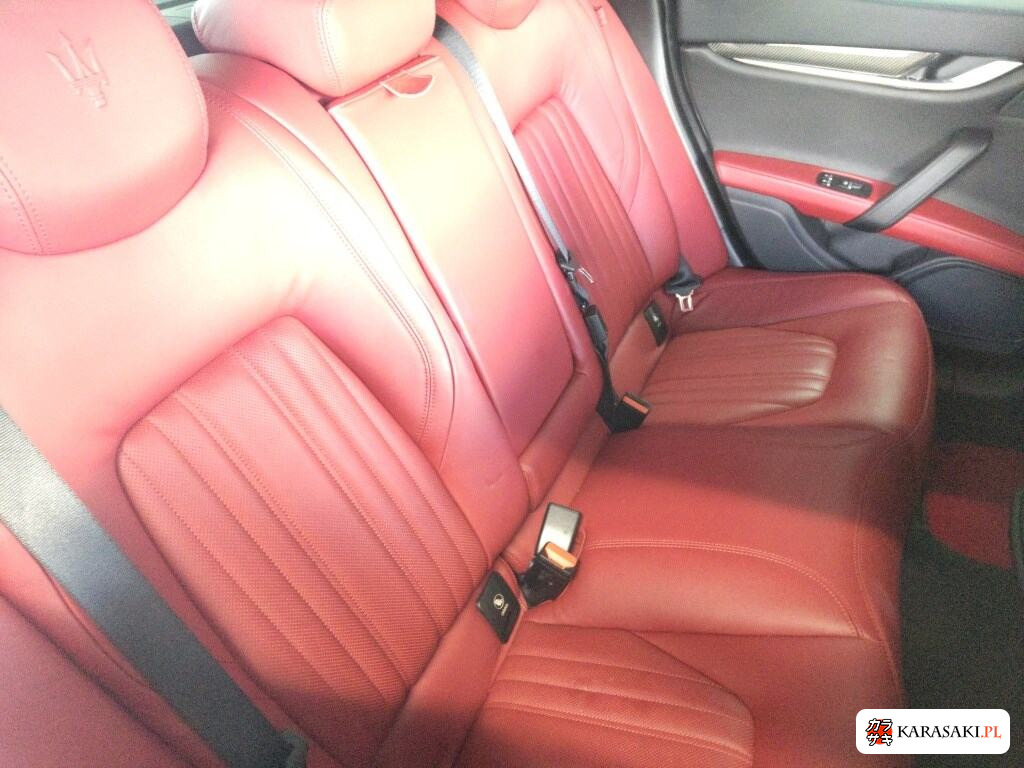
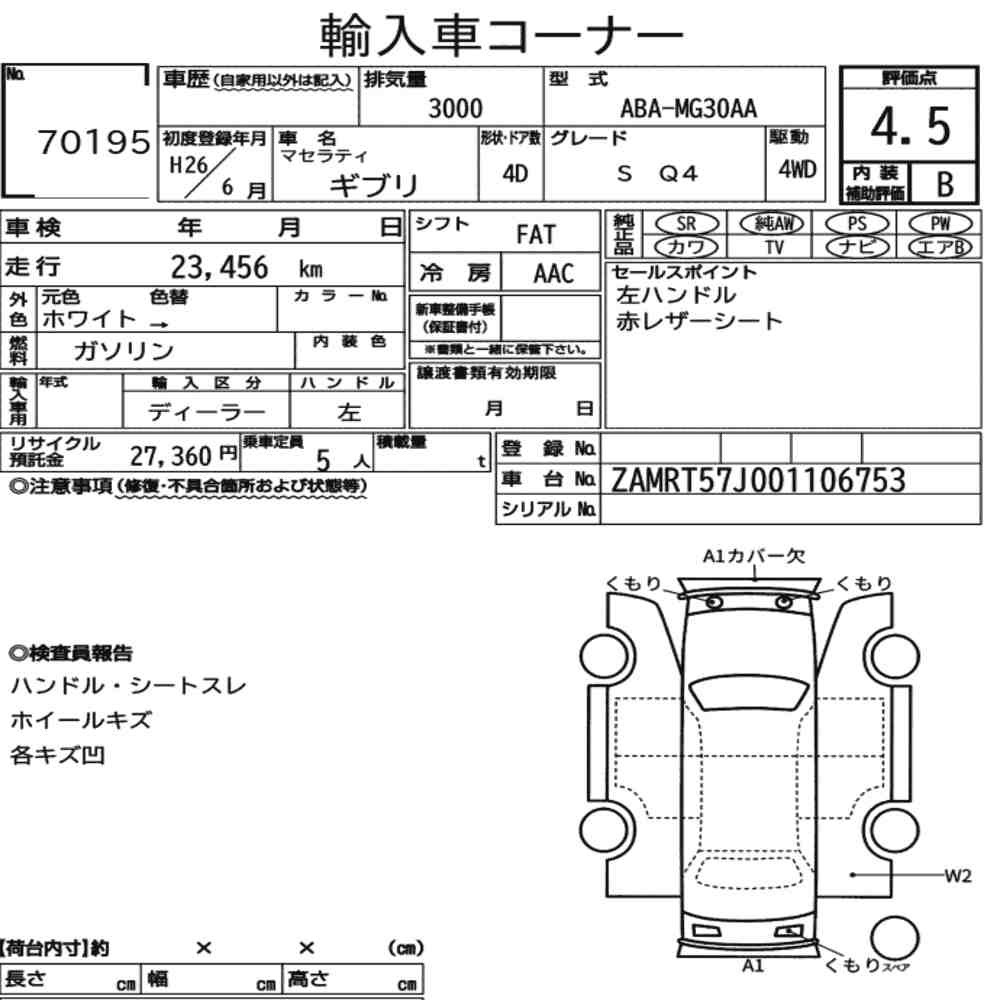

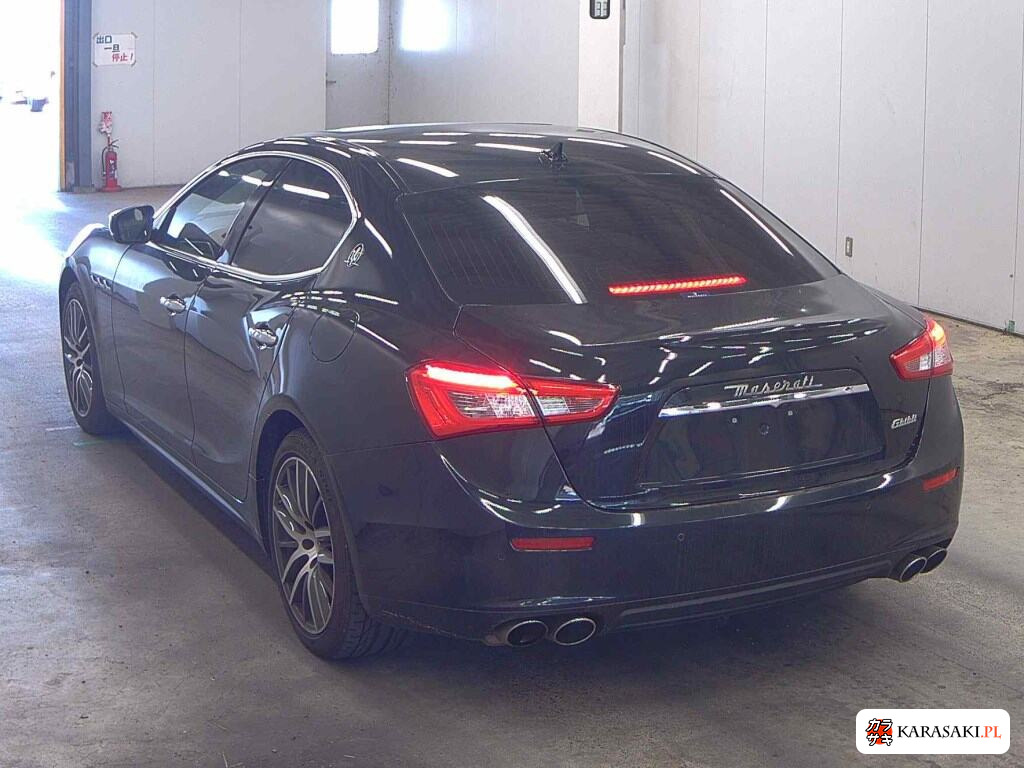
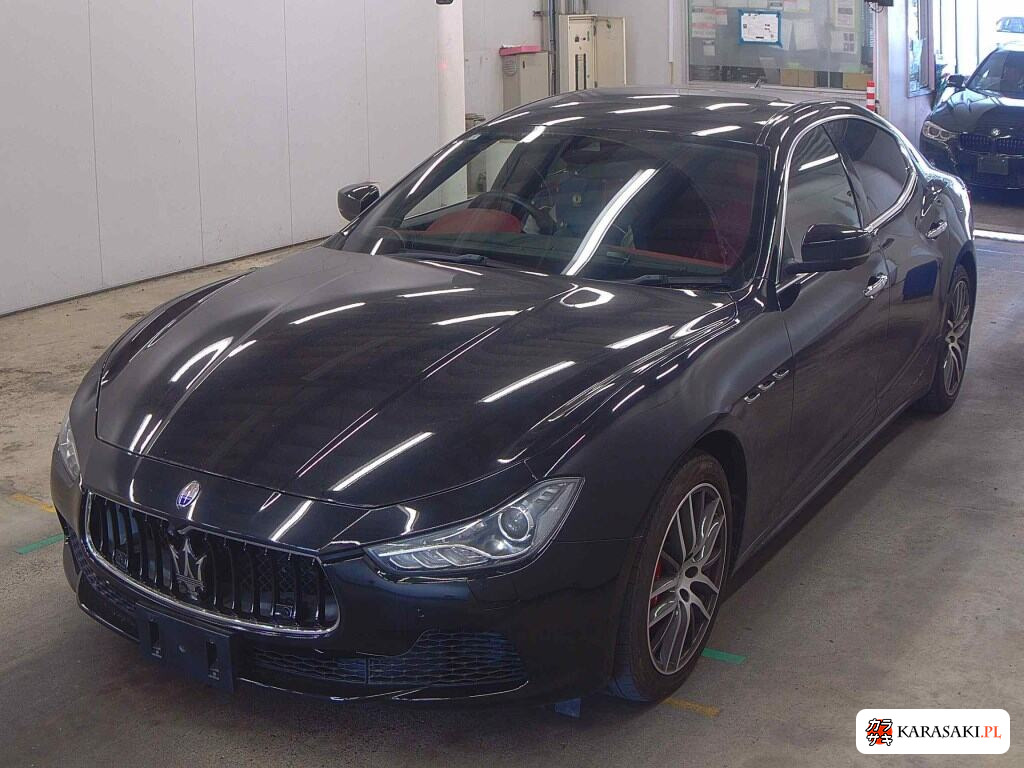
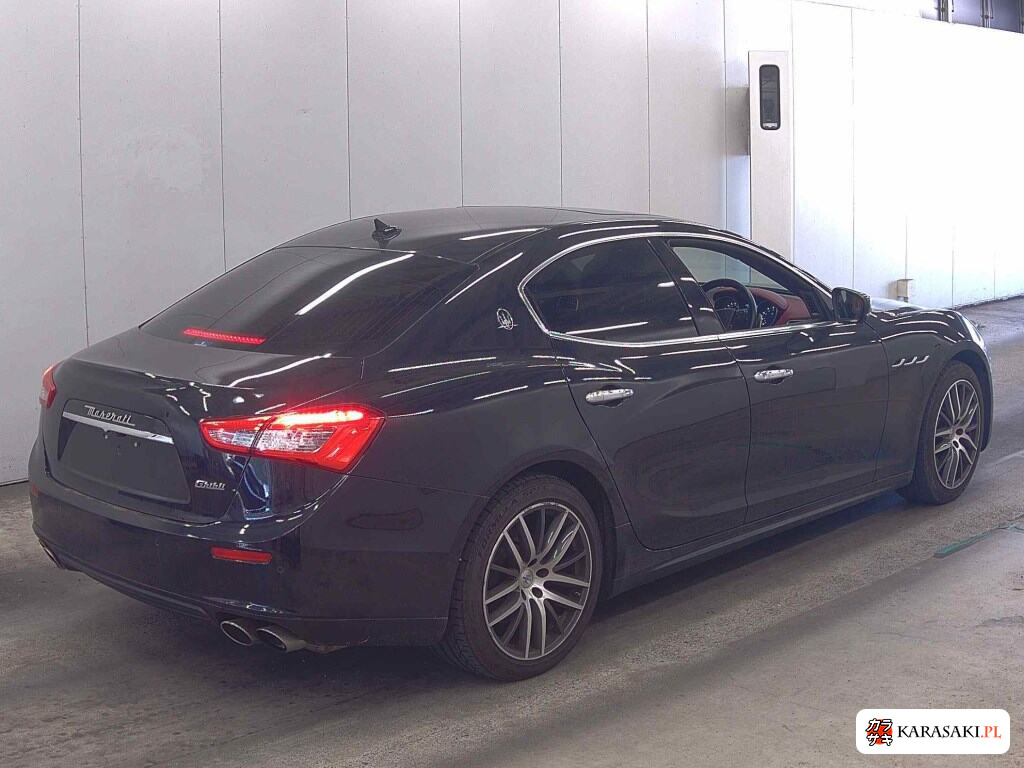
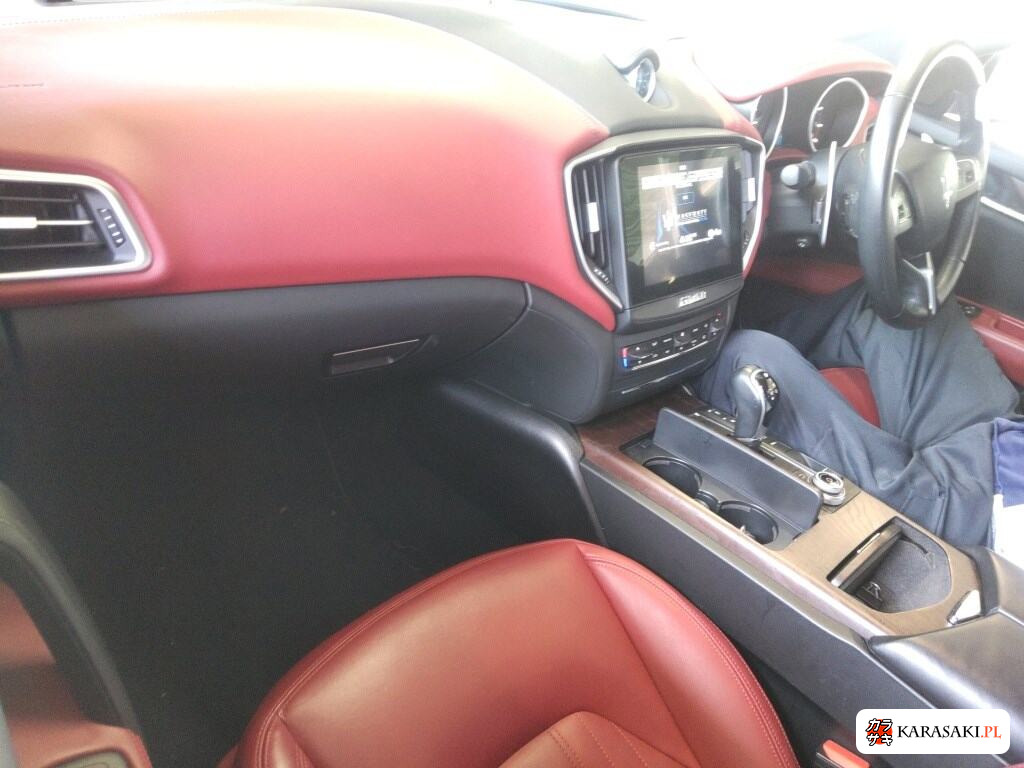
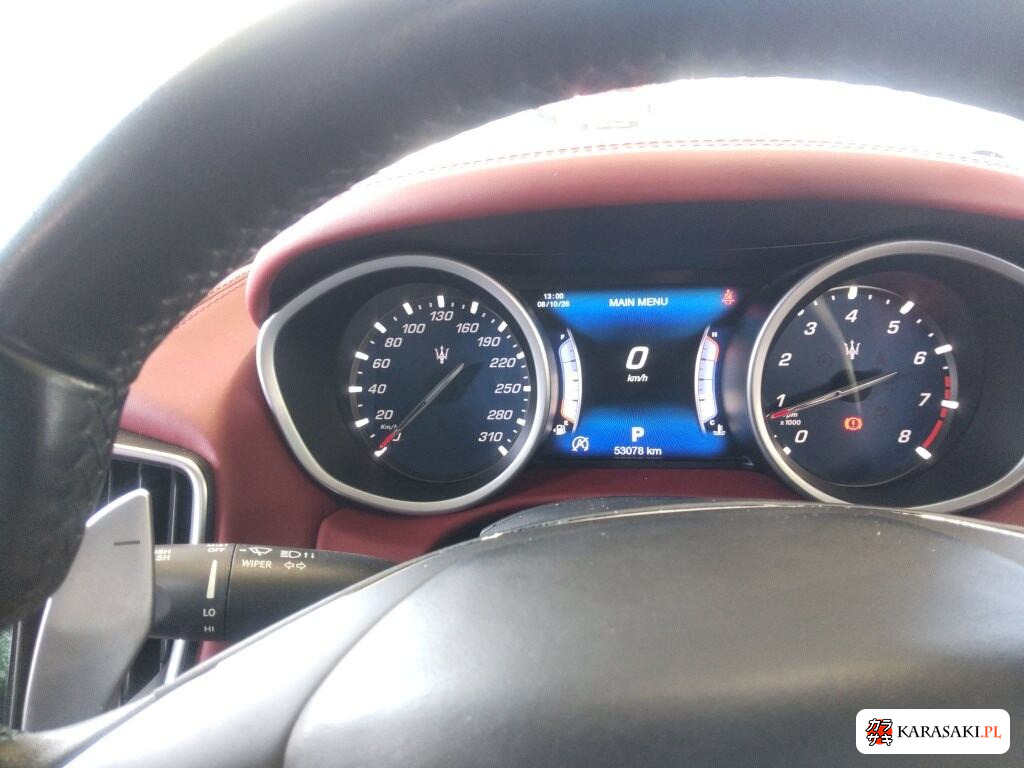
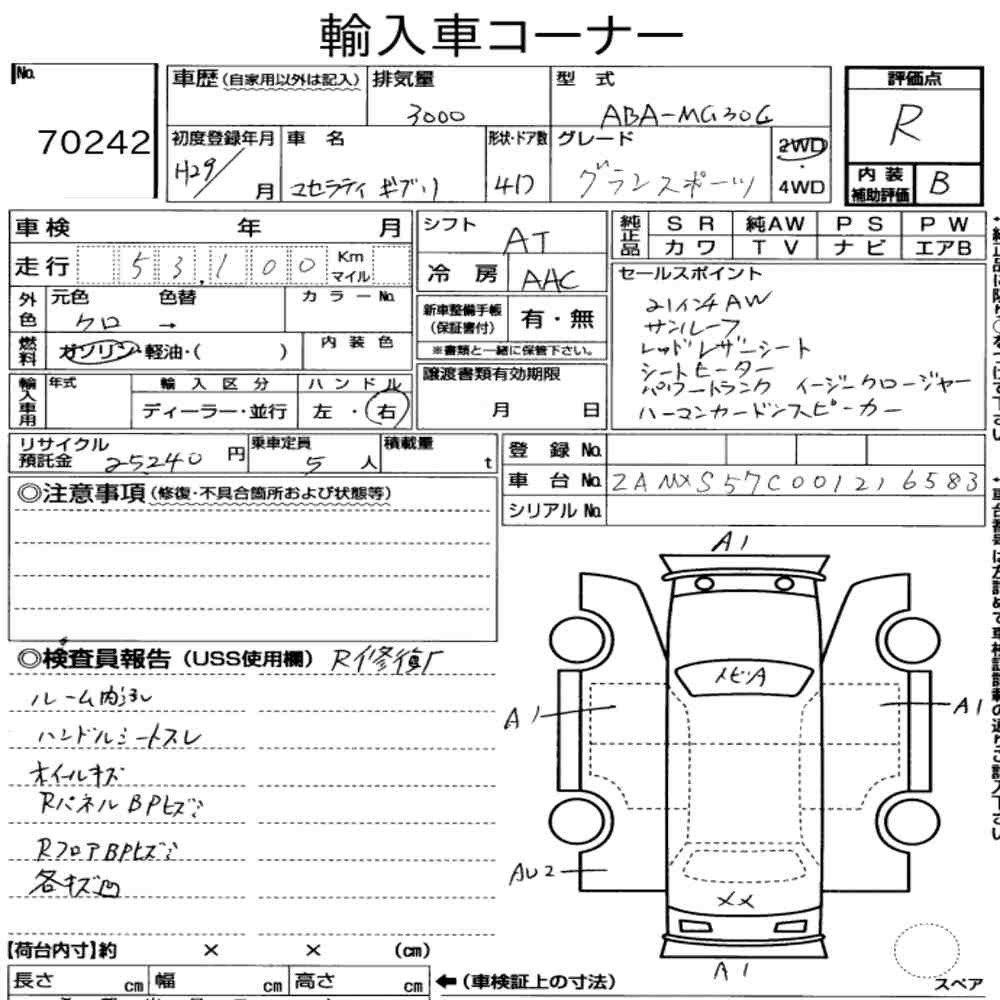

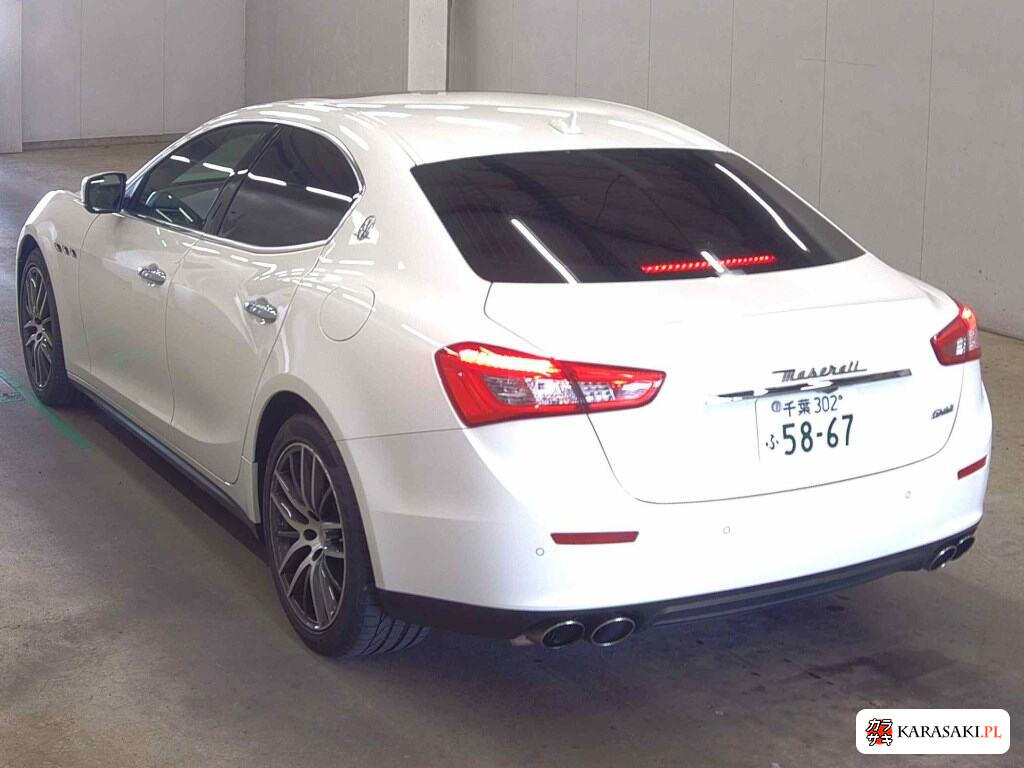
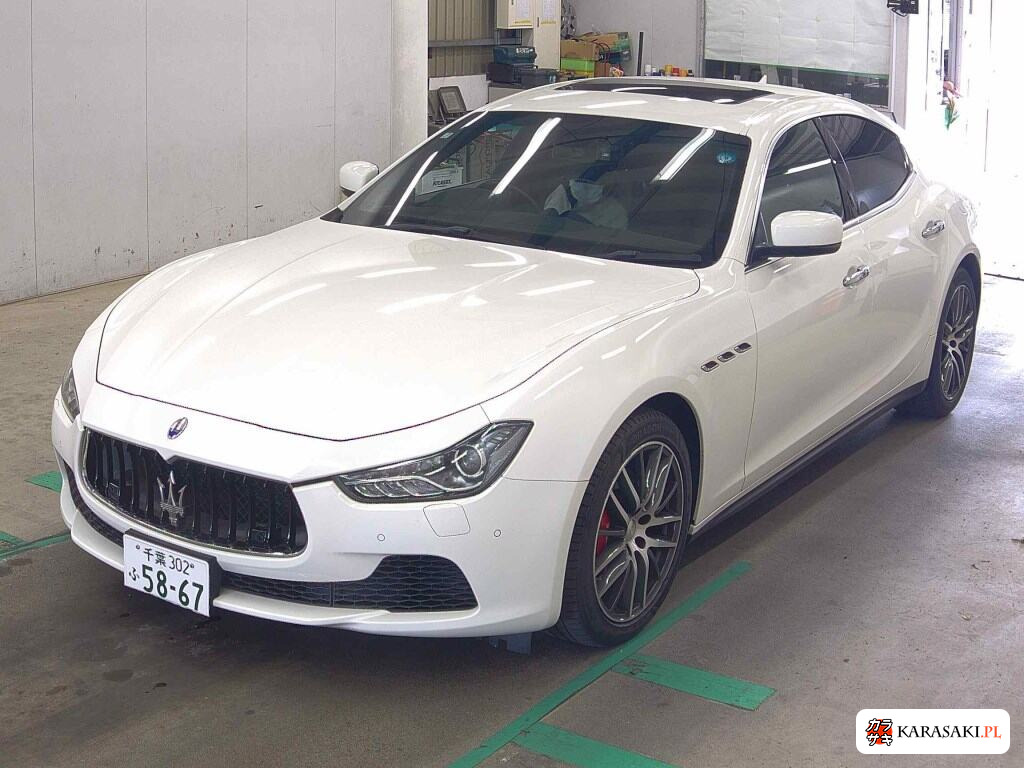
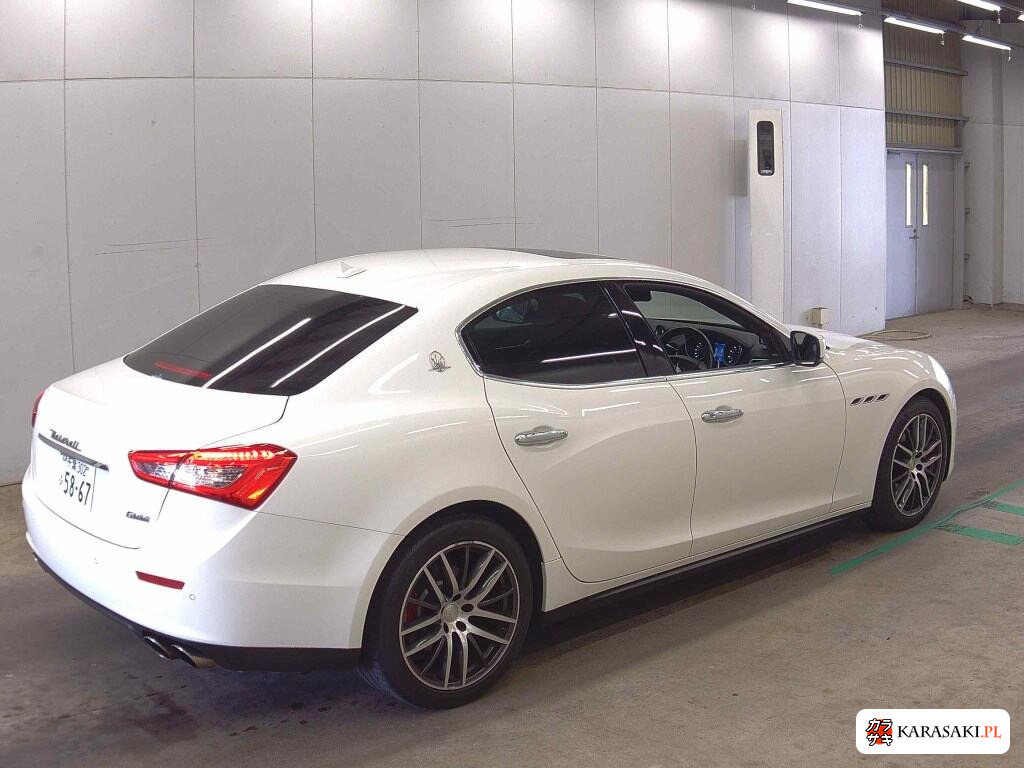
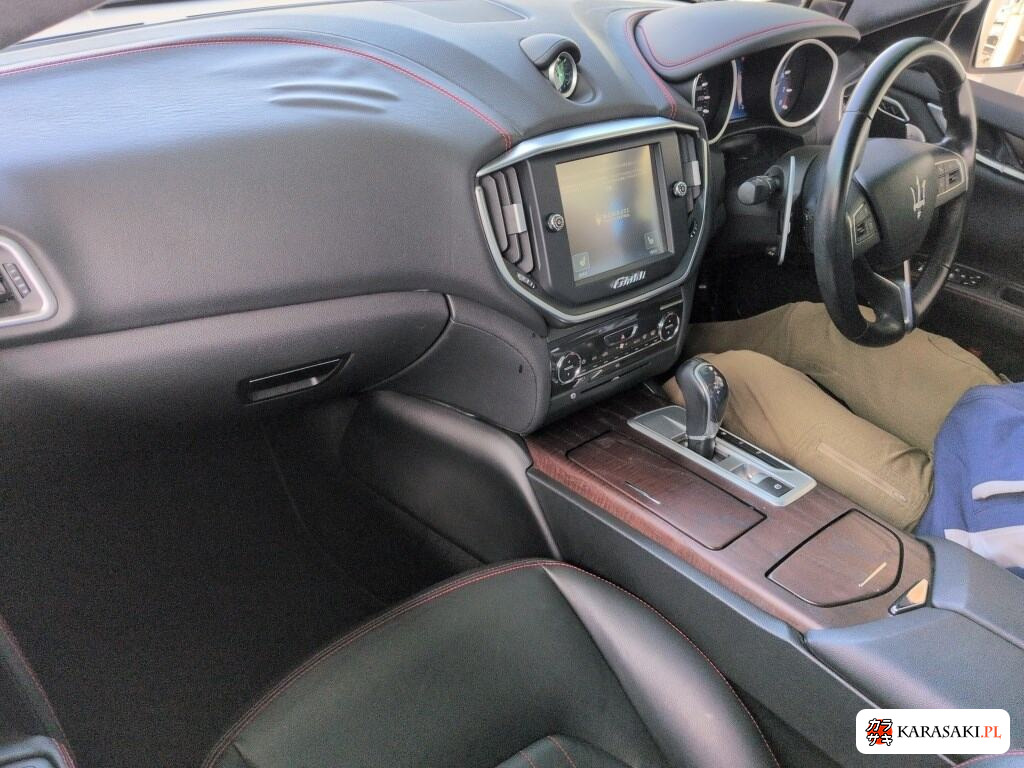
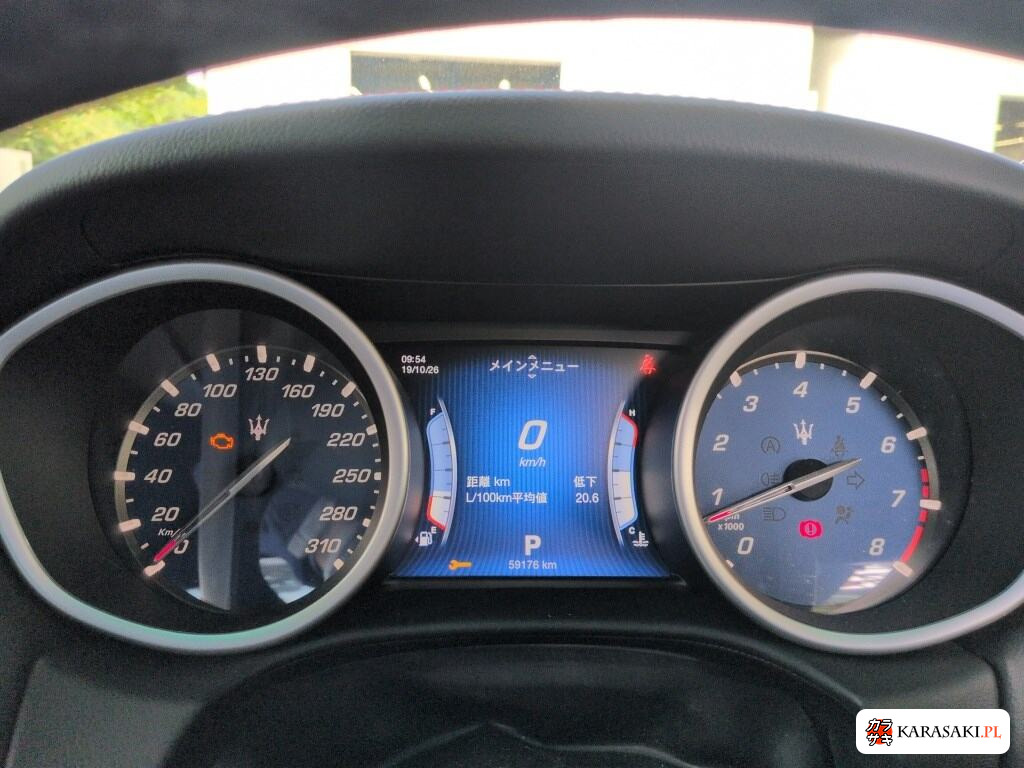
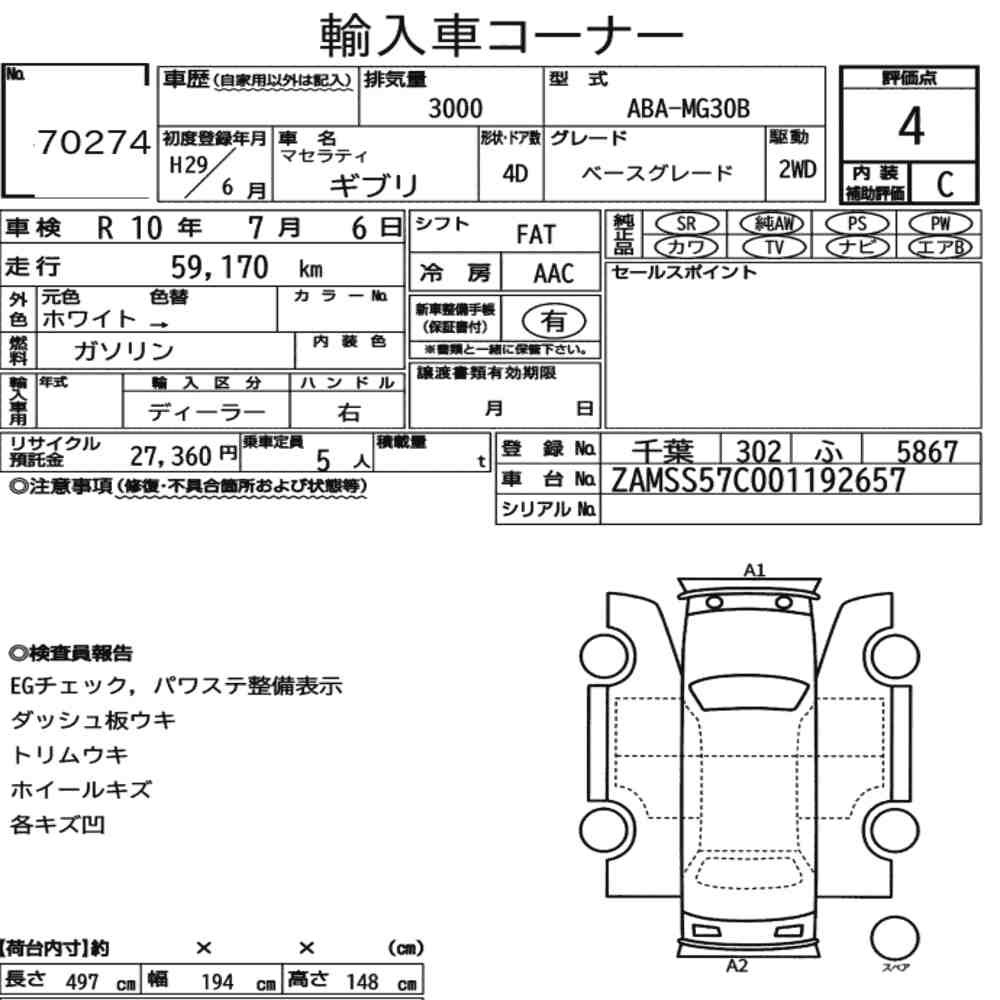

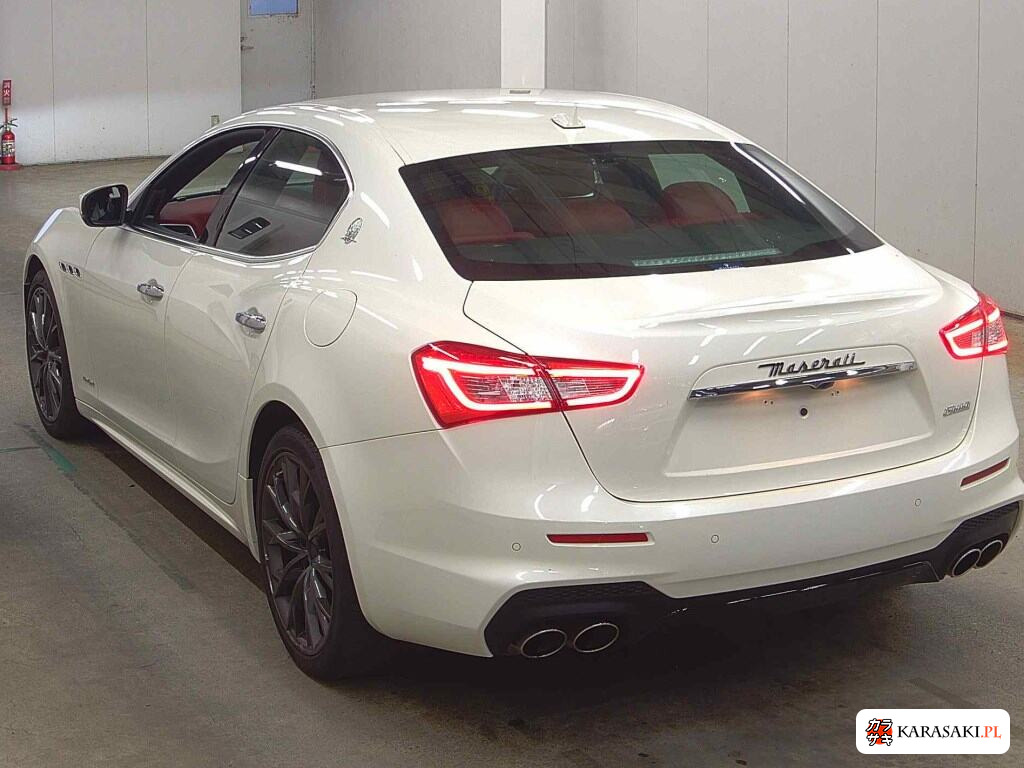
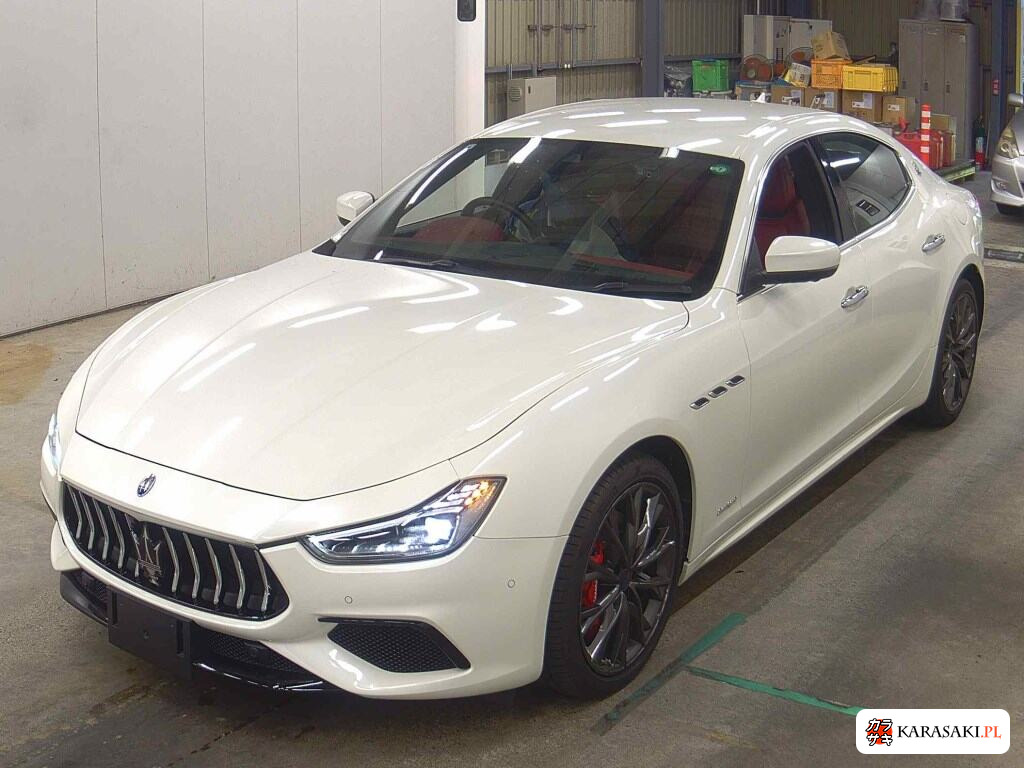
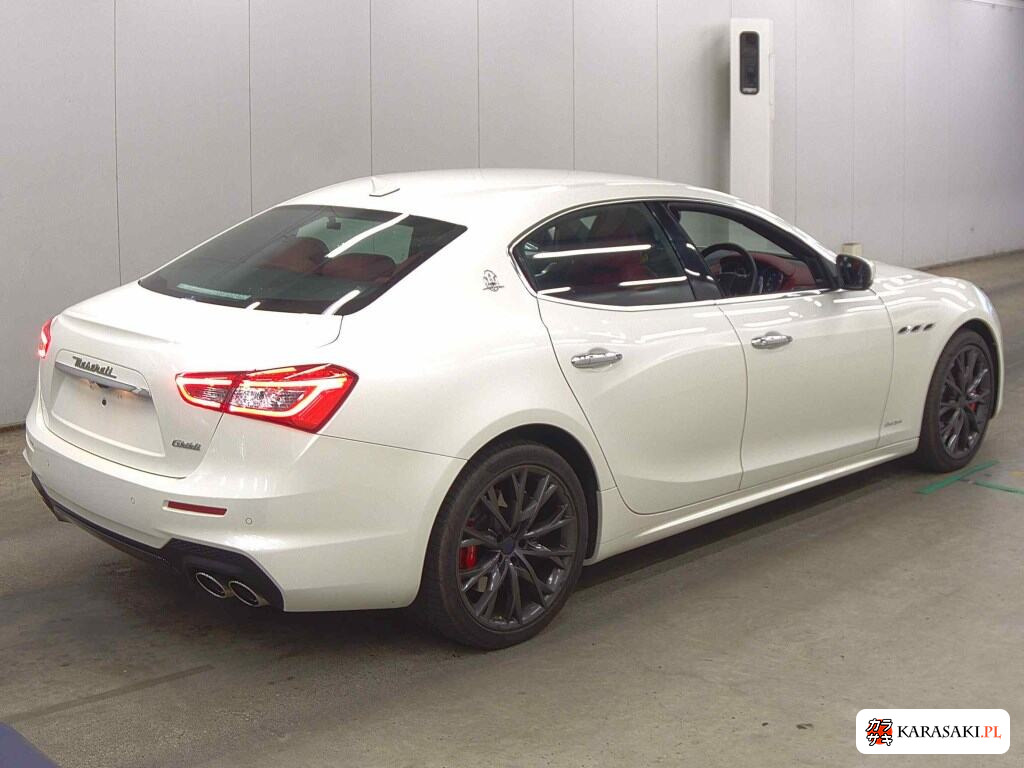
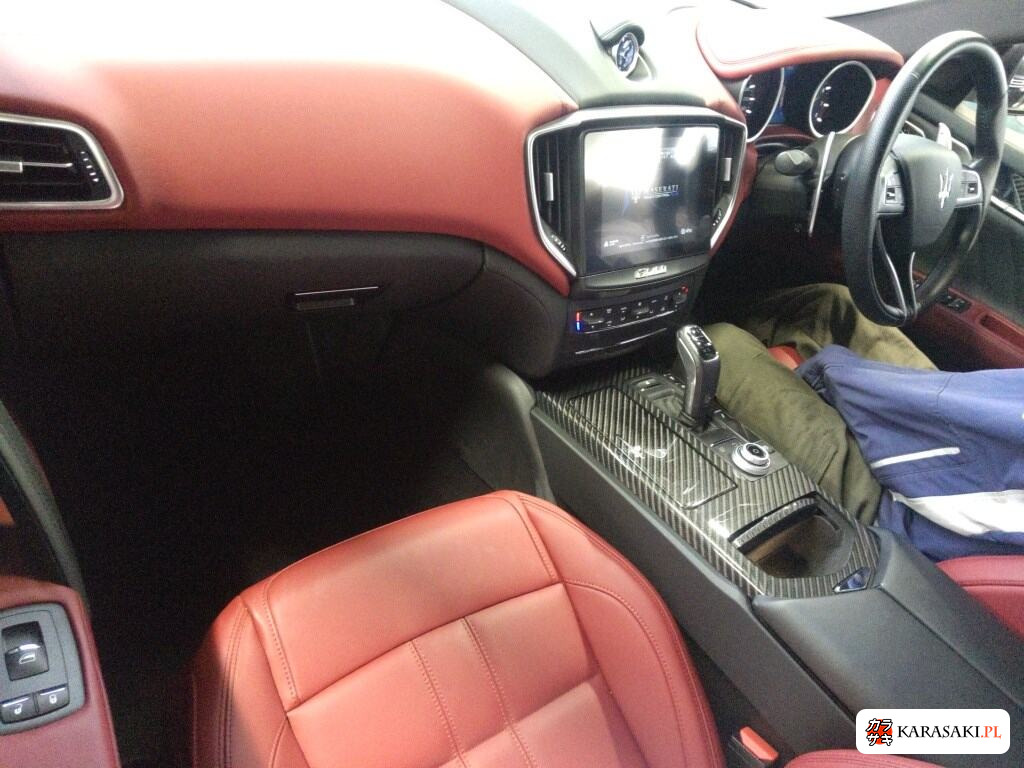
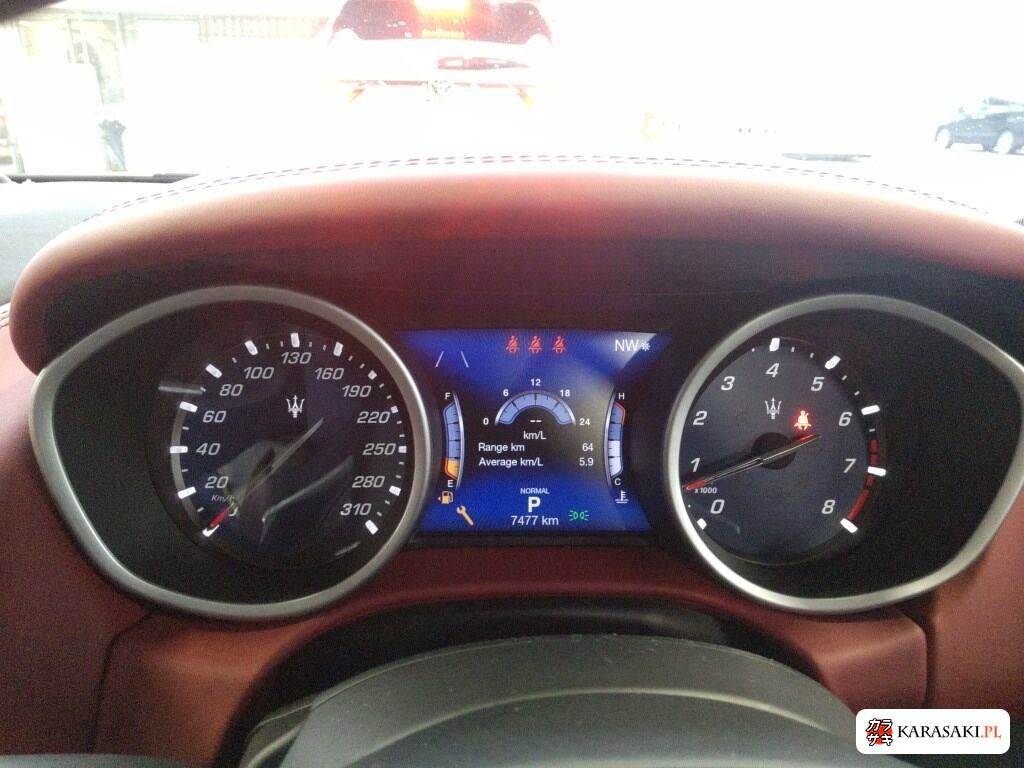
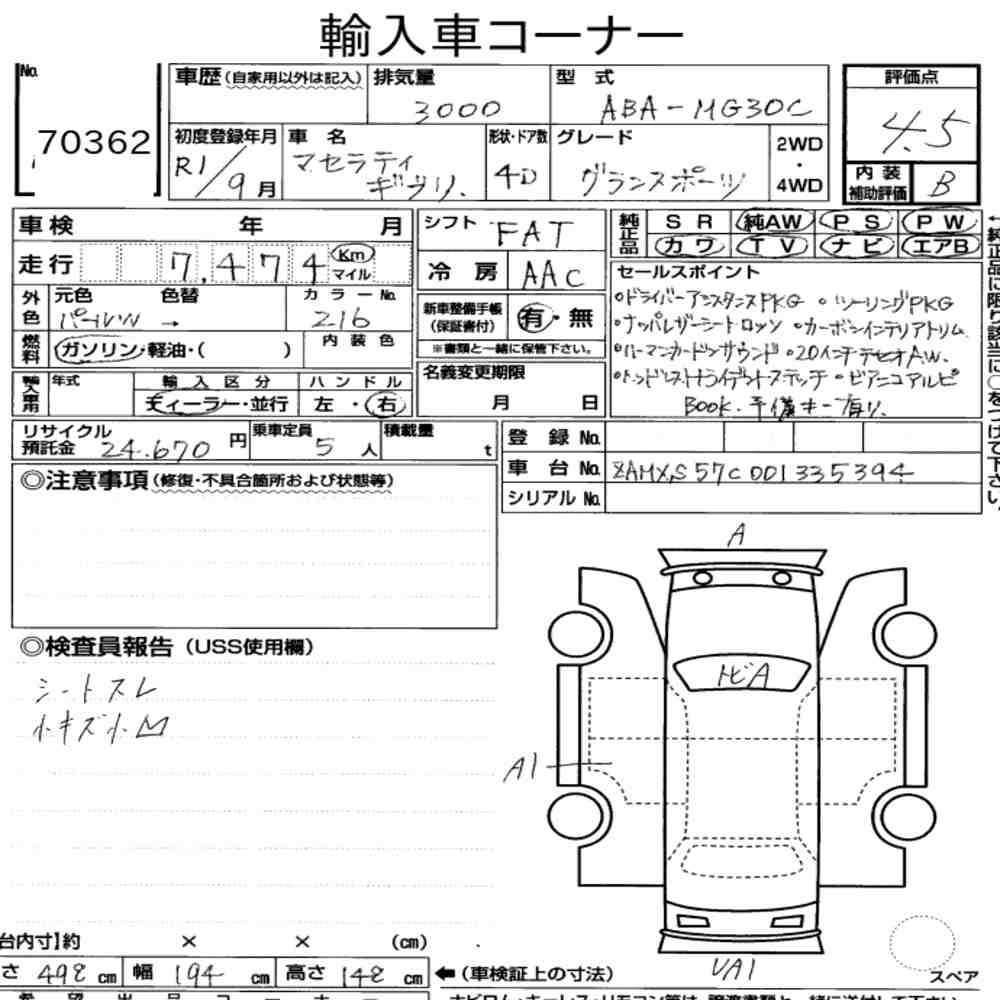

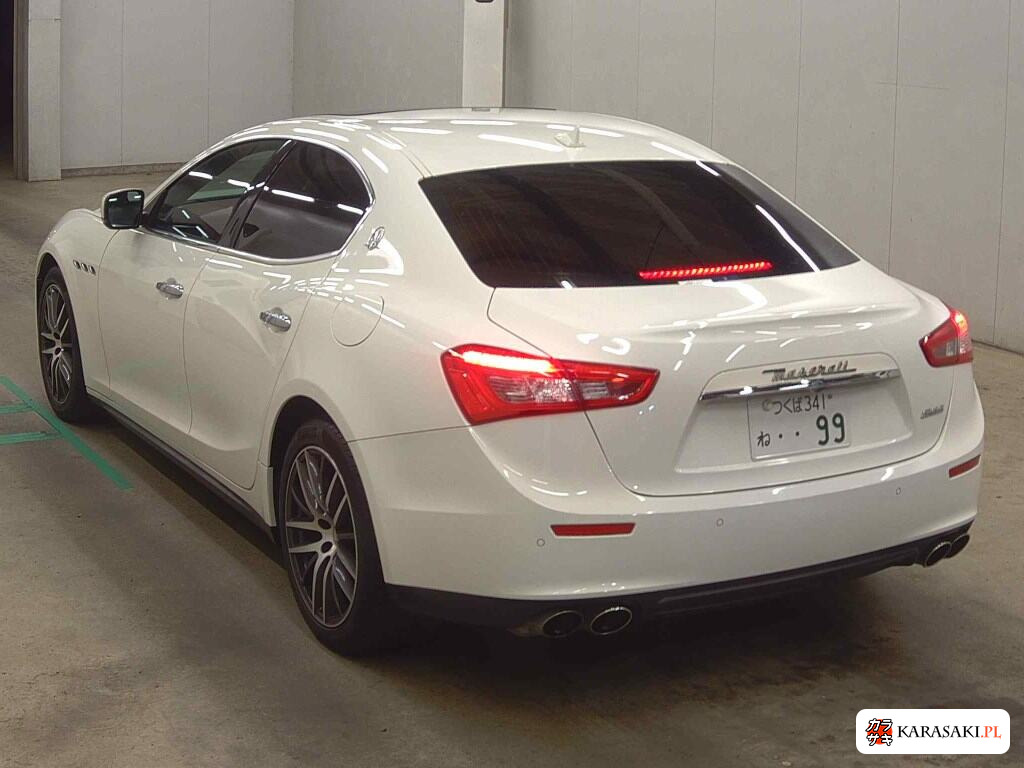
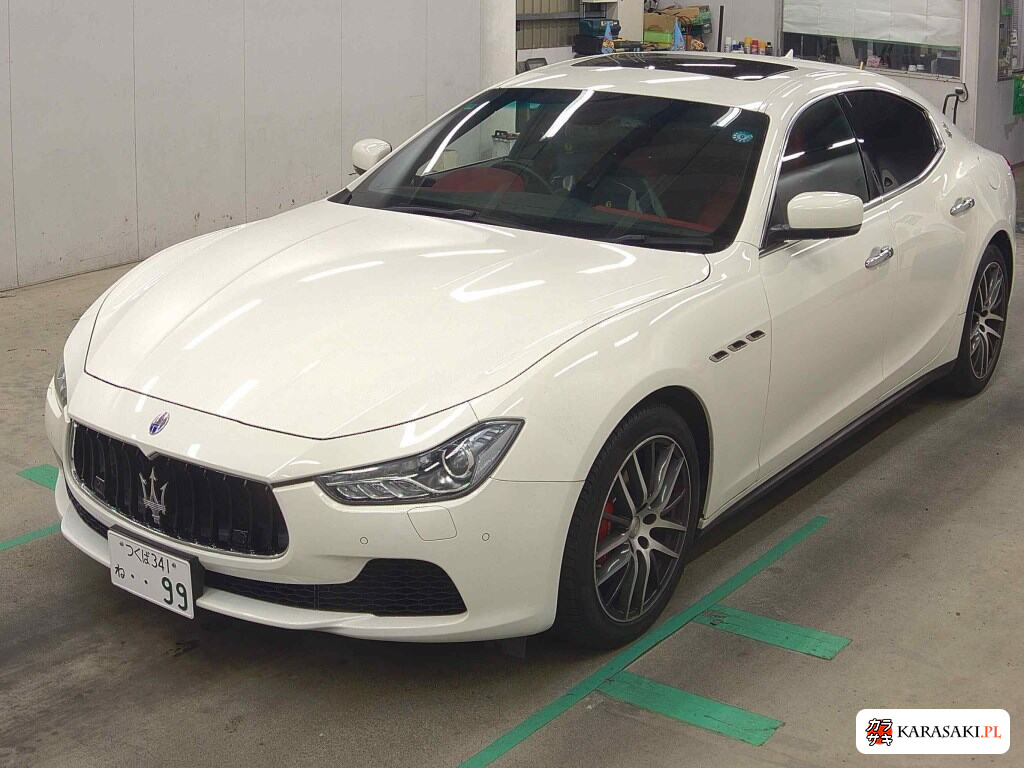
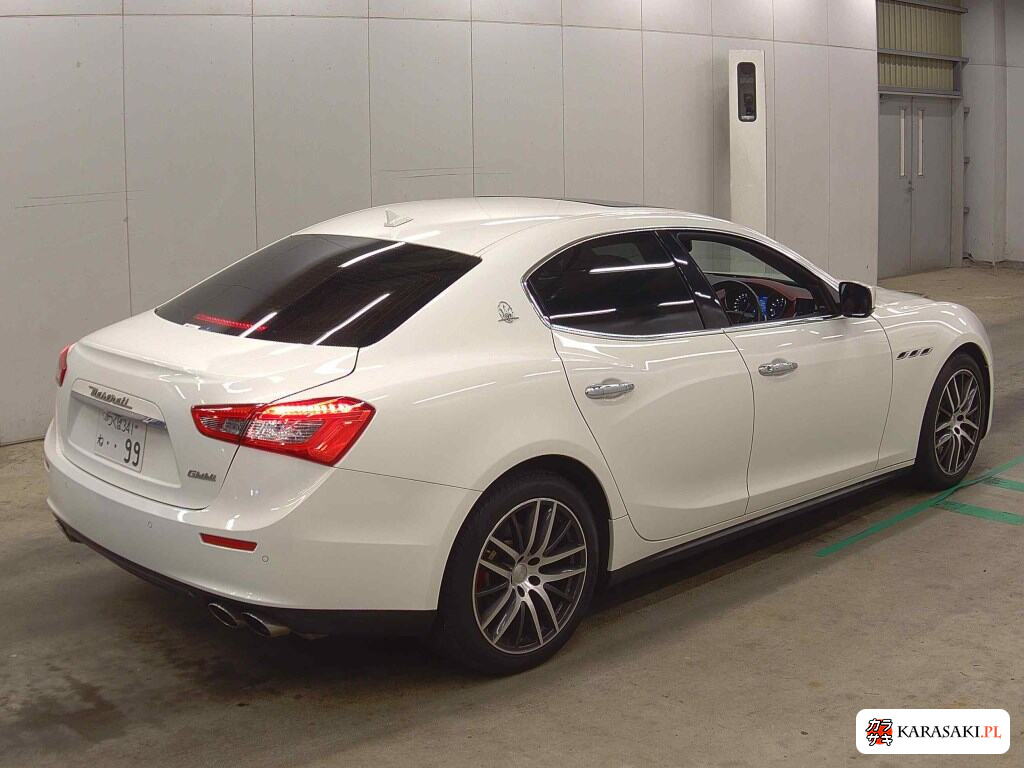
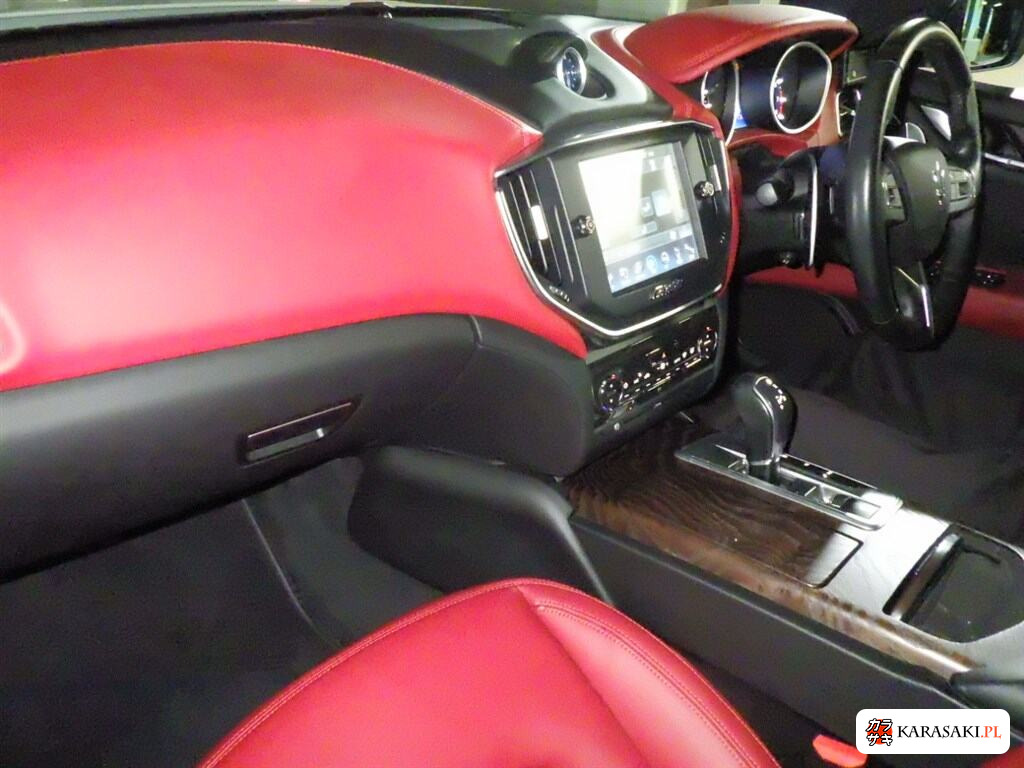
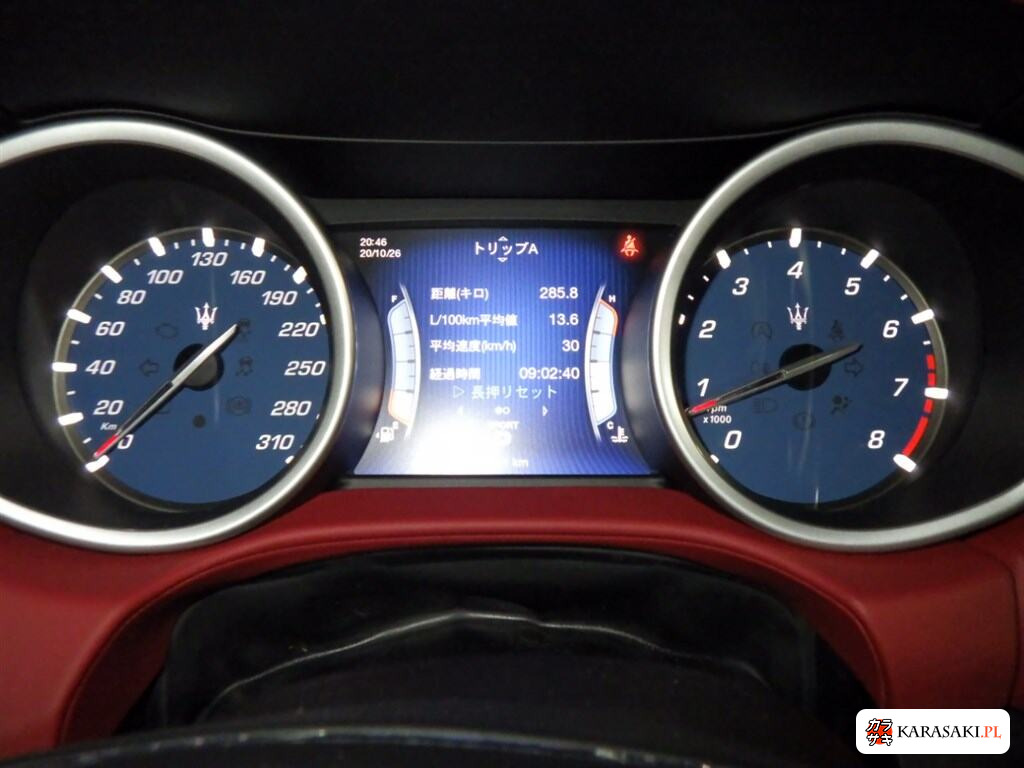
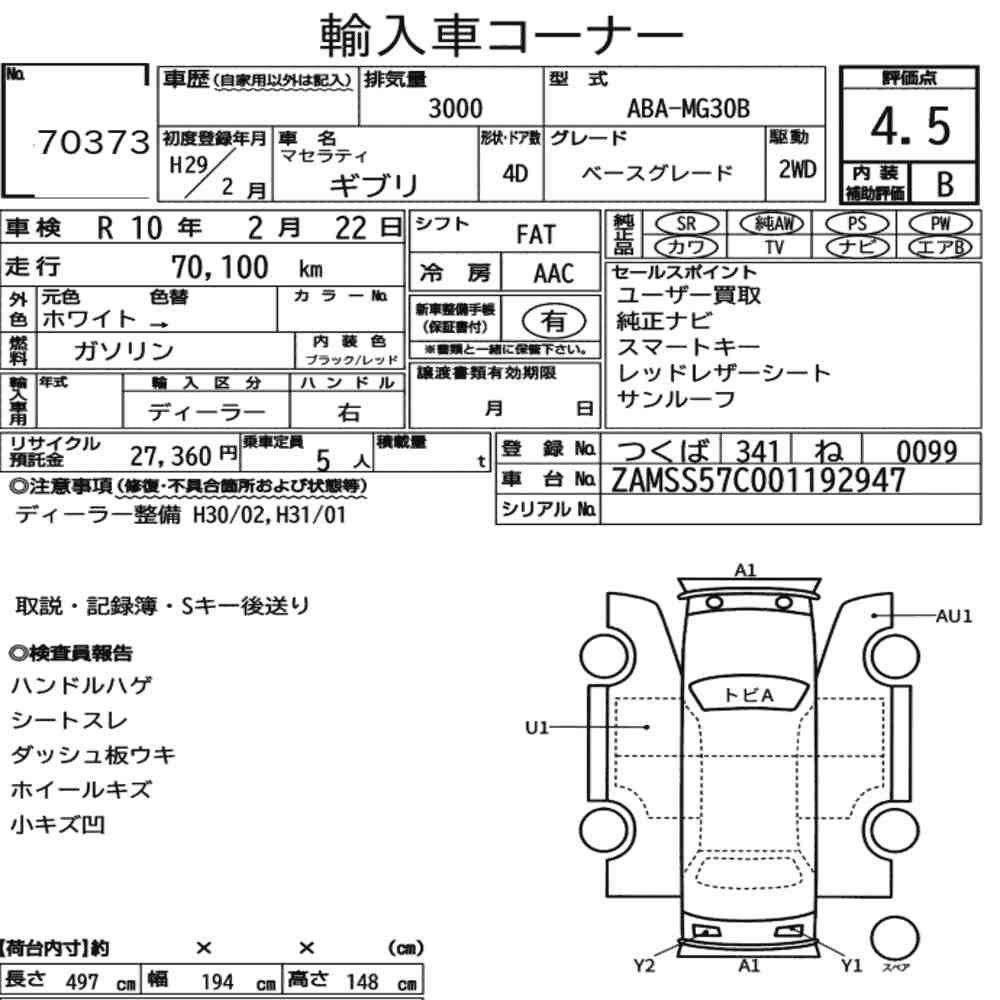

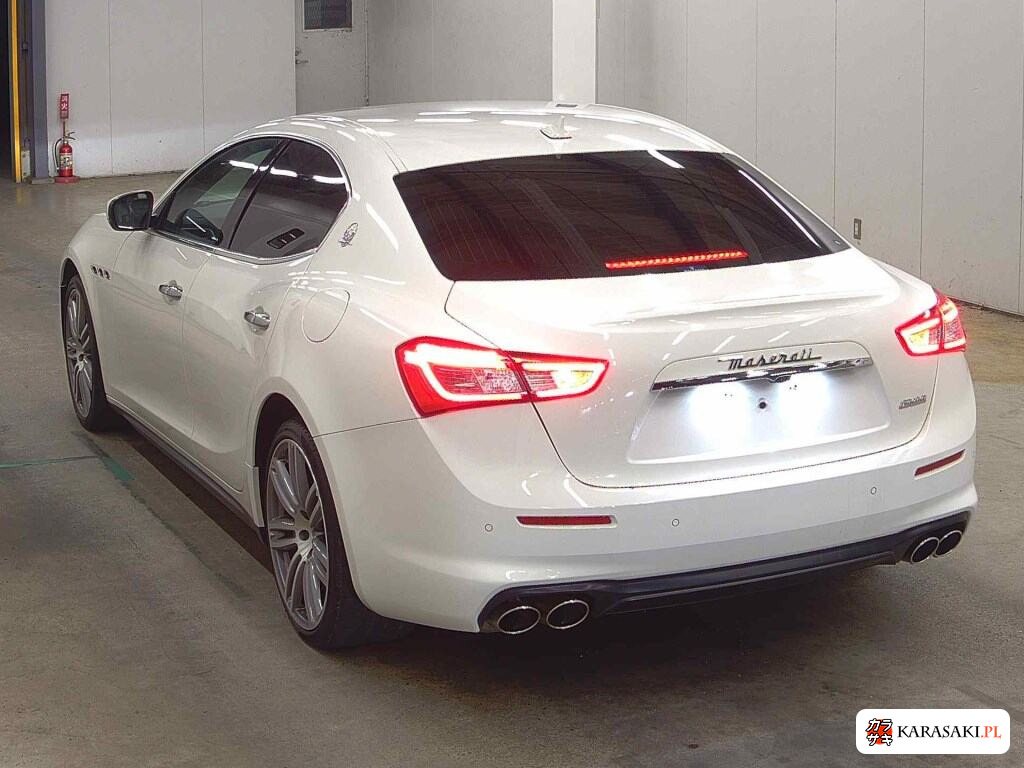
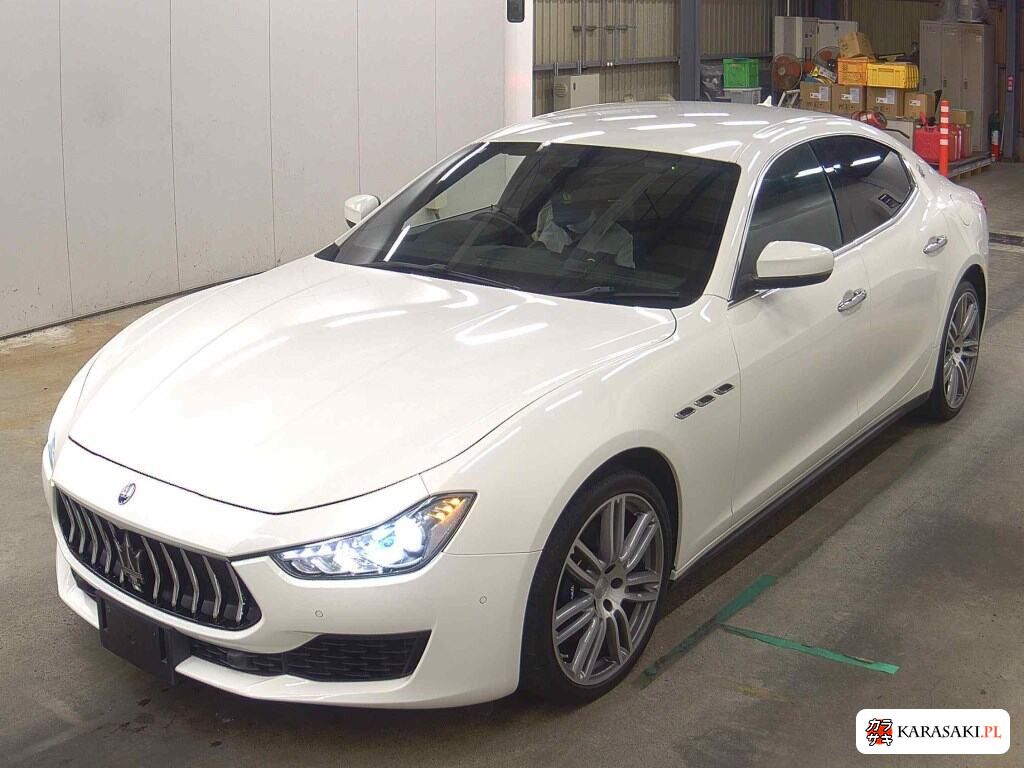
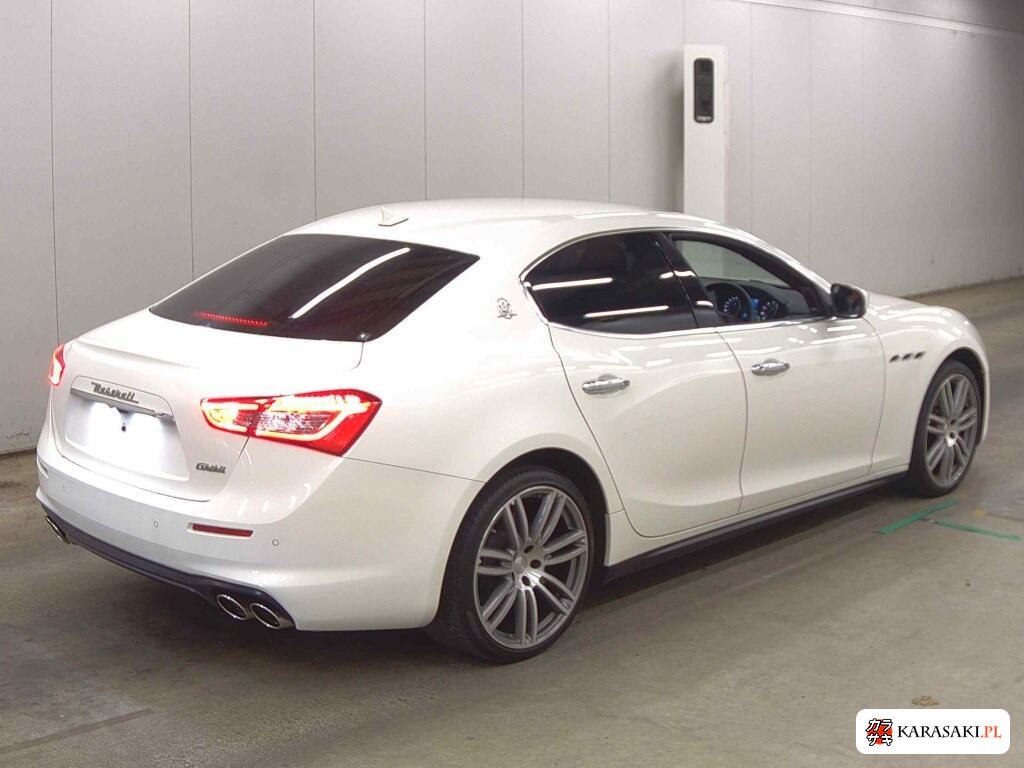
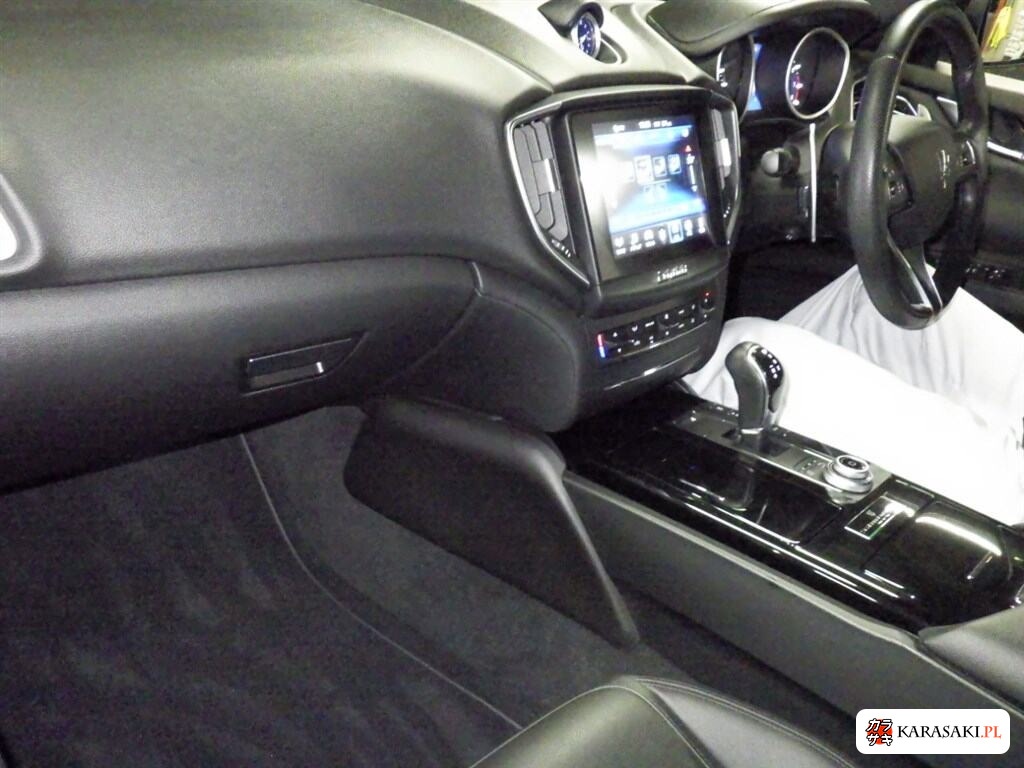
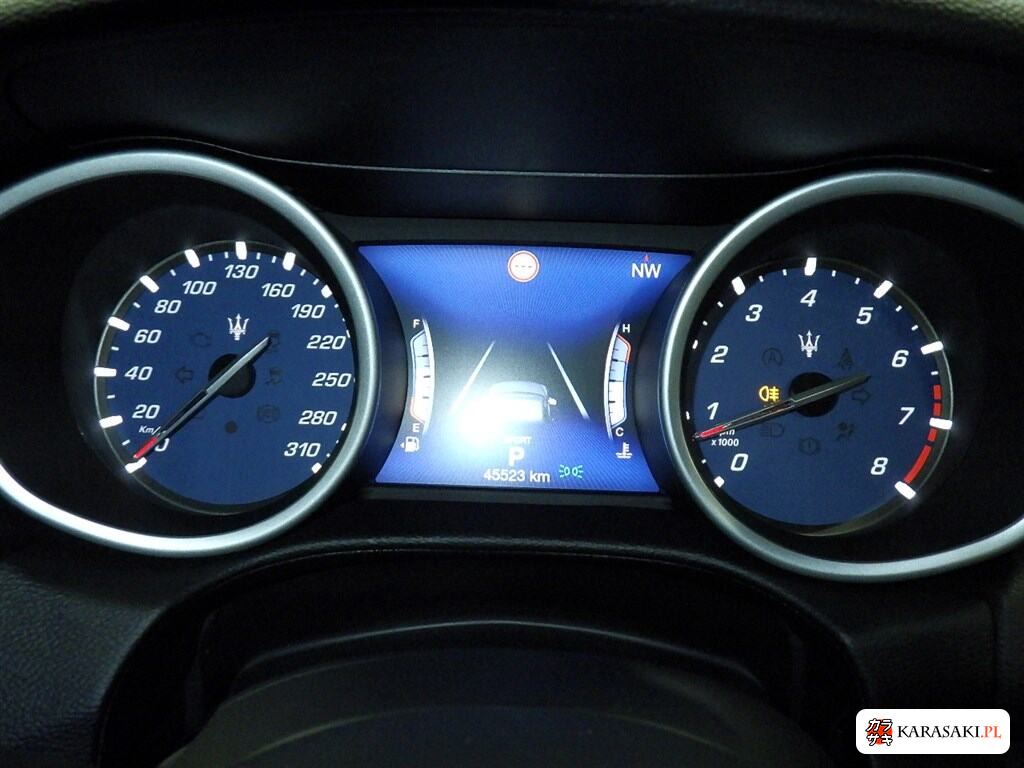
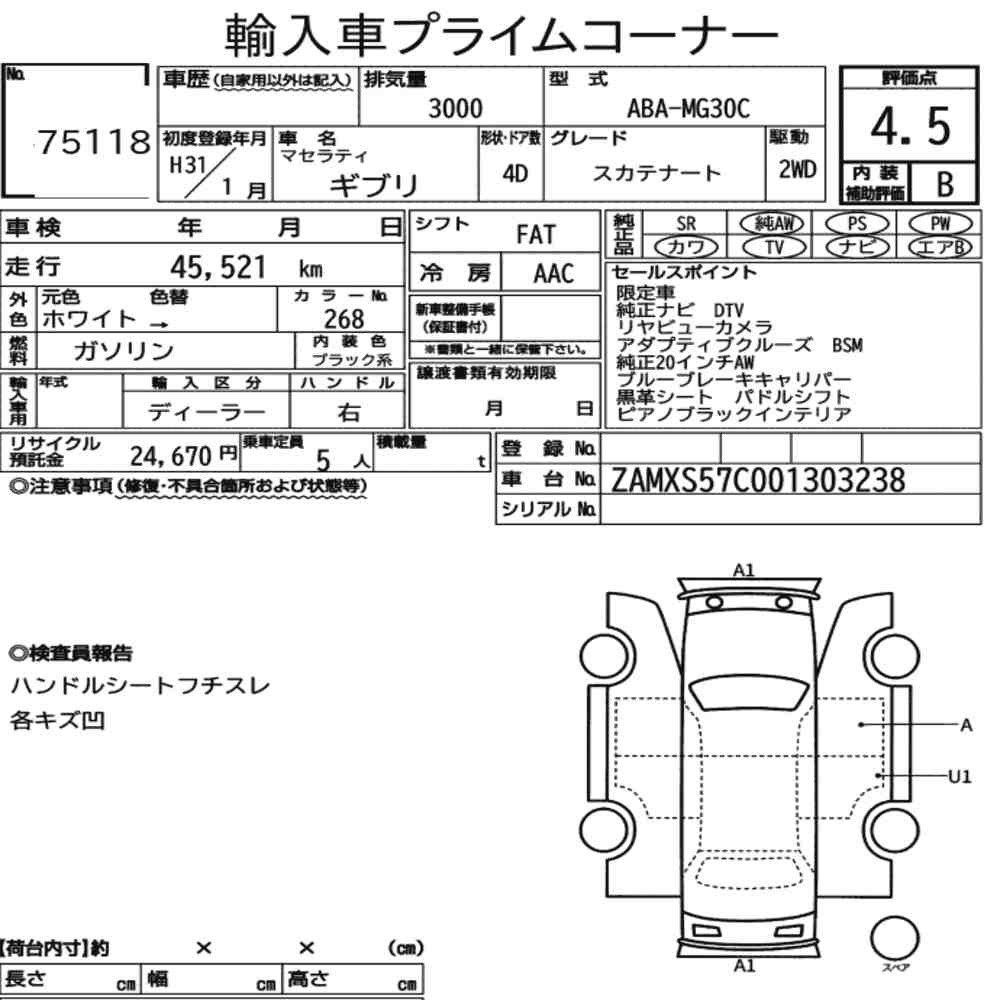

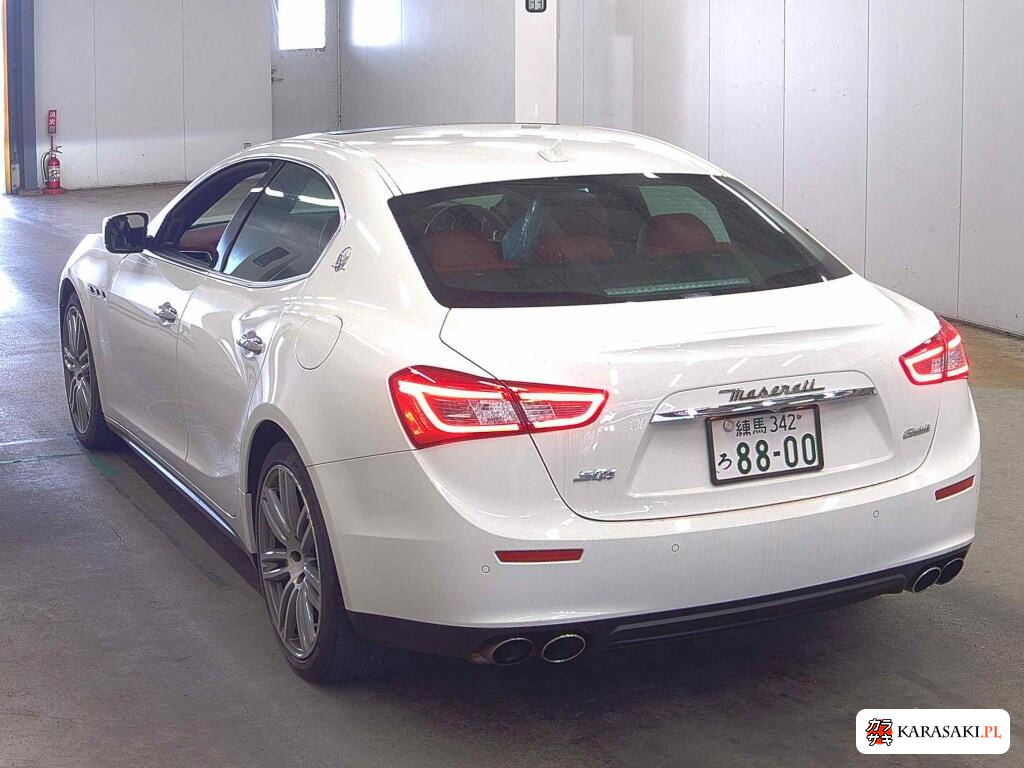
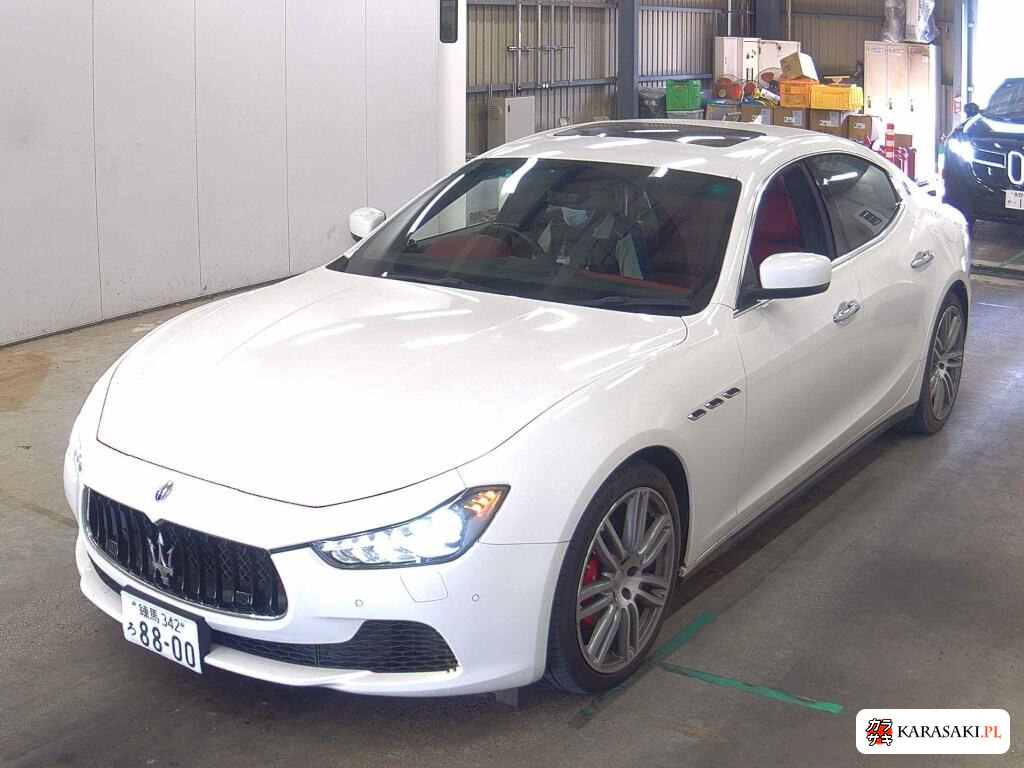
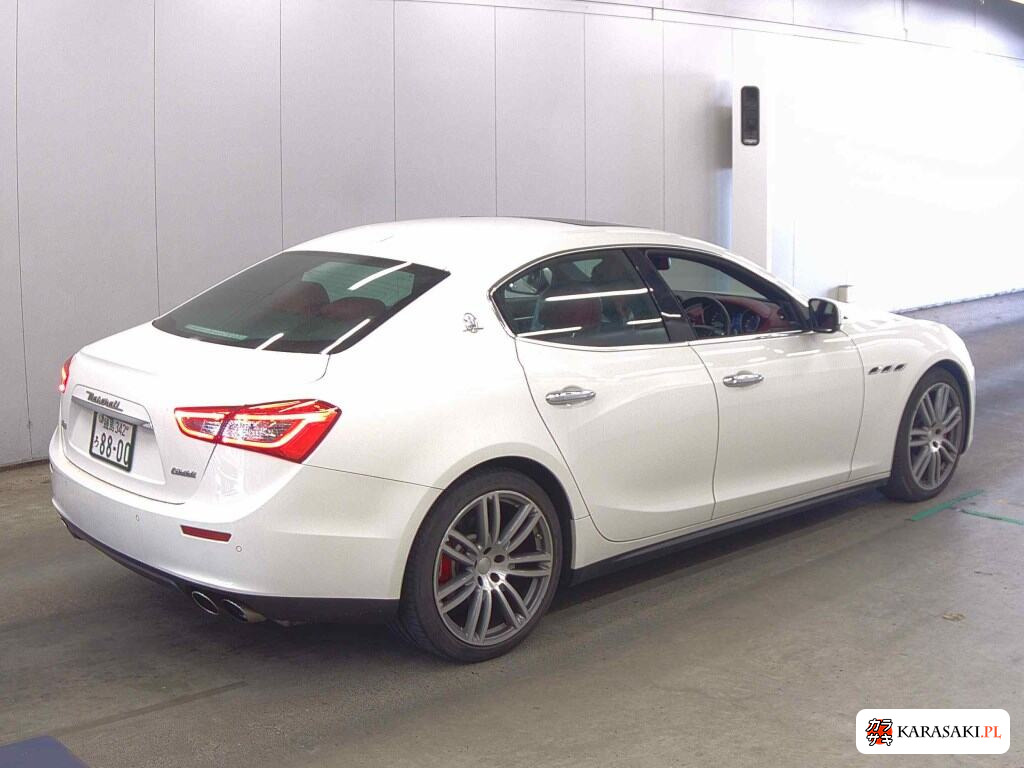
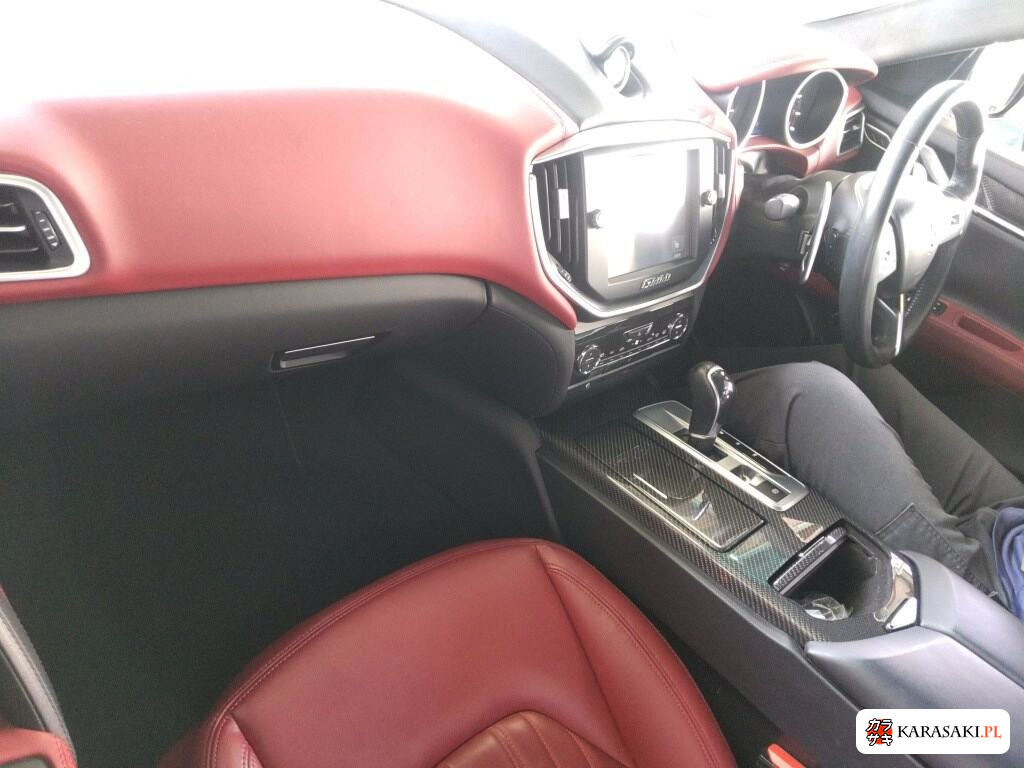
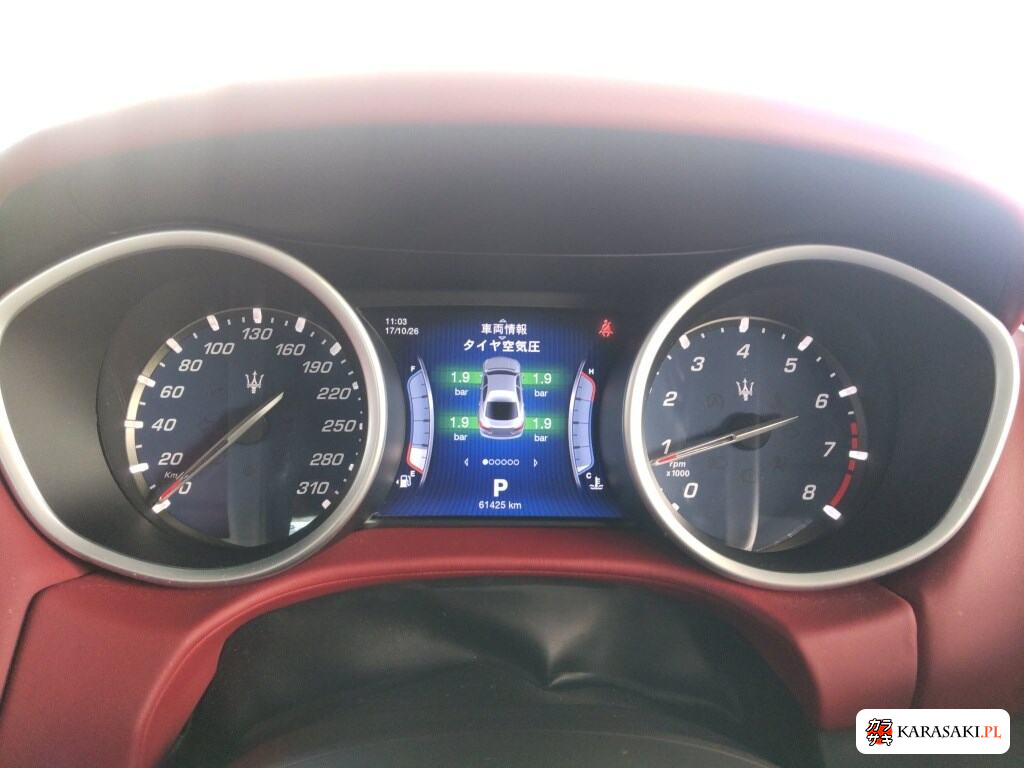
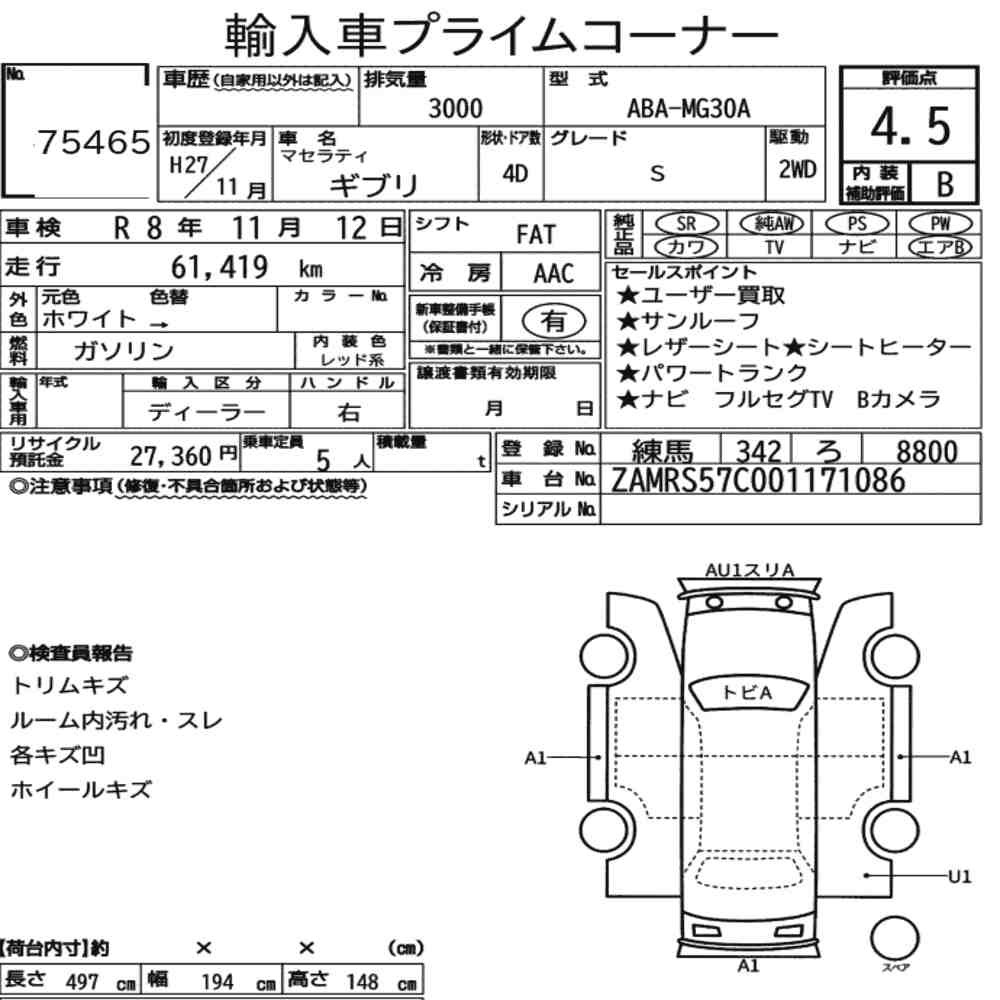

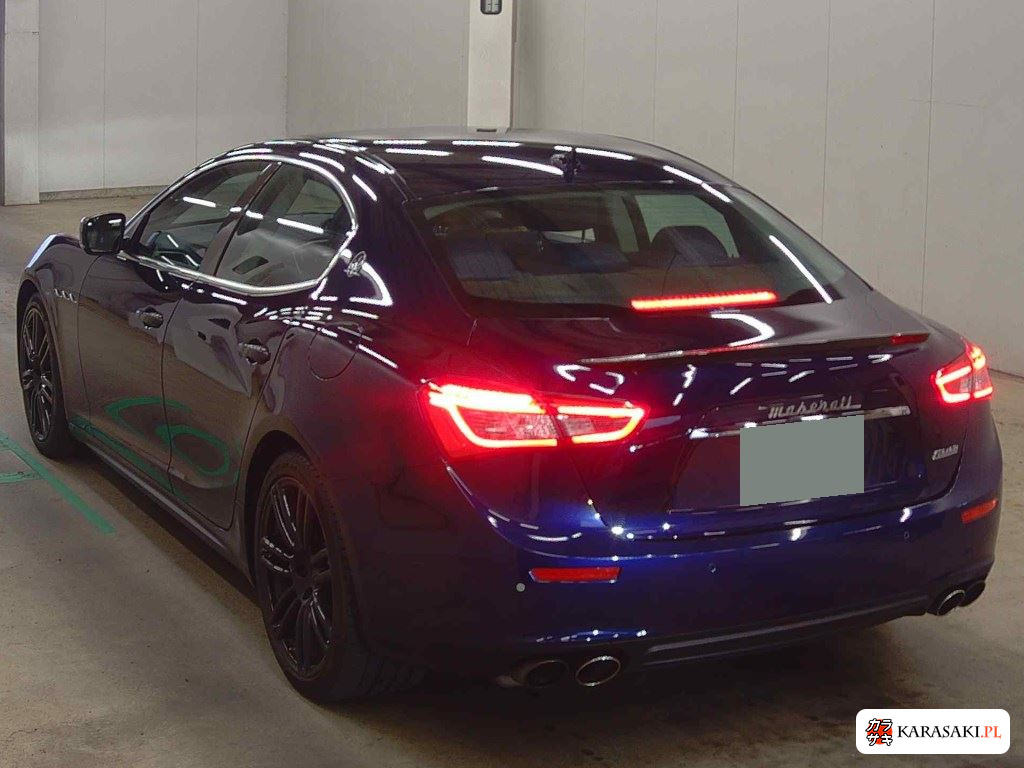
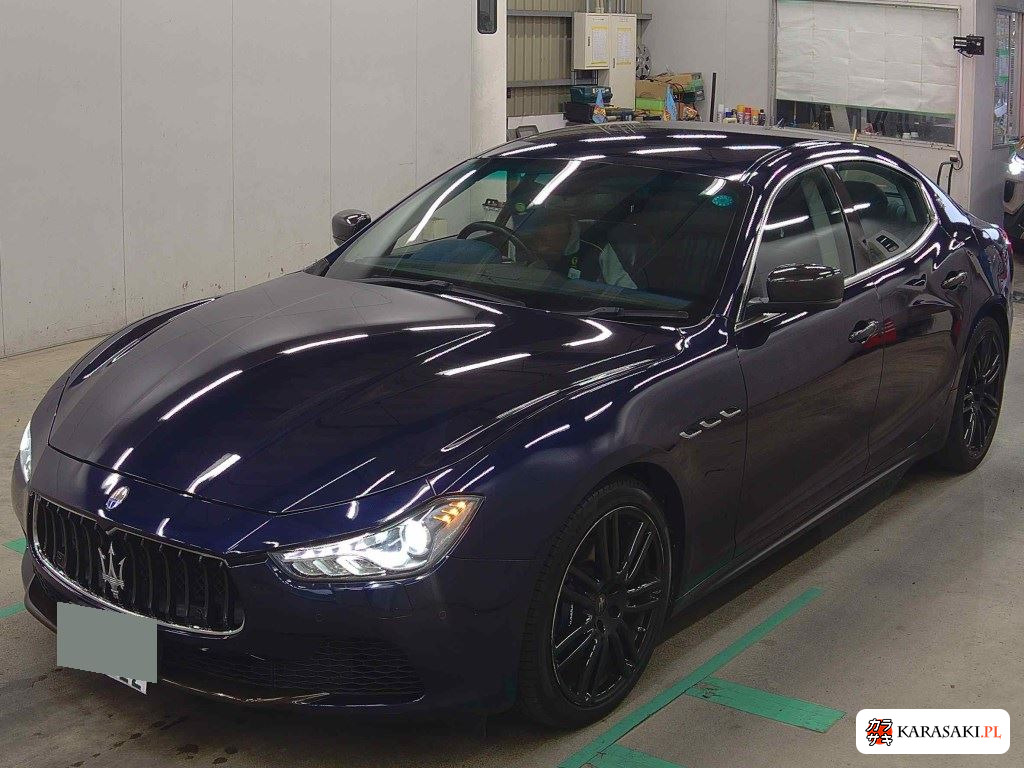
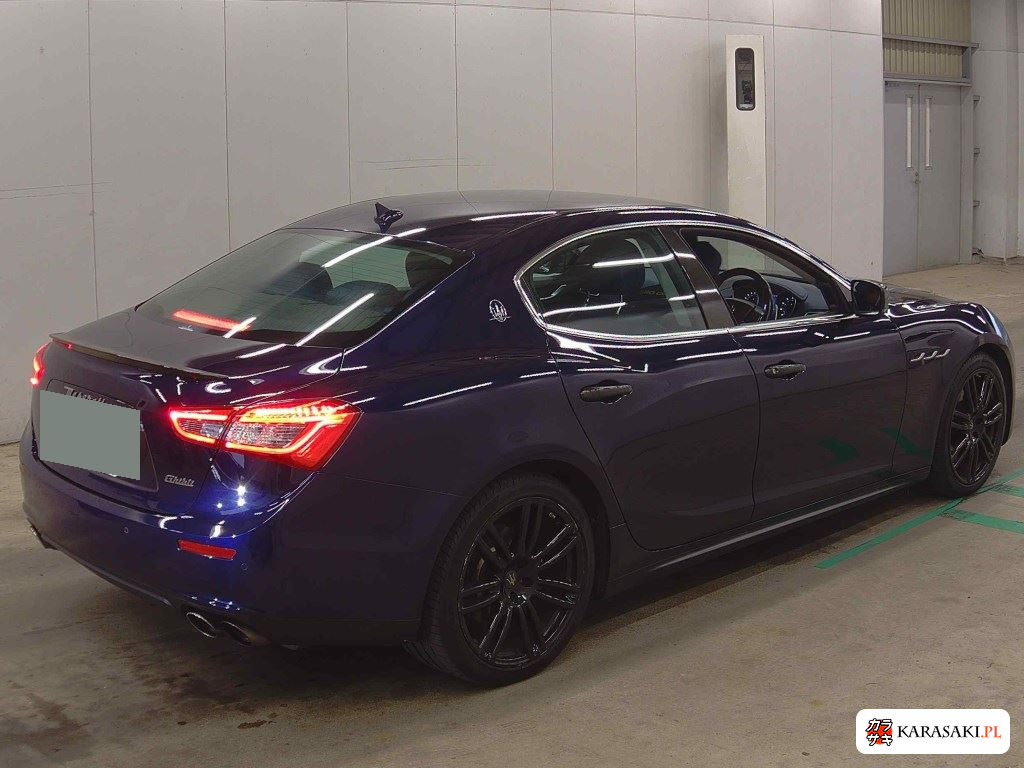
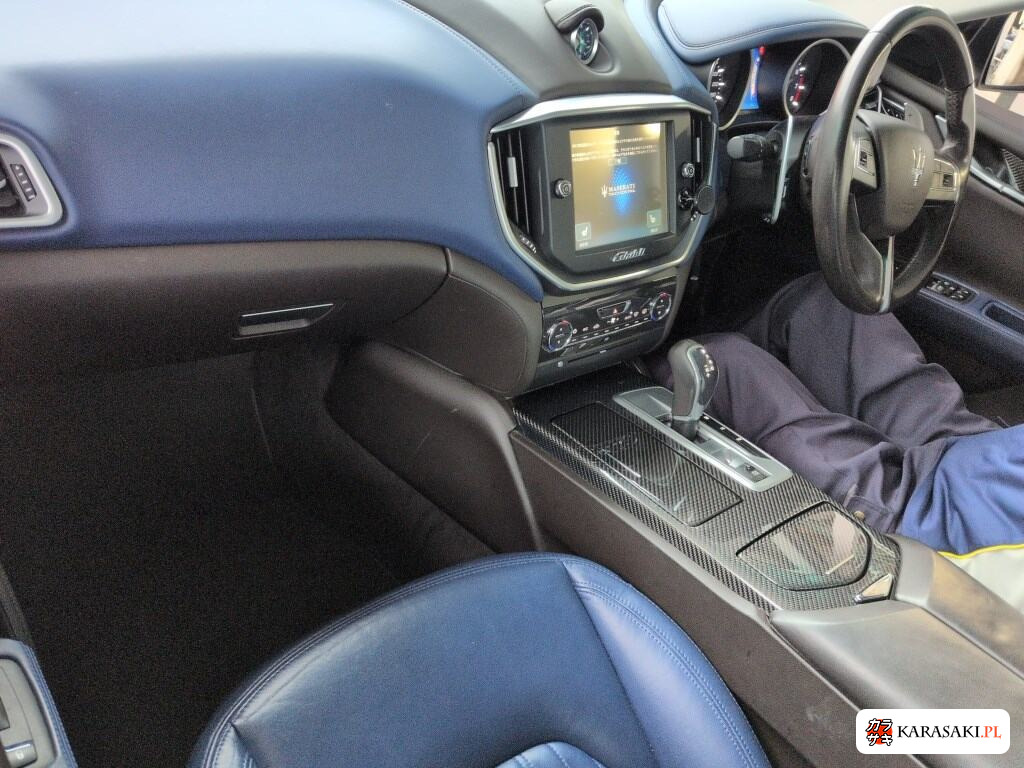
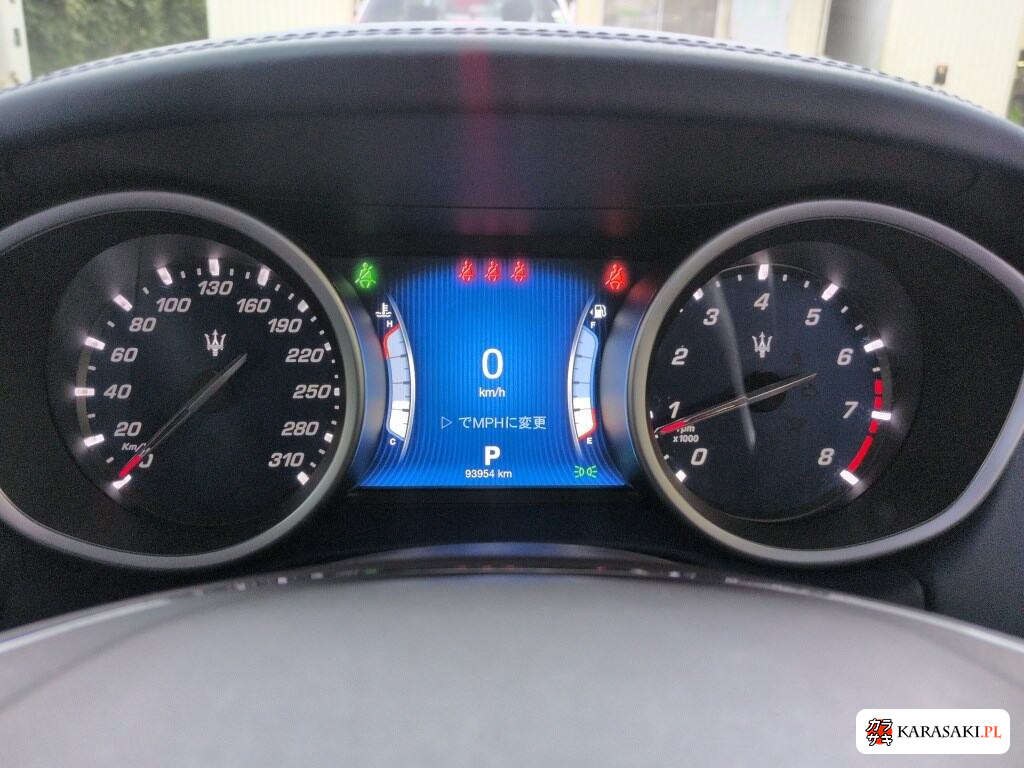
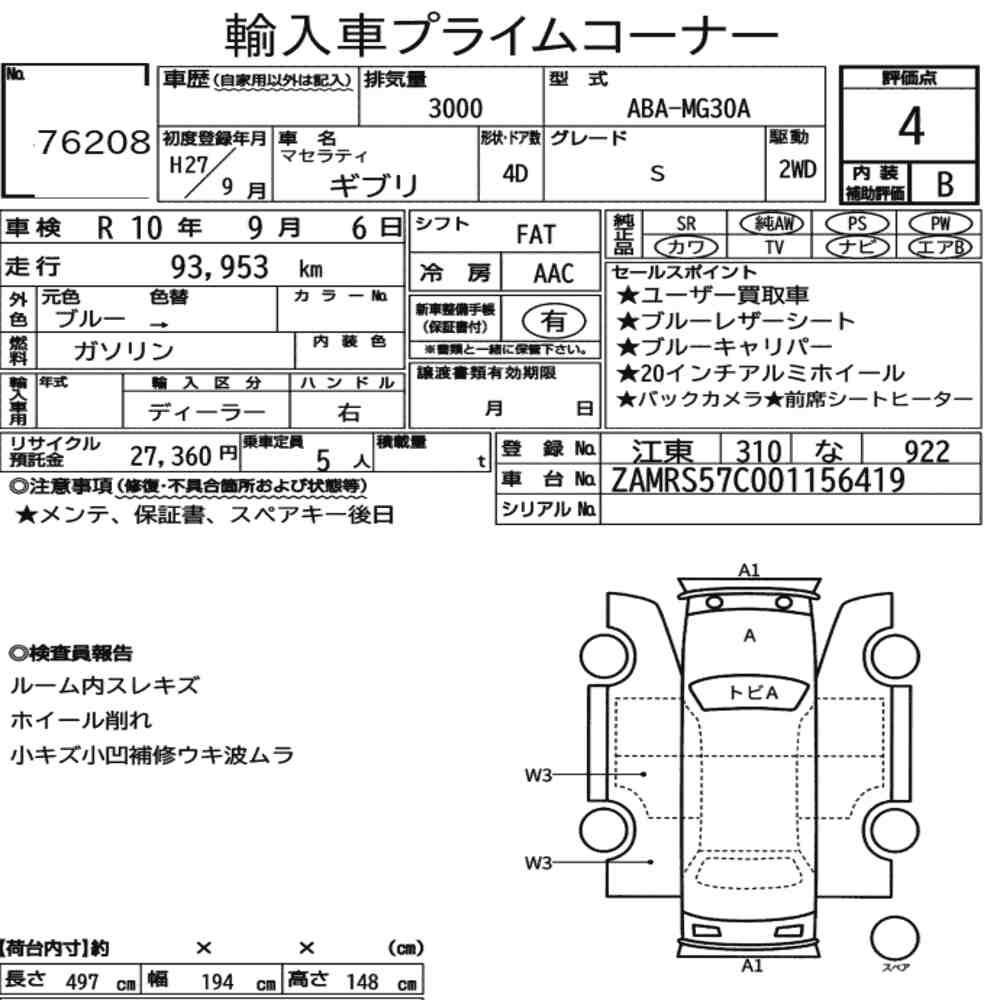

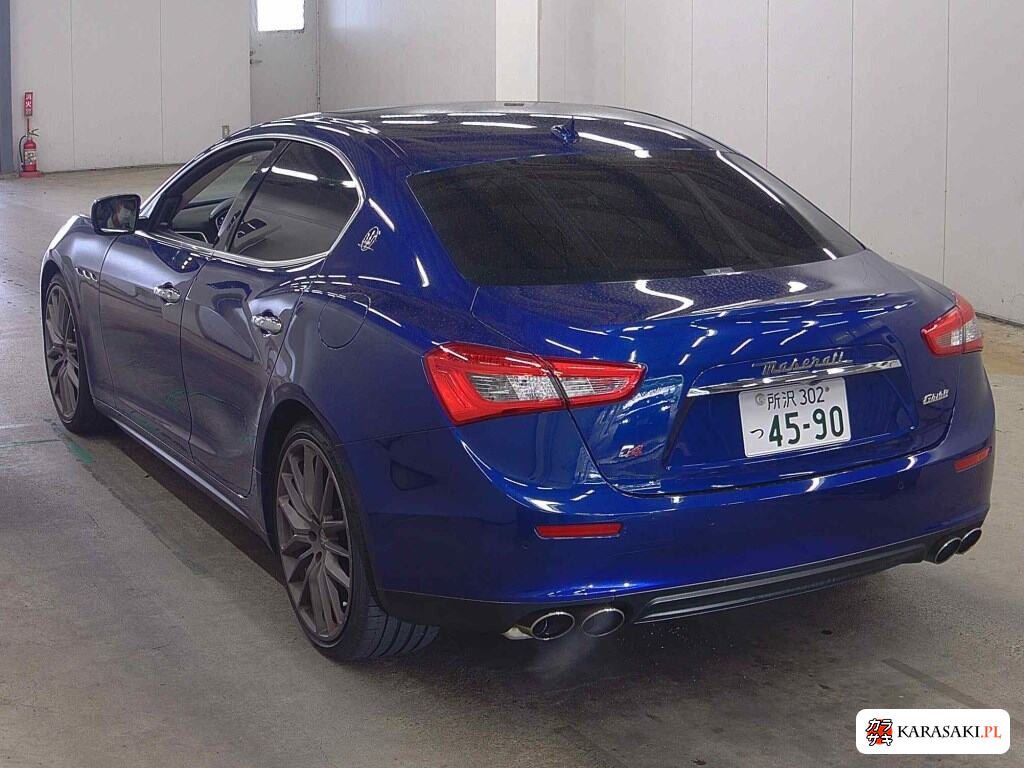
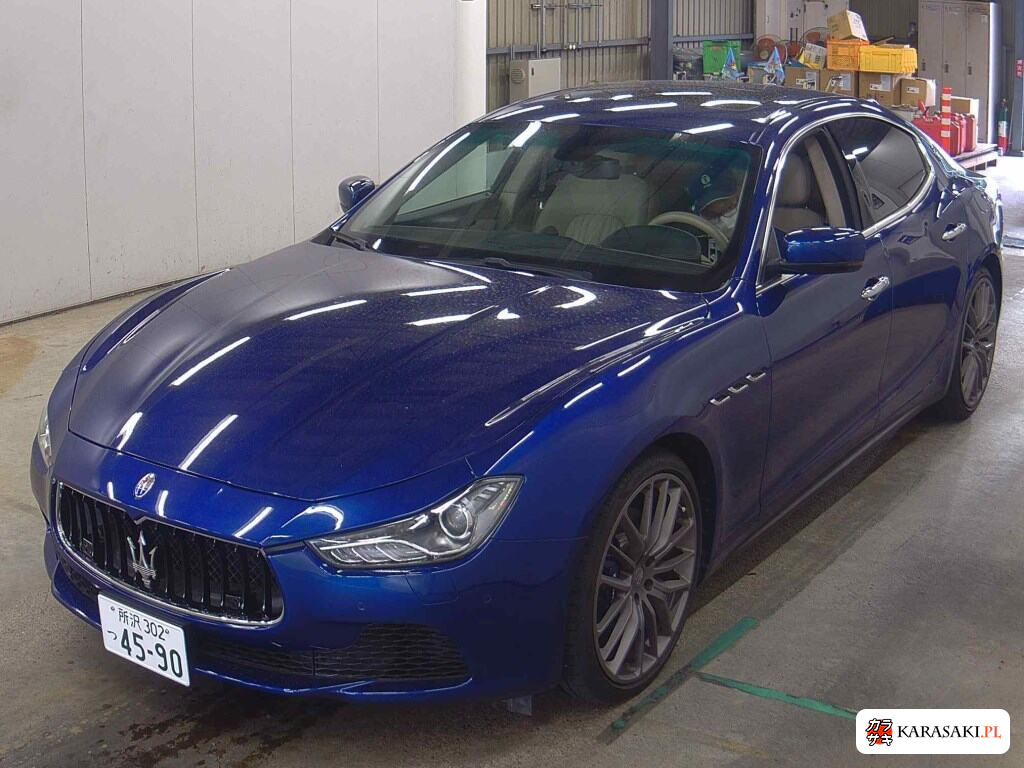
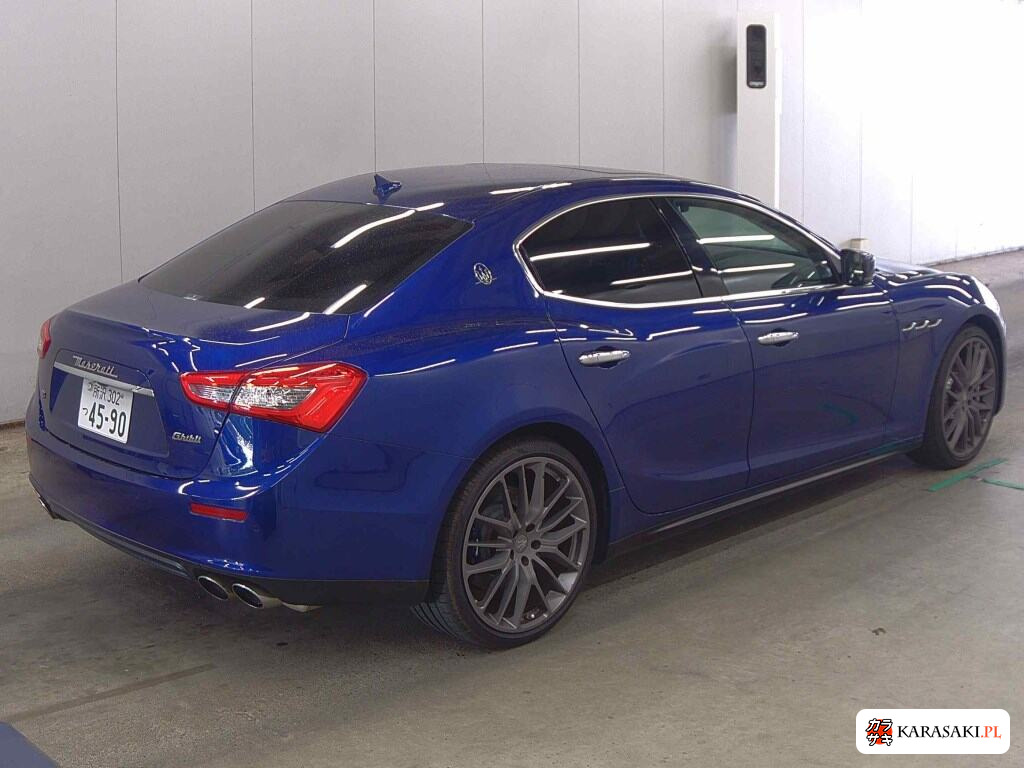
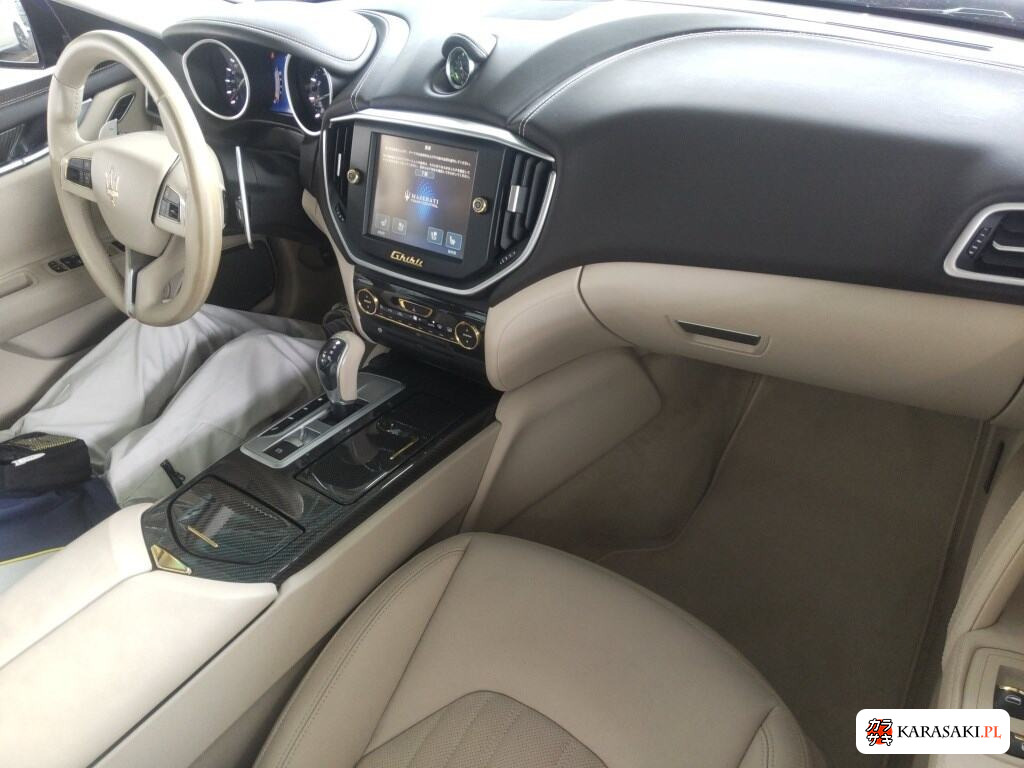
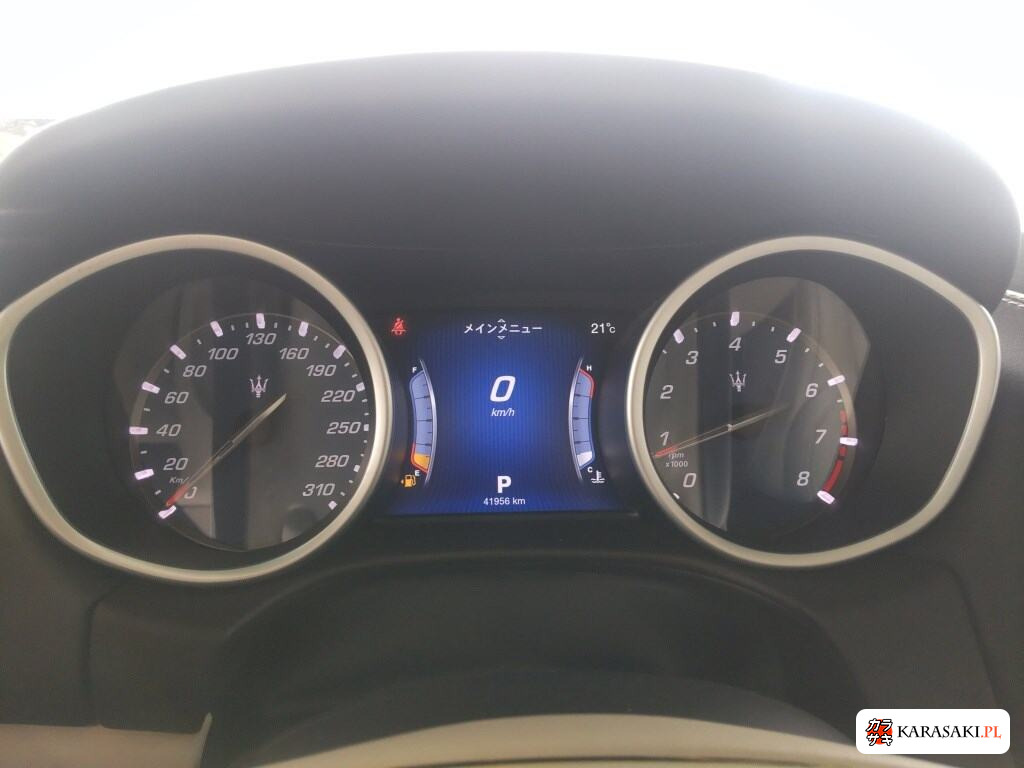
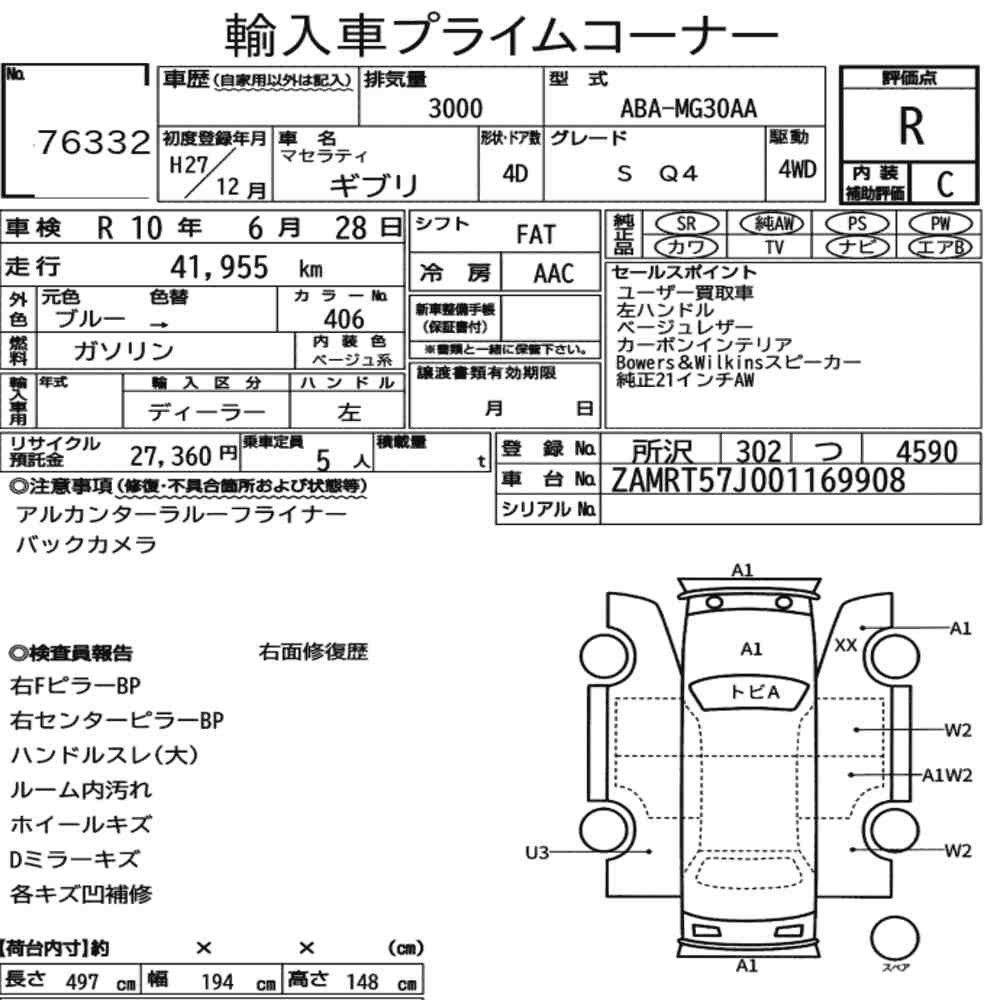

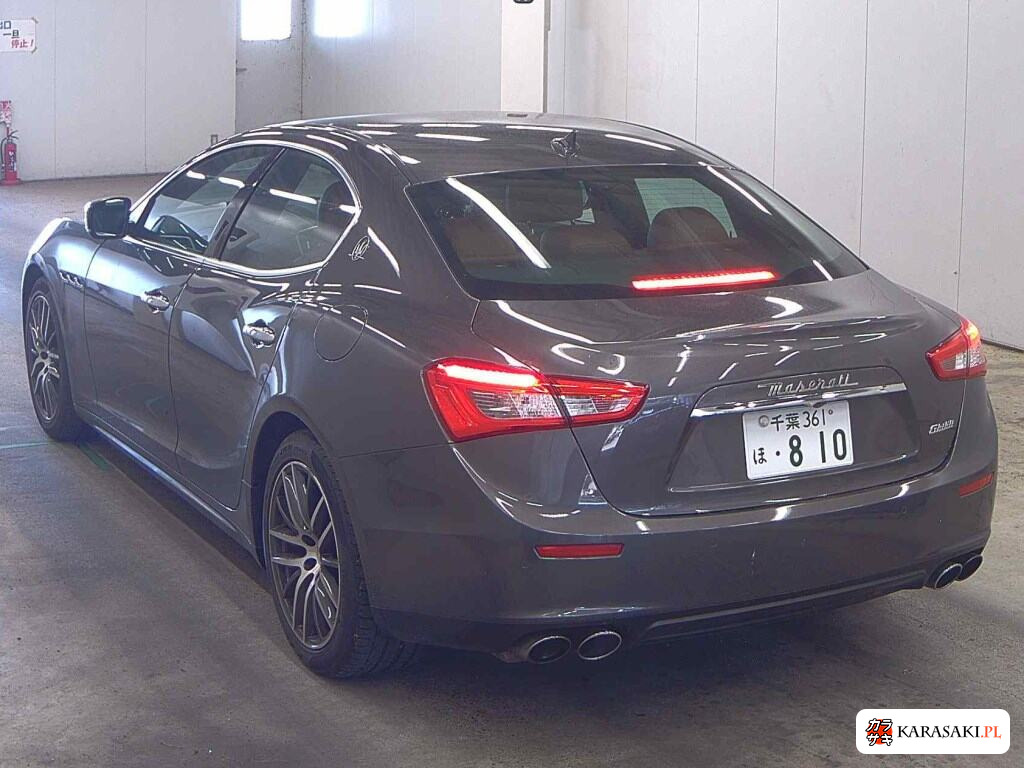
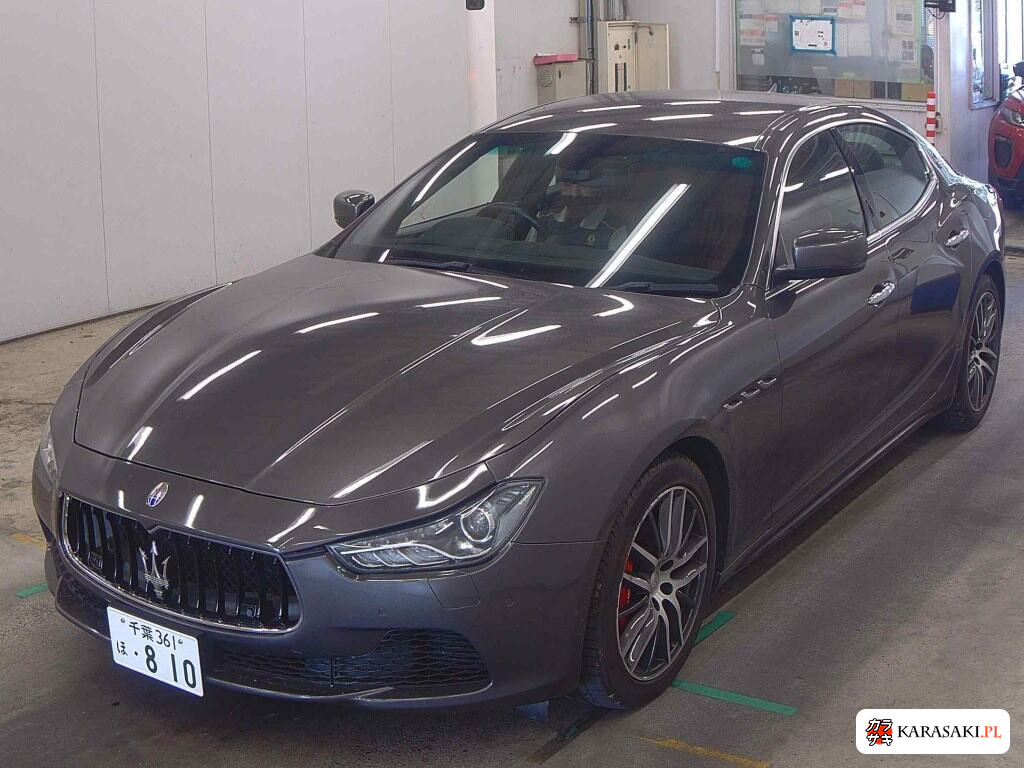
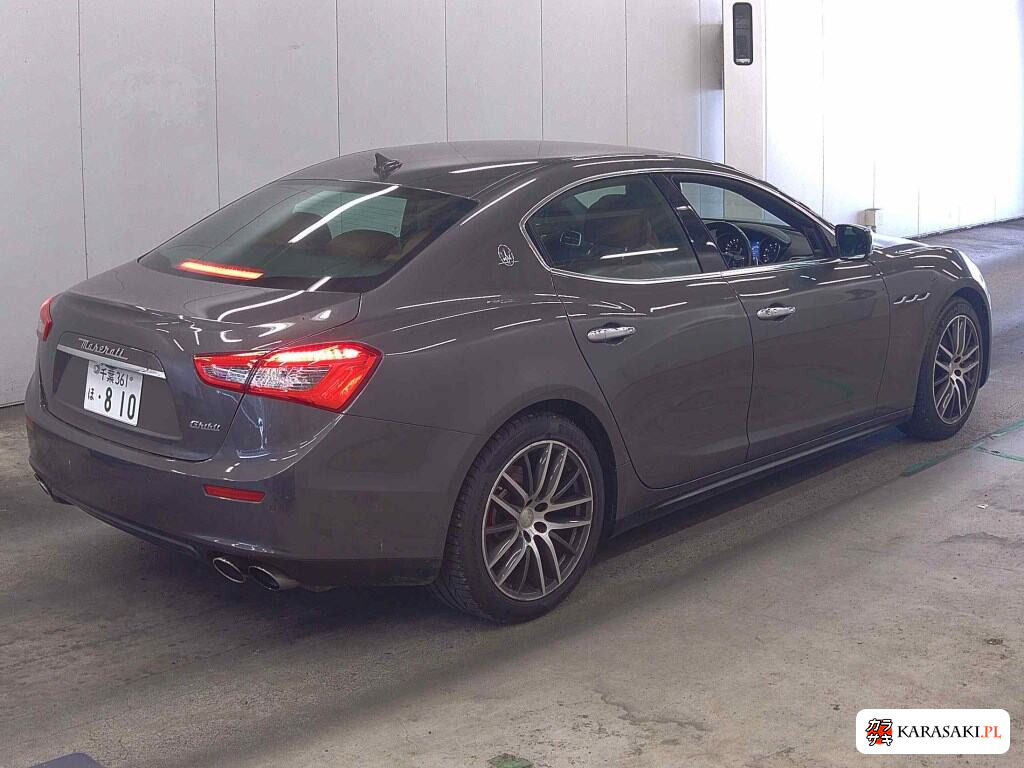
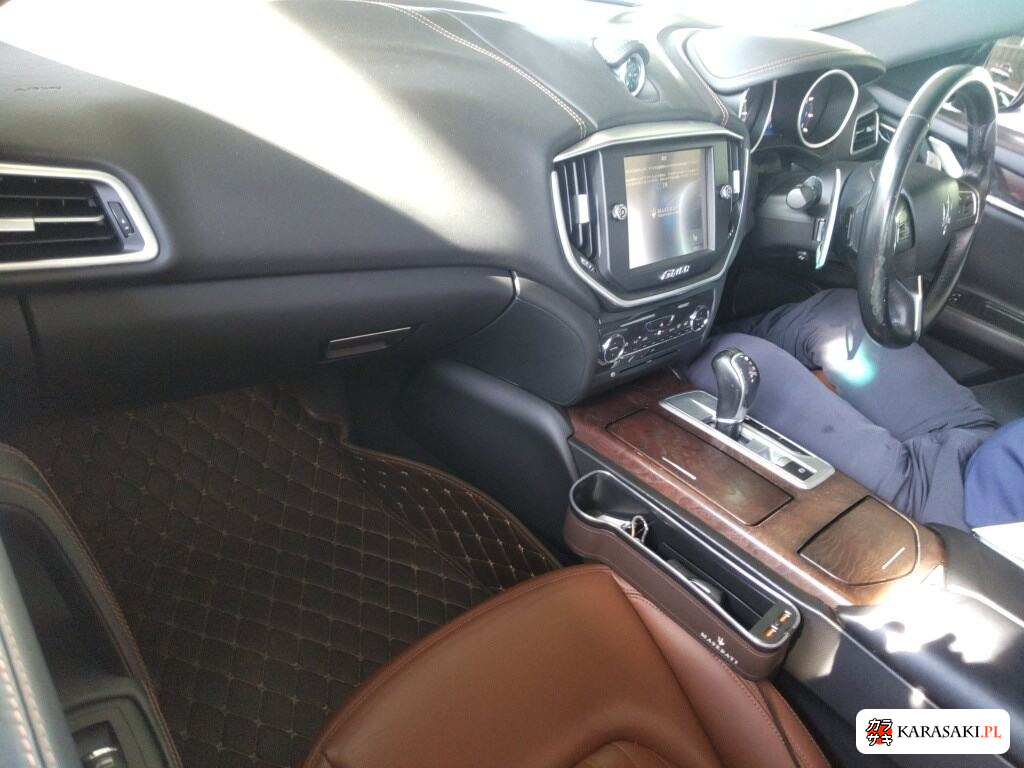
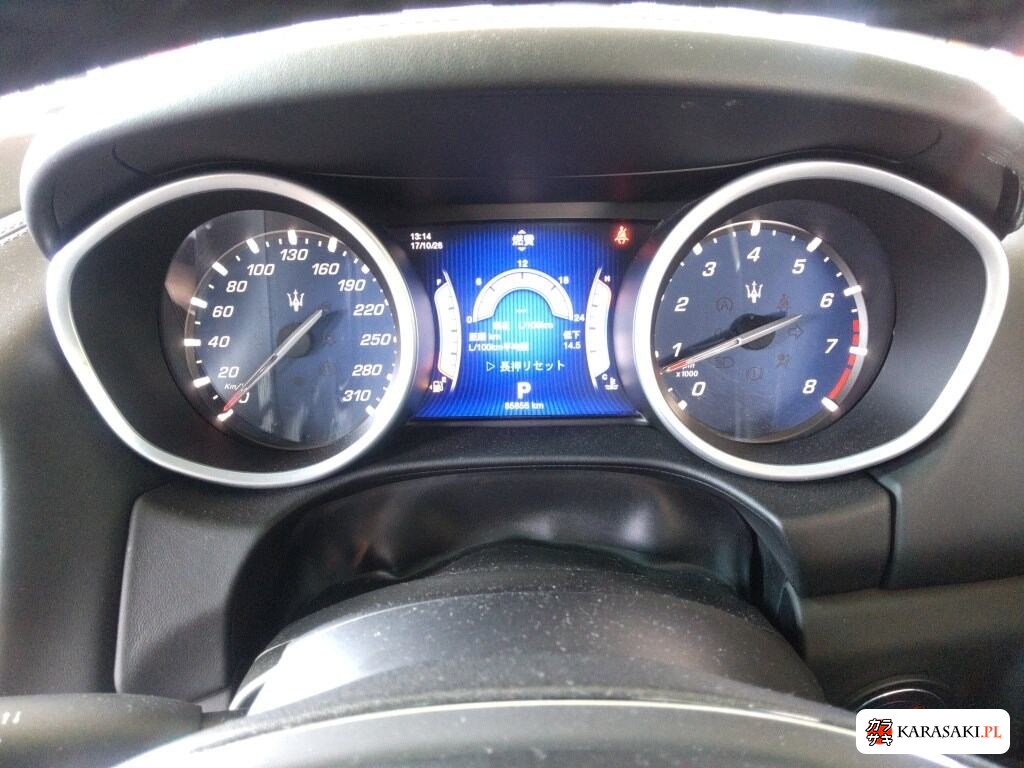
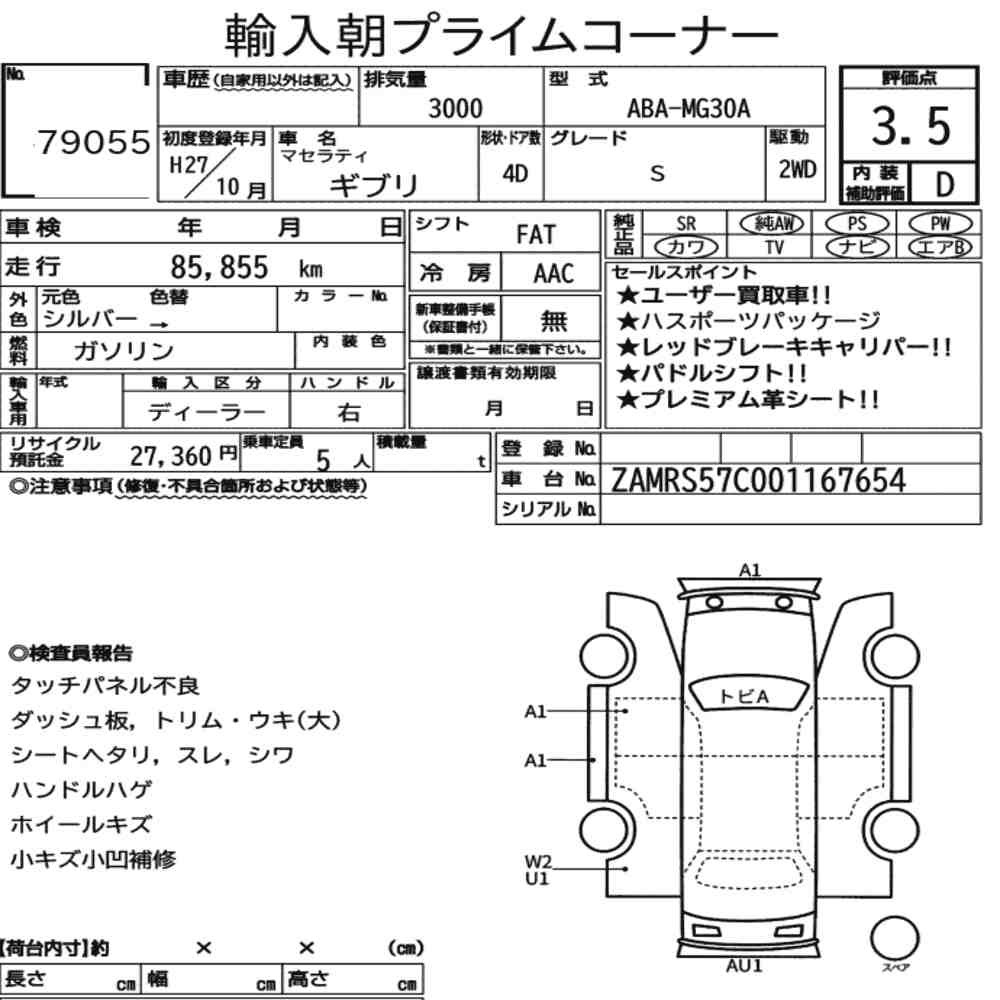
The auction pool turns over every few days. We'll watch these criteria and email you when the next one appears.
What to watch for: reliability and running costs
The Ghibli III demands service discipline rather than courage. On early petrol V6 cars (2013-2016) workshops reported flaws in the lubrication circuit and the oil pump, eliminated by an update in late 2016. The second known point is the timing gear: the chain runs on plastic guides and tensioners that grow brittle with age, and with the long factory oil intervals the chain can stretch around 120,000 km. Independent specialists recommend oil changes every 10-12 thousand kilometres and treat a metallic rattle right after a cold start as a warning sign. The diesel avoids that failure mode, but short city trips interrupt DPF regeneration, fuel dilutes the oil and the crankshaft bearings suffer; add carbon build-up in the intake and a cracking EGR cooler. S Q4 versions can leak from the transfer-case seals, and the official fix means replacing the whole module.
The electronics can be moody in small ways: air-blend actuators, seat heating mats, parking sensors and the sticky button coatings on 2013-2019 cars. The ZF 8HP automatic is considered durable as long as the transmission oil is changed roughly every 60 thousand kilometres. The practical takeaway: with this car the oil-change history matters more than the model year, and the independent auction grade helps filter out worn-out examples. We explain how to read that sheet in our guide to the USS auction sheet.
Importing a Ghibli to Poland: costs and the honest verdict
The procedure is the same as for any car from Japanese auctions: bidding through an agent, sea transport, customs clearance and registration. The Ghibli was built in Italy, so the zero duty from the EU-Japan agreement does not apply and you pay the standard 10% of the customs value. The V6 and V8 engines displace more than 2,000 cc, which means 18.6% excise, and VAT is 23%, charged on the sum of the customs value, duty and excise.
Let us run an example close to the 2019 median from our data, at a rate of roughly 0.023 PLN per yen. A starting price of 2,180,000 yen is about 50,000 PLN; remember it is the lower anchor, as bidding usually ends higher. With auction fees and freight, assume a customs value of 63,000 PLN:
- 10% duty: 6,300 PLN,
- 18.6% excise on the customs value plus duty: 12,890 PLN,
- 23% VAT on the sum of the above: 18,904 PLN.
The levies add up to about 38,000 PLN, and the Ghibli costs about 101,000 PLN after clearance, before the agent's fee and registration. At the same time, per our measurement of 15 July 2026, Poland's largest classifieds site carried 81 Ghibli listings, and clean 2017-2019 cars with 47-96 thousand kilometres were asking around 80-96 thousand zloty. We are comparing the real cost of importing with asking prices that usually leave room to negotiate, so the honest verdict is: importing a Ghibli in a popular specification is not a price play. It makes sense when you want a car in a condition the local market cannot offer: half the mileage, an independent grade and a verifiable history, or a version that is nearly unobtainable here, like the Trofeo.
There is one more calculation that changes the rules: the Ghibli Hybrid. Its engine displaces 1,998 cc, inside the 2,000 cc threshold, and a February 2026 interpretation by the Polish Ministry of Finance (PAD6.8101.1.2026) confirmed that the hybrid excise rates also cover mild hybrids. Instead of 18.6% you then pay 1.55%: on our example that is about 1,074 PLN instead of 12,890 PLN, nearly twelve thousand zloty saved on excise alone. Confirm the classification of a specific car before buying; the full rules are in our guide to the excise duty on a car from Japan. The complete cost mechanics are in the guide how much importing a car from Japan costs, and current cars are in the Maserati Ghibli catalog.
Frequently asked questions about the Maserati Ghibli
Is the Maserati Ghibli reliable?
The Ghibli demands service discipline. On petrol V6 cars from 2013-2016 workshops reported lubrication-circuit flaws, eliminated by an update in late 2016, and the plastic timing guides do not forgive long oil intervals: a safe change is every 10-12 thousand kilometres. The diesel prefers motorways to city traffic because of the DPF and the crank bearings. A car with a documented oil history matters more than the model year.
How much does a Maserati Ghibli from Japan cost?
The median starting price of the 167 Ghiblis in our catalog is 1,180,000 yen, about 27,000 PLN before bidding, transport and levies. A worked example close to the 2019 median: a starting price of 2,180,000 yen lands at about 101,000 PLN after duty, excise and VAT, before the agent's fee. Treat it as the lower anchor, since bidding usually ends higher.
How does the Ghibli differ from the Quattroporte?
The Ghibli sits on a shortened Quattroporte platform: its 2.99 m wheelbase is roughly 20 cm shorter and the car measures 4.97 m. The Quattroporte is a full-size limousine, while the Ghibli targets the E-segment and a sportier drive. The engine ranges largely overlap, including the Ferrari-built F160 V6.
When did Maserati Ghibli production end?
Production ended in December 2023, after a decade on the market and more than one hundred thousand cars built; the last model years are 2024. The send-off was the 334 Ultima, limited to 103 units, with the last V8 engine in the brand's history. The used market, including Japanese auctions, still offers wide supply.
Summary
The Maserati Ghibli III is the cheapest way into the Trident world and a car with two faces: Ferrari-built engines on one side, steep depreciation on the other. Japanese auctions are an unusually good source for it, because Japan was one of the model's main markets, roughly every third car is left-hand drive, and the mileage medians (37,000 km for model year 2019, 20,500 km for 2021) are out of reach in local classifieds. The import maths must stay honest, though: at the median starting price and with full levies, a 2019 car lands at about 101,000 PLN after clearance, comparable with Polish asking prices. The import wins on condition, history and rare versions, and with the Hybrid also on the 1.55% excise instead of 18.6%. We cover the brand's V8 coupé in our guide to the Maserati GranTurismo from Japan.
This overview is for information only. Duty, excise and VAT rates are statutory, but the final amounts depend on the exchange rate, the customs valuation, the classification and the paperwork of a specific car, so confirm the calculation with a customs agency or tax advisor before buying.


