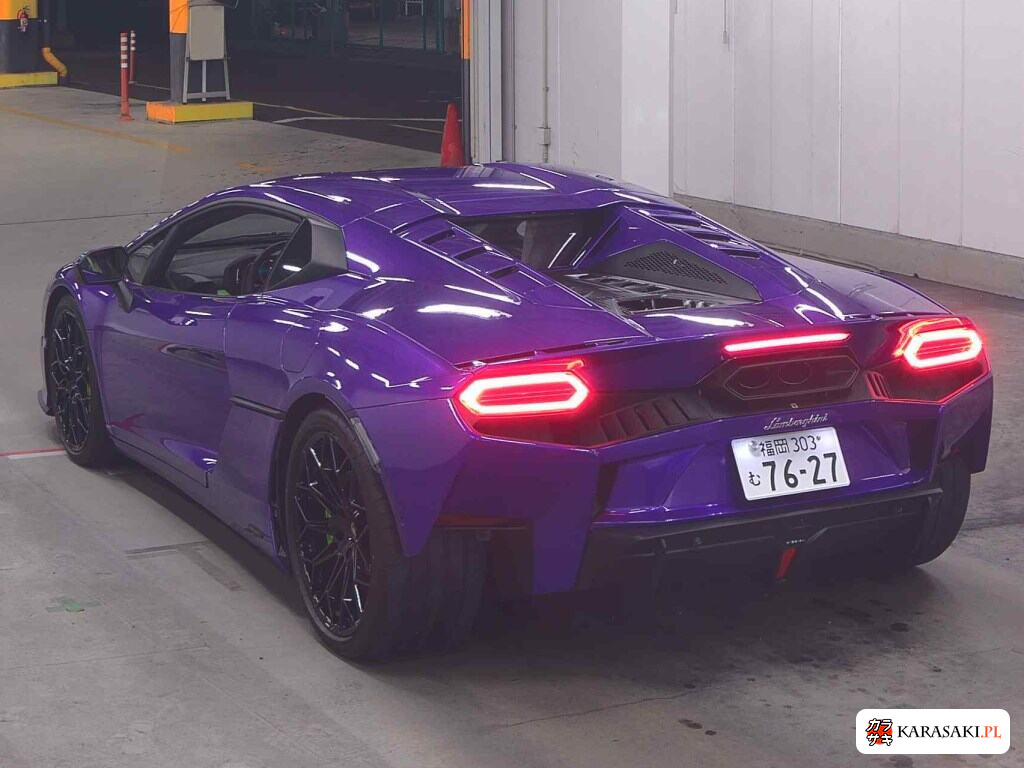
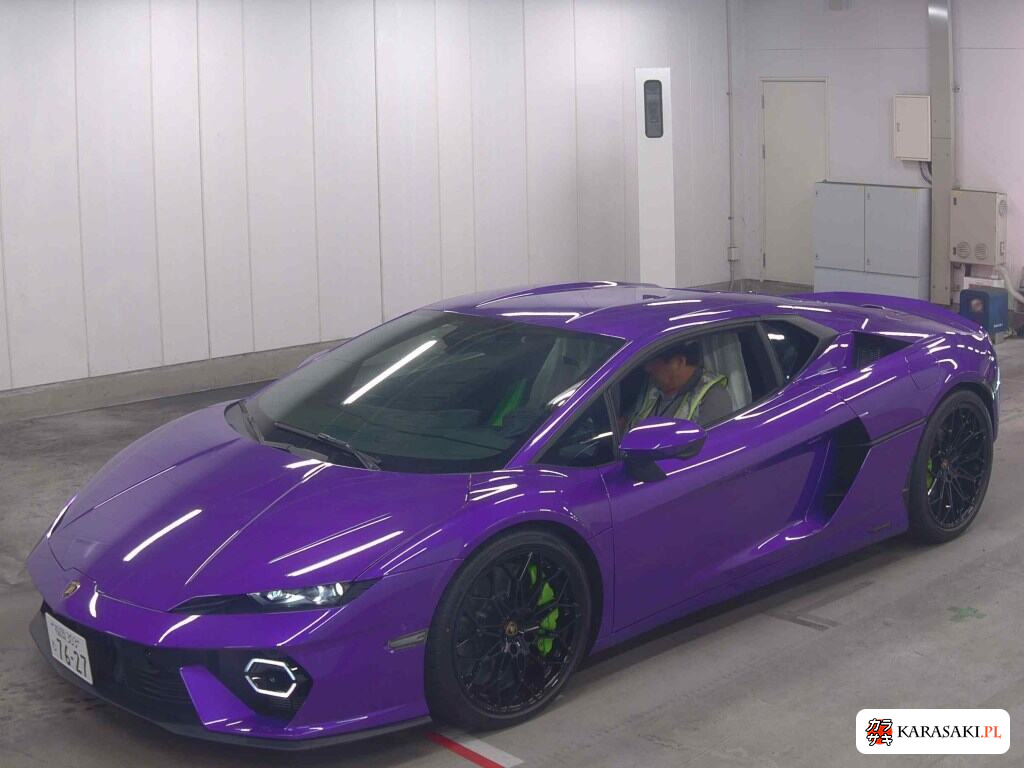
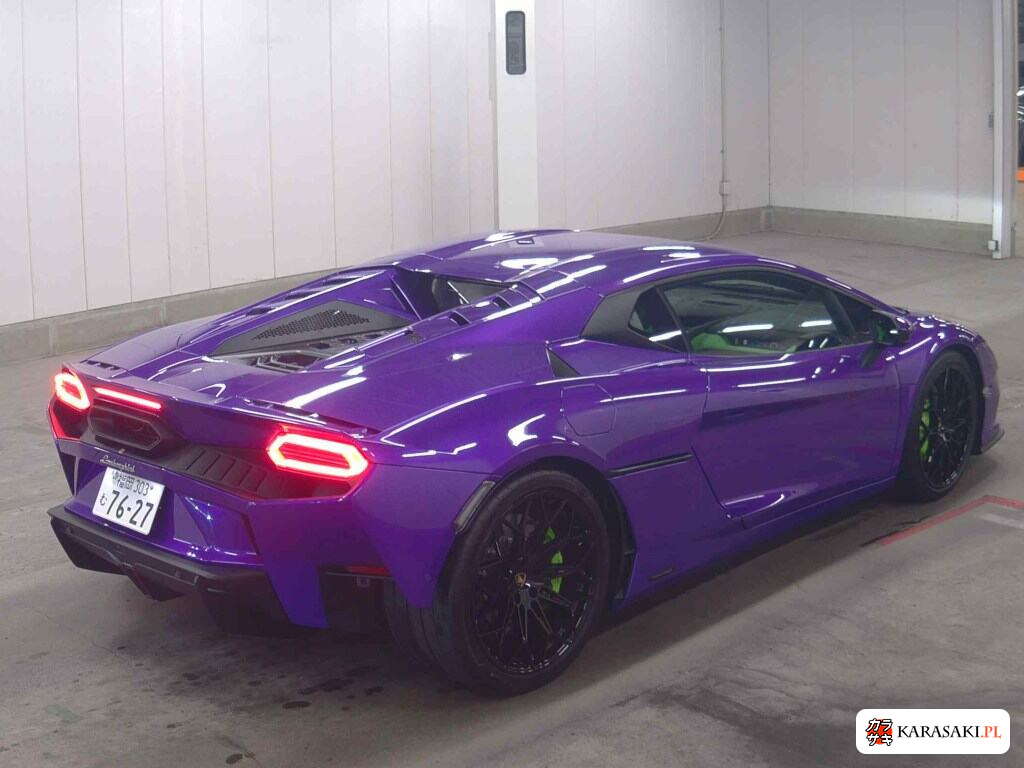
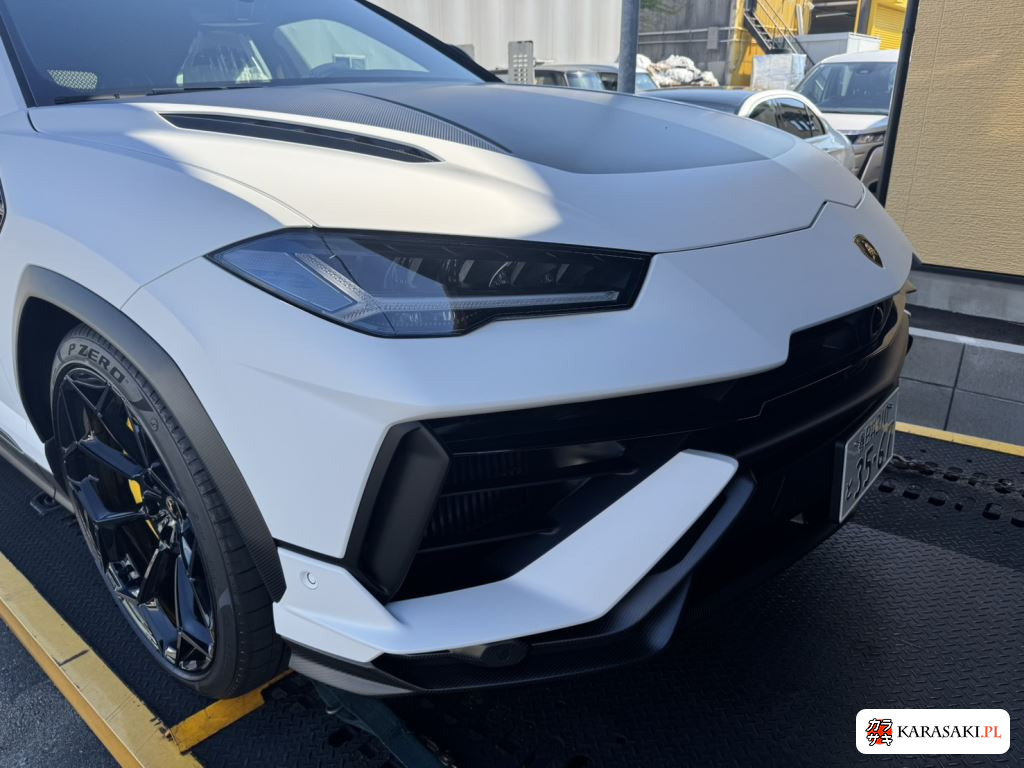
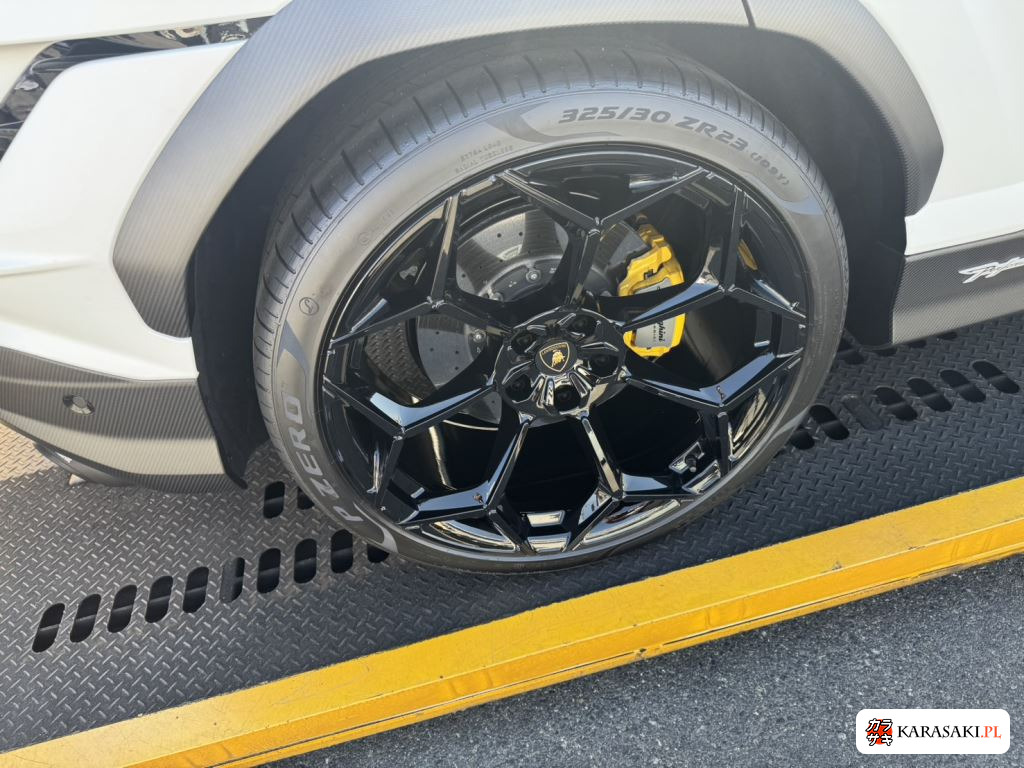
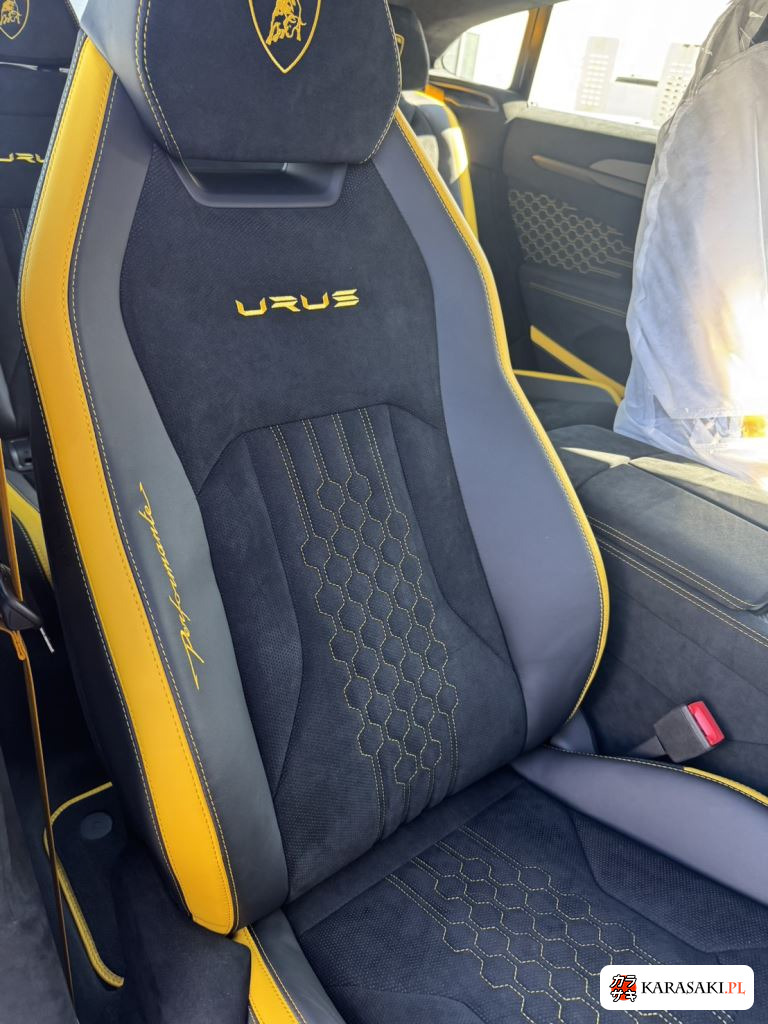
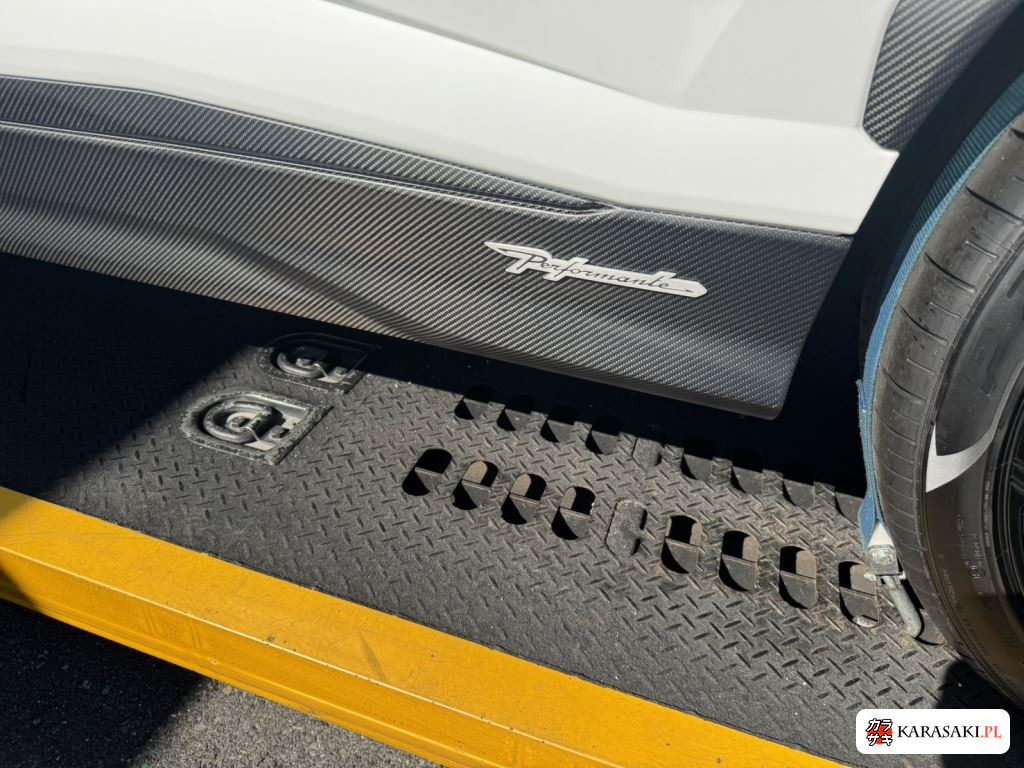
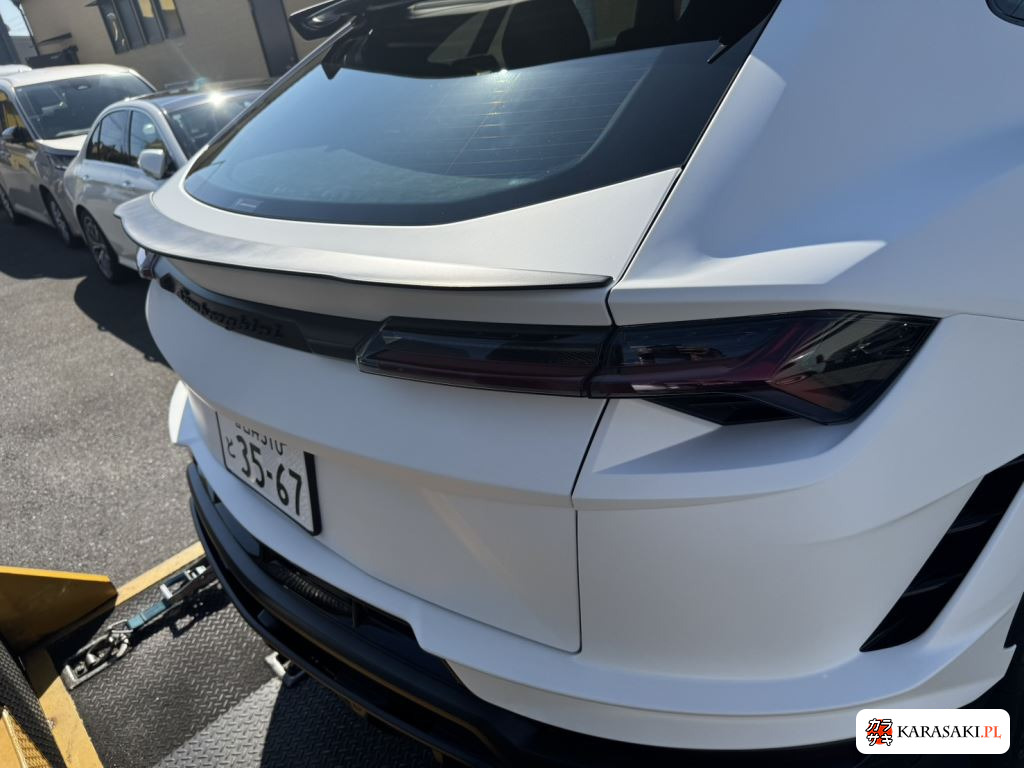
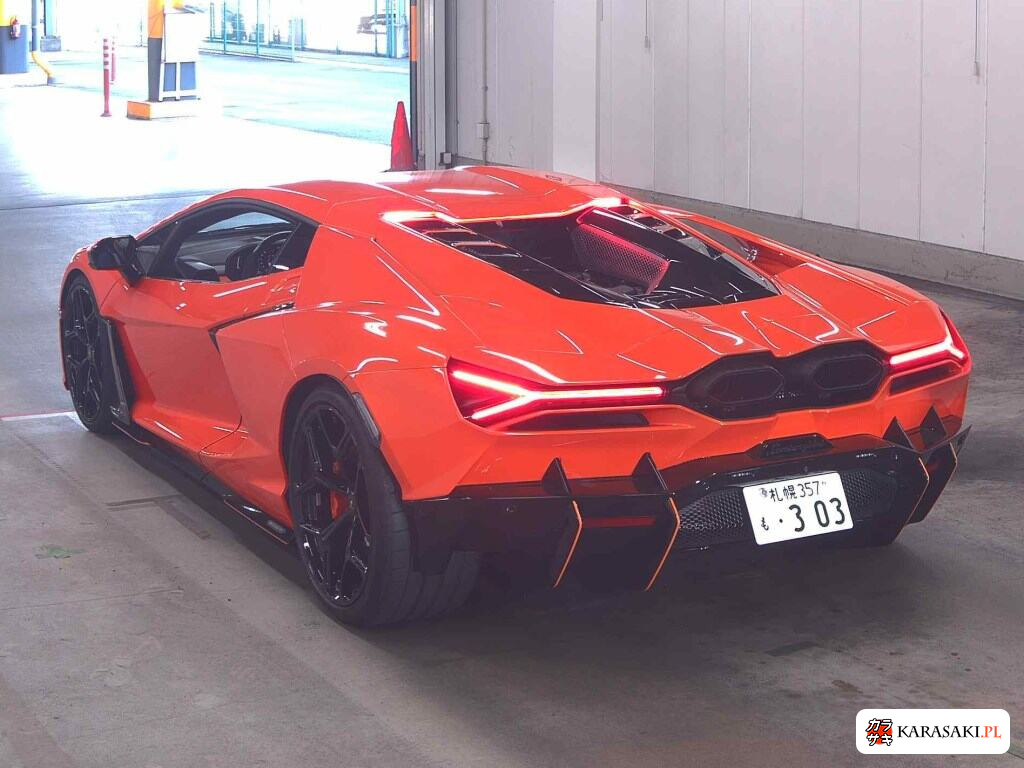
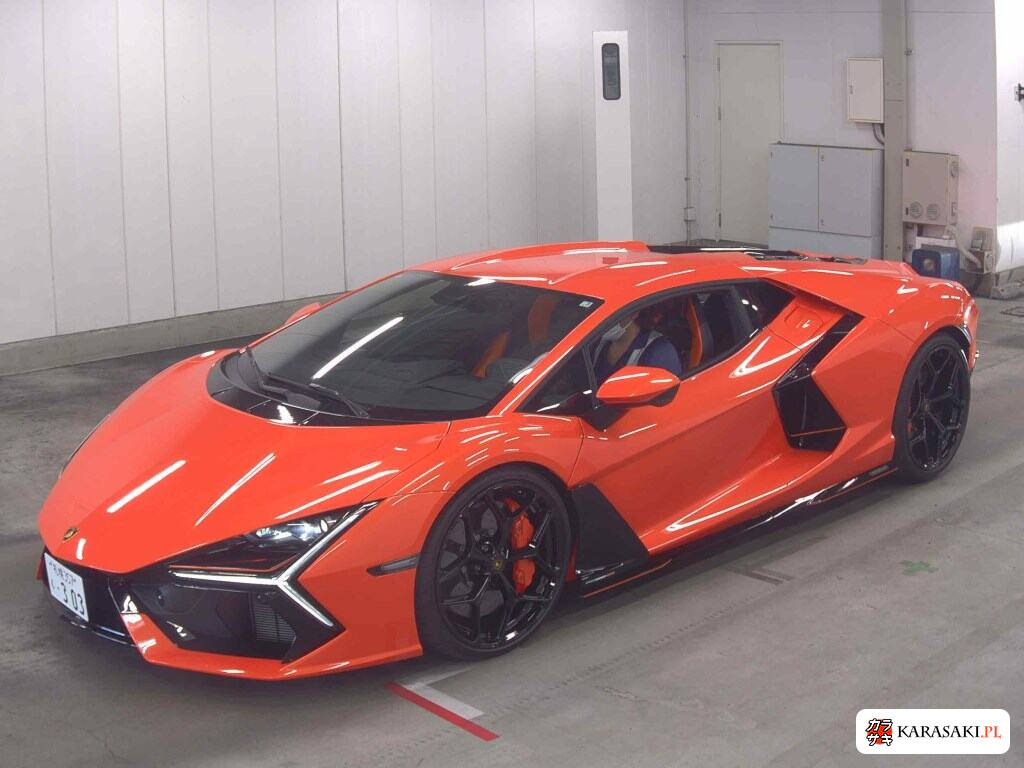
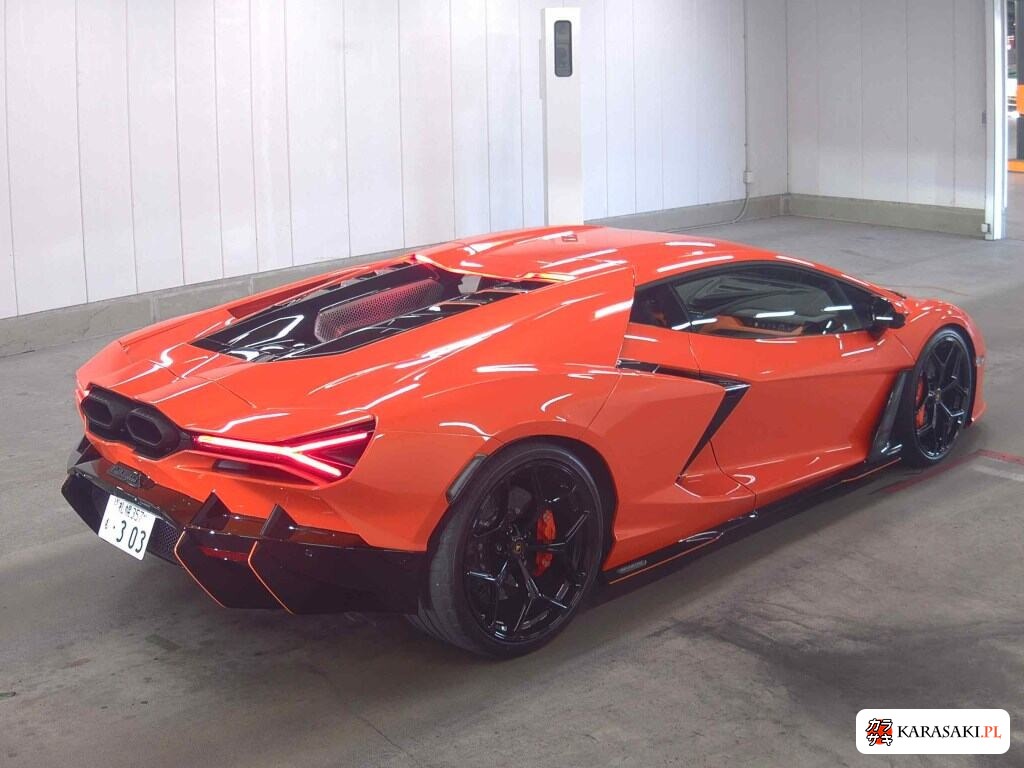
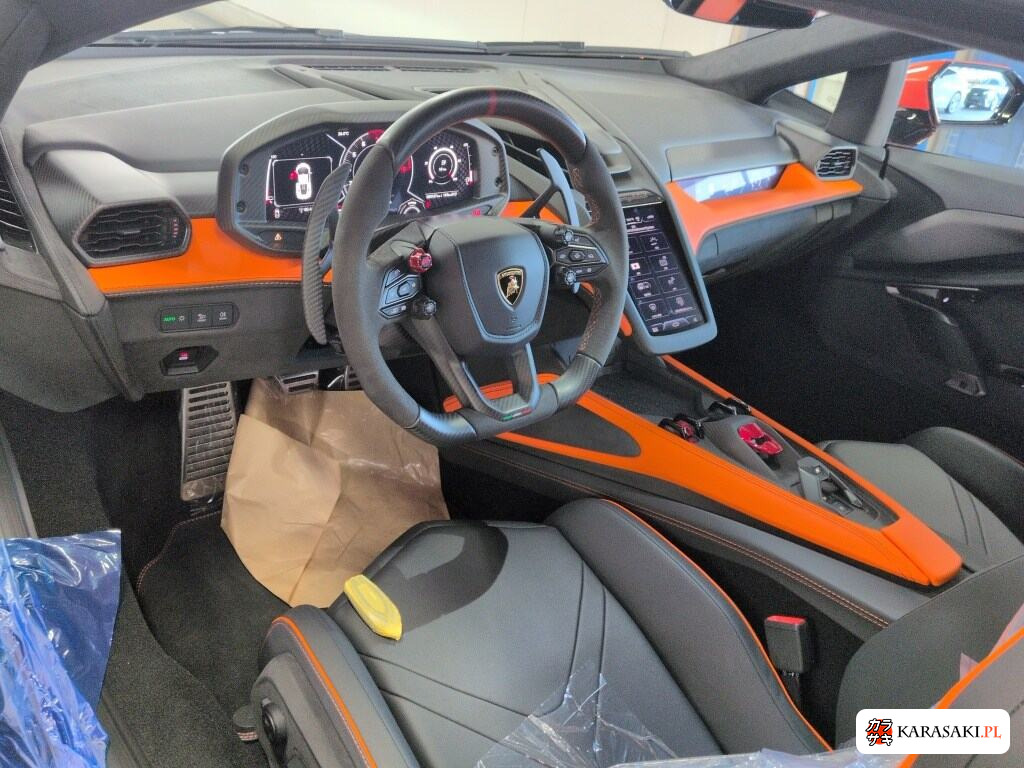
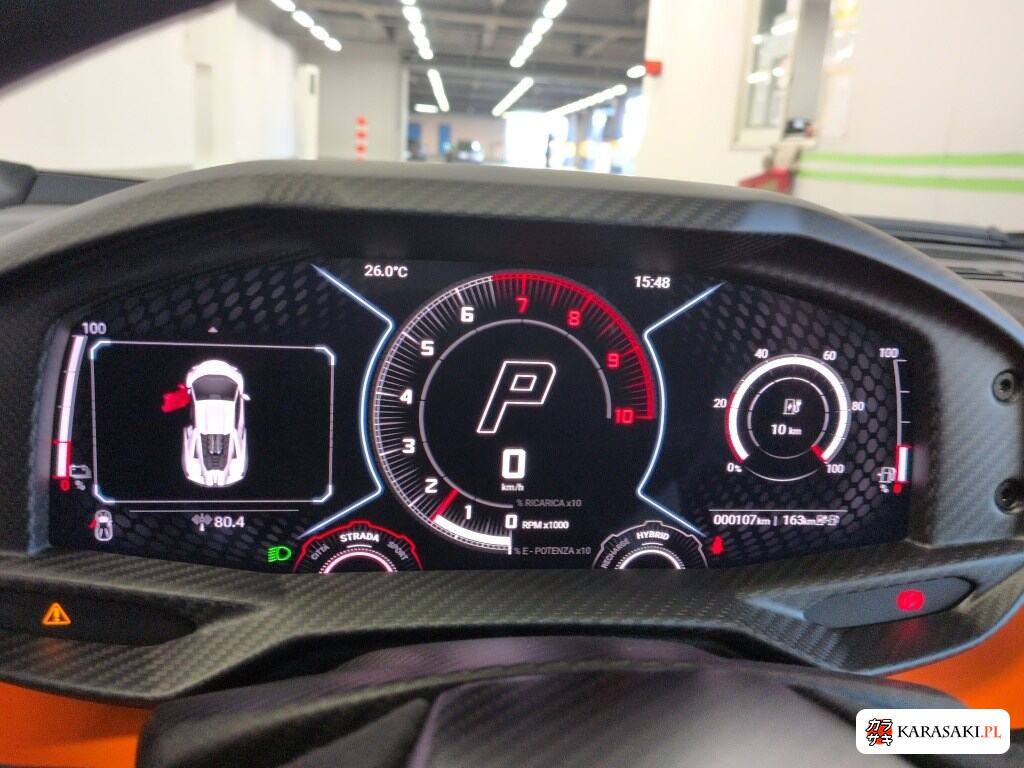
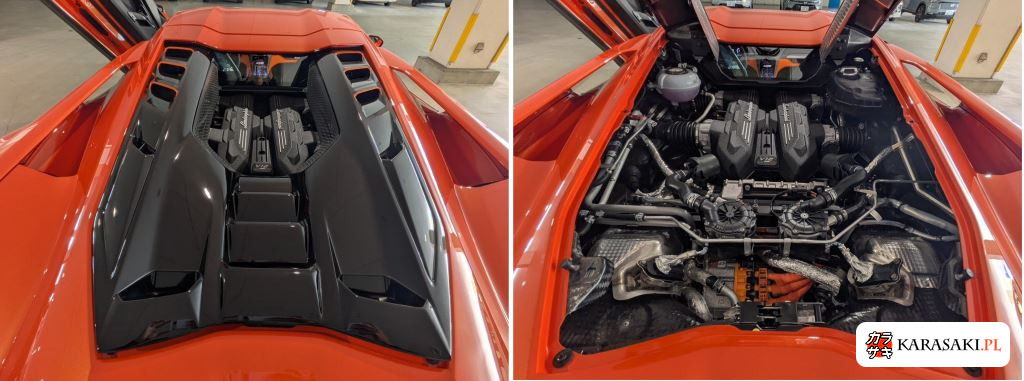
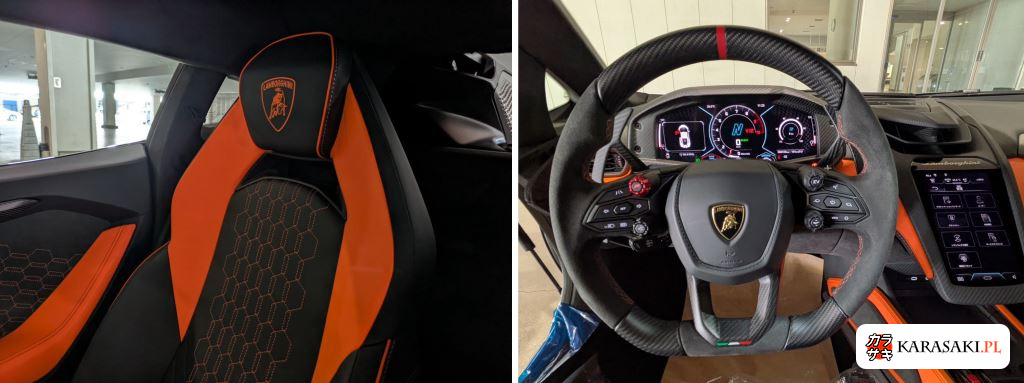
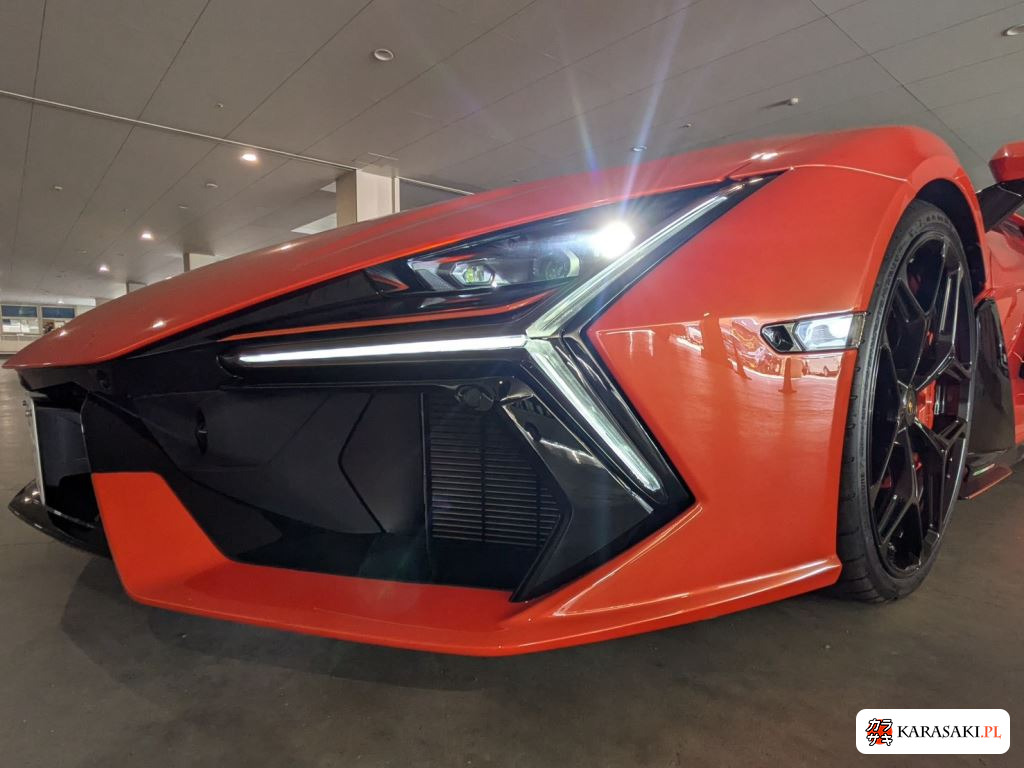
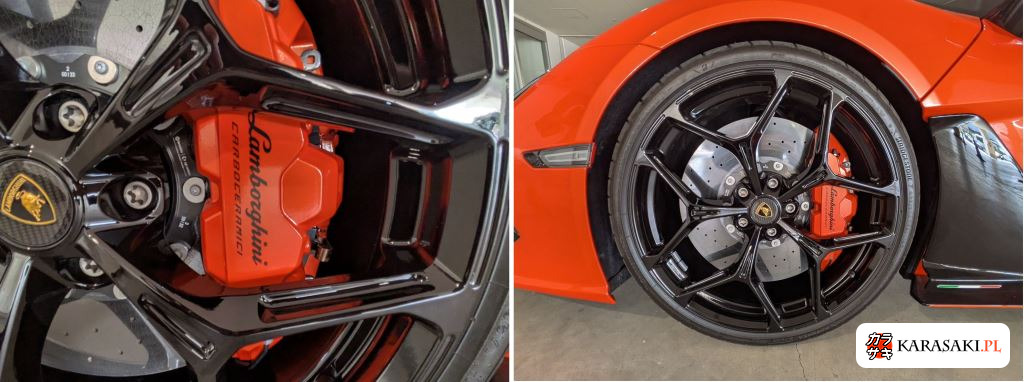
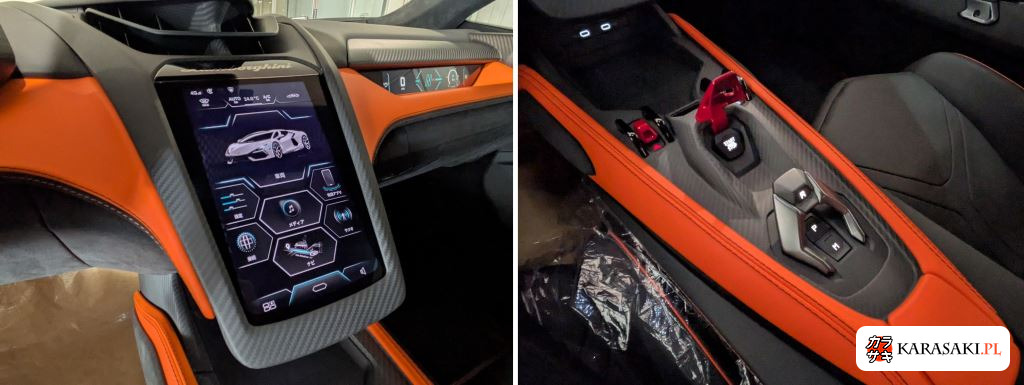
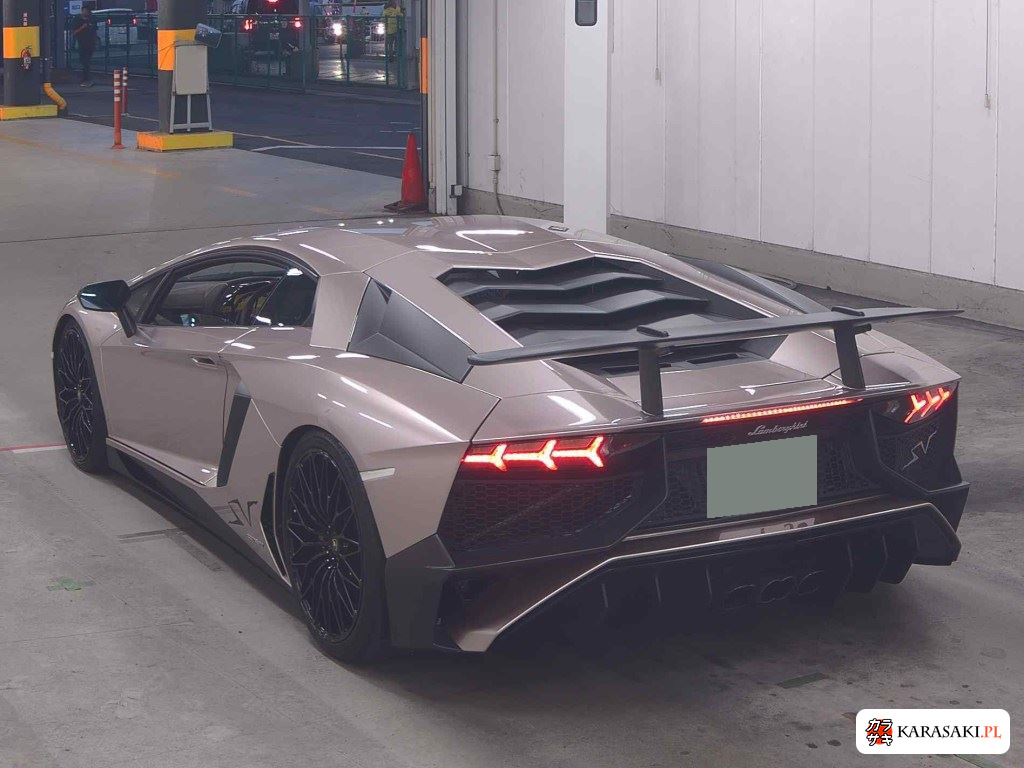
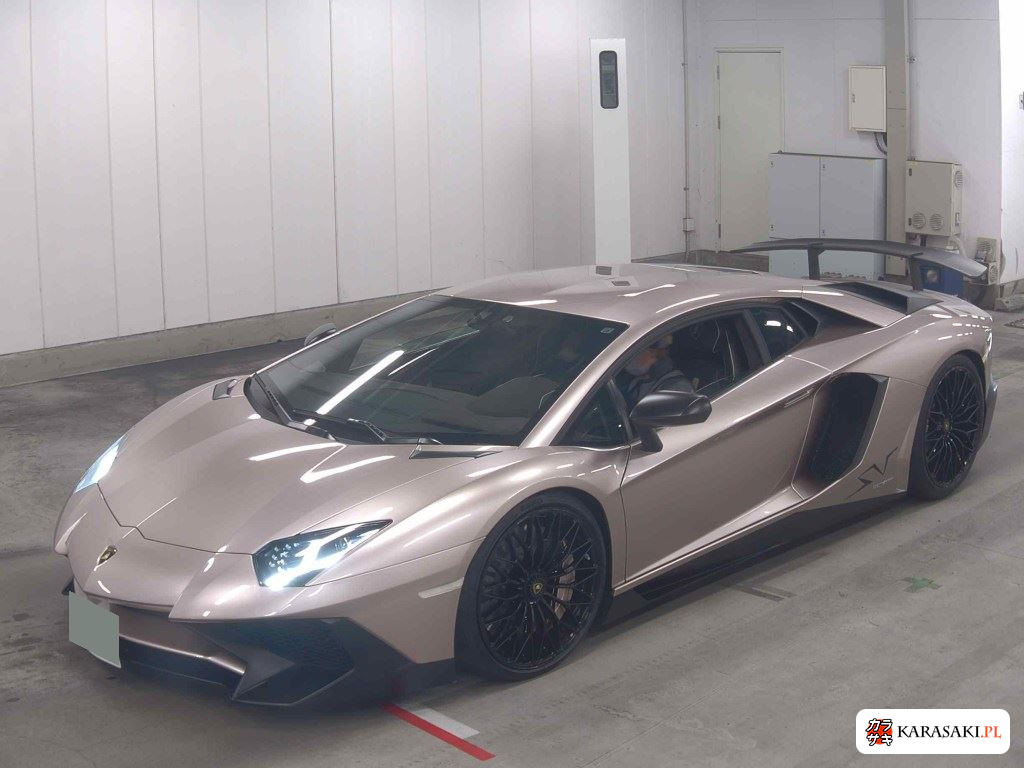
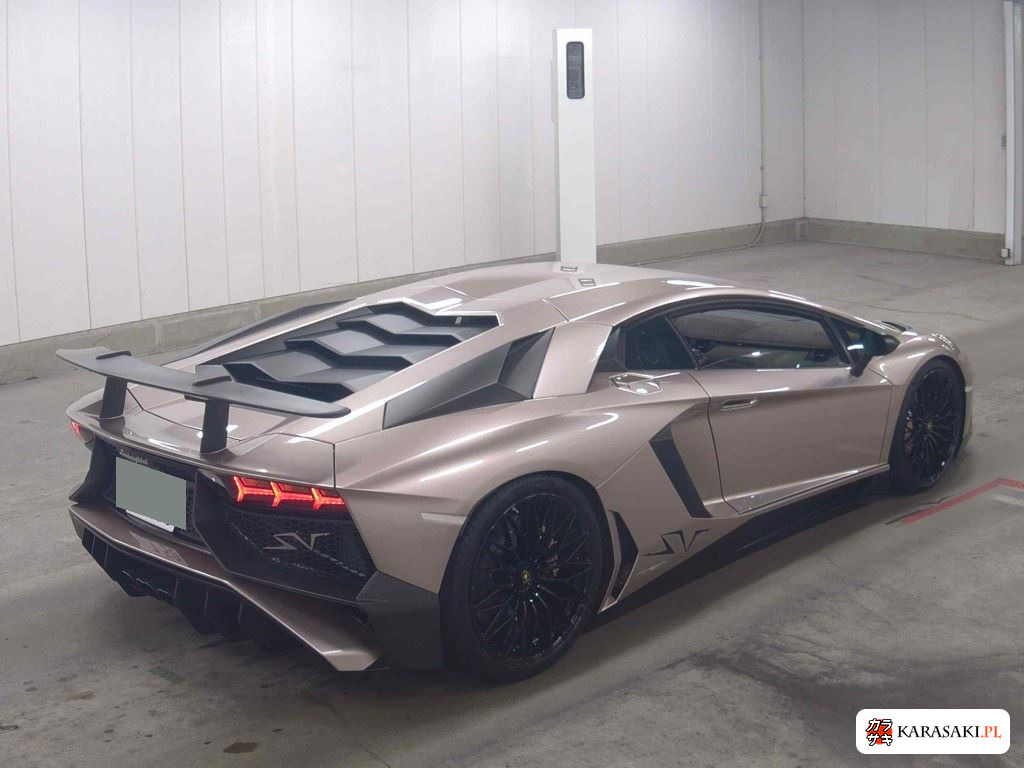
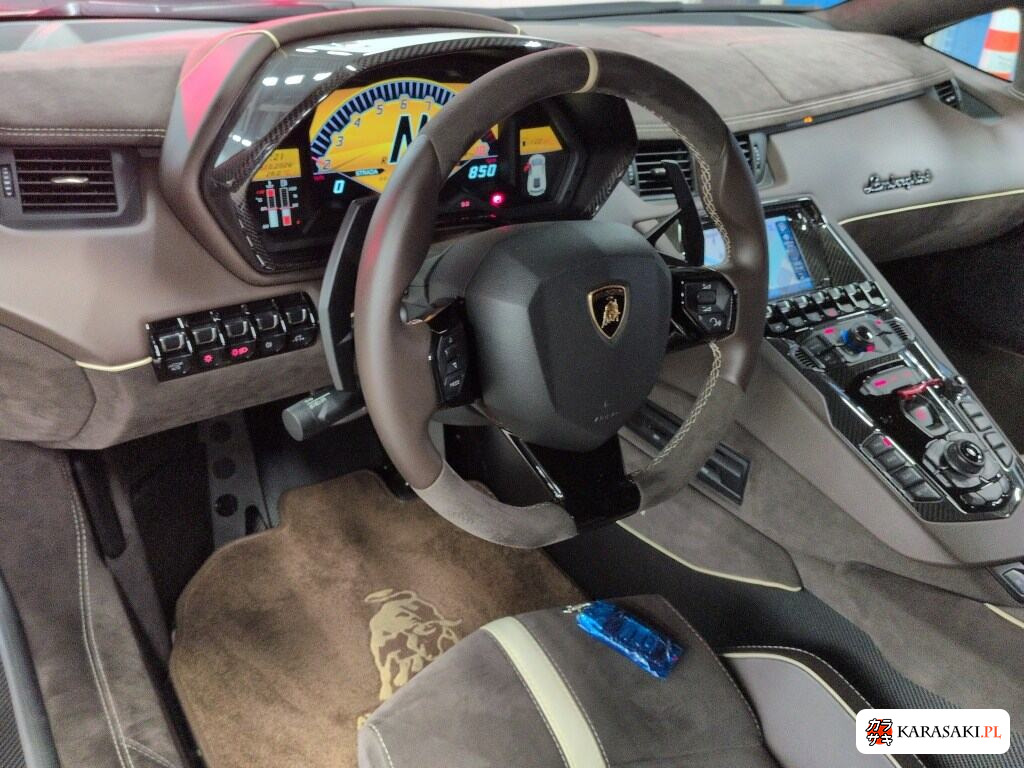
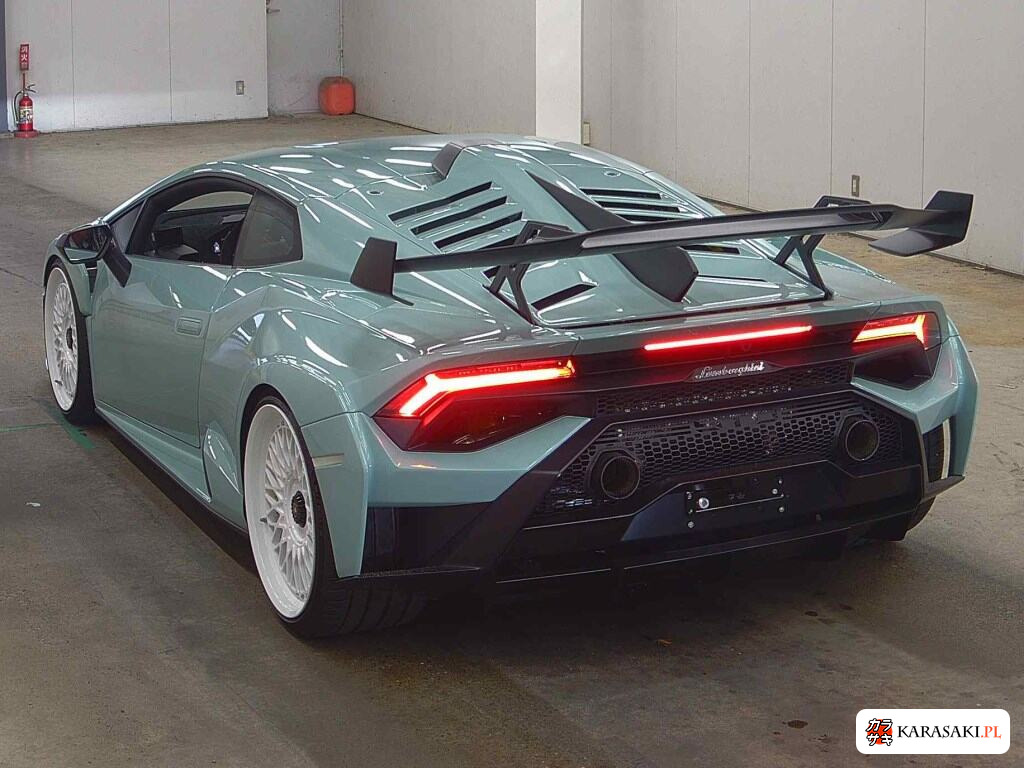
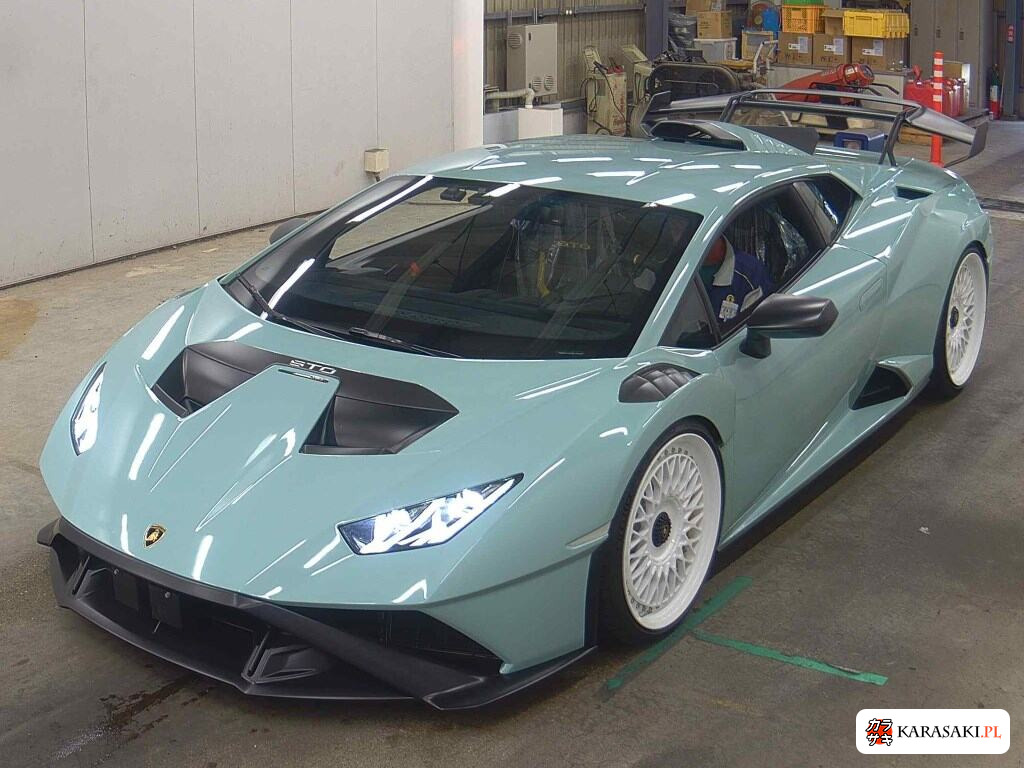
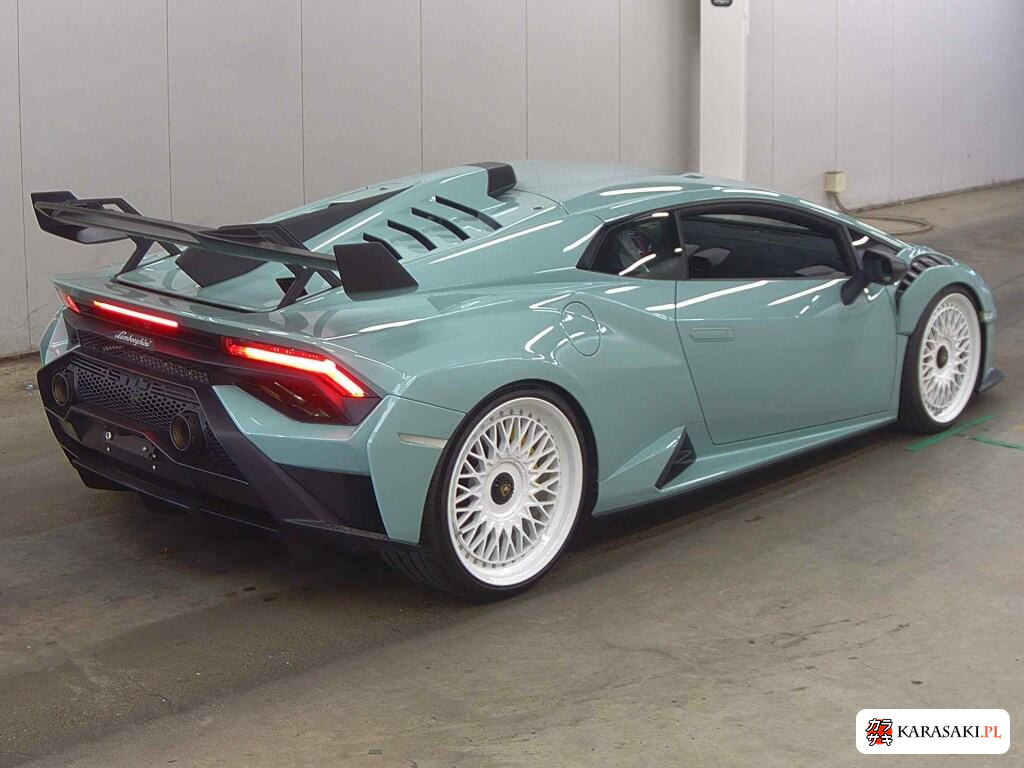
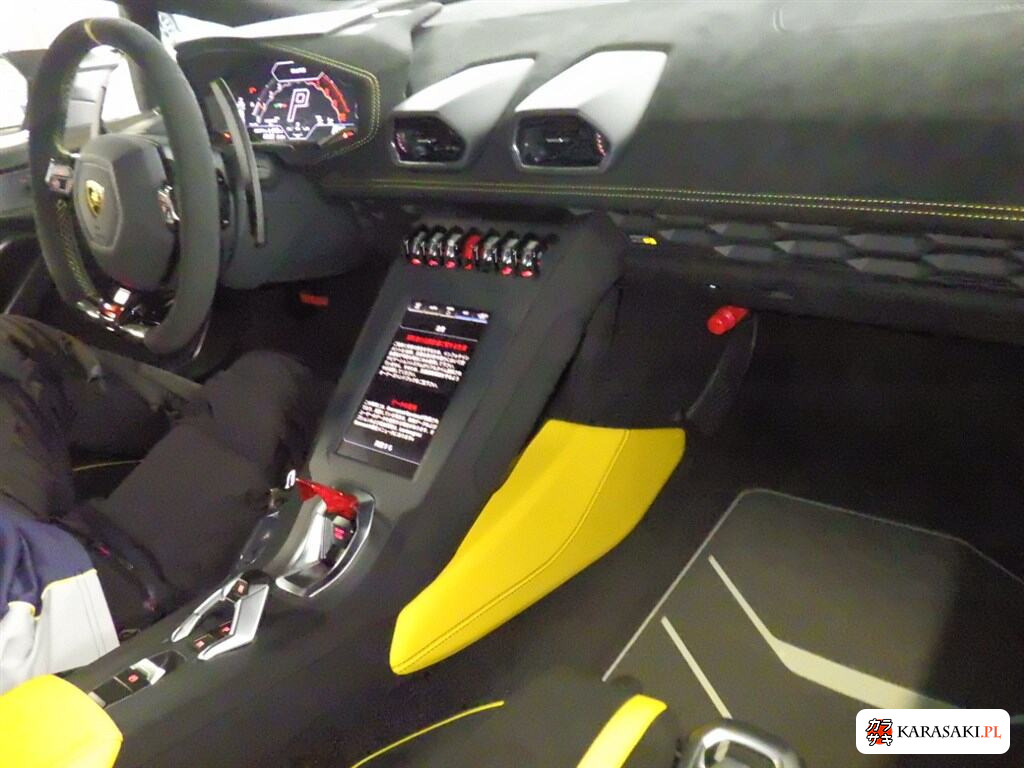
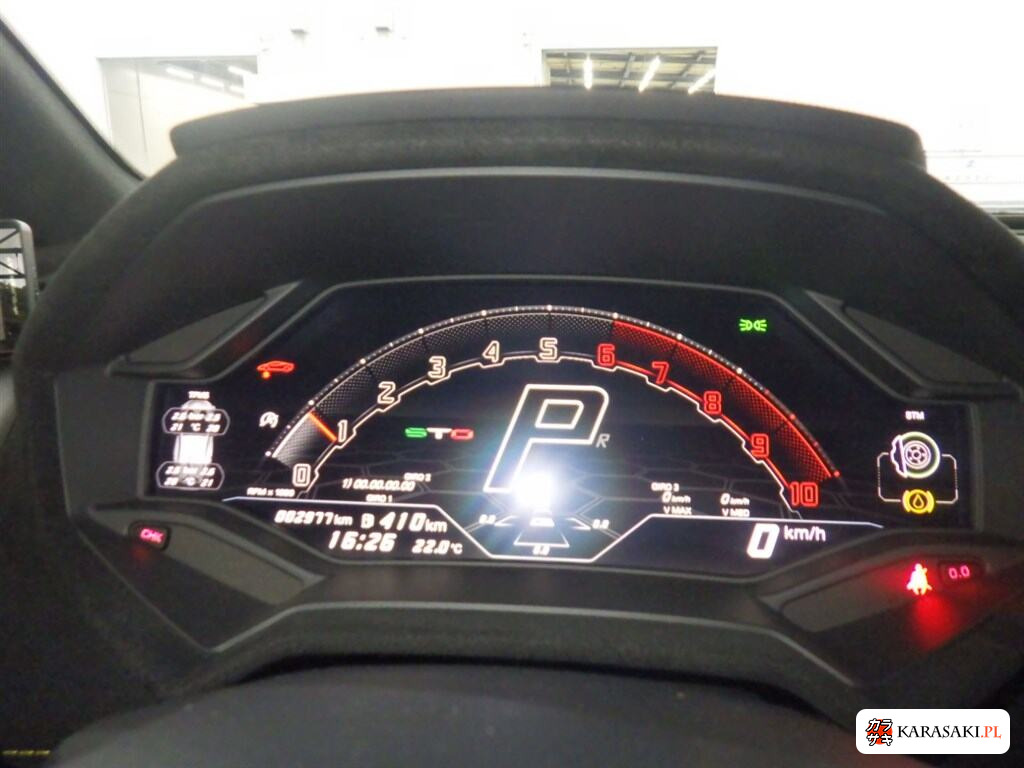
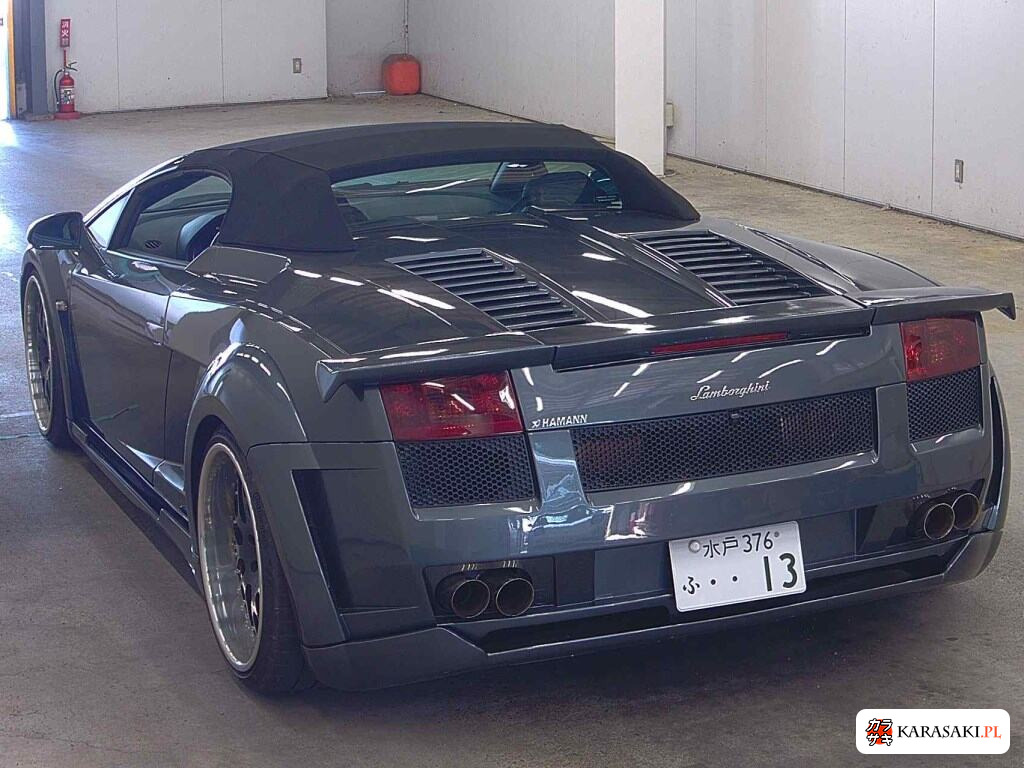
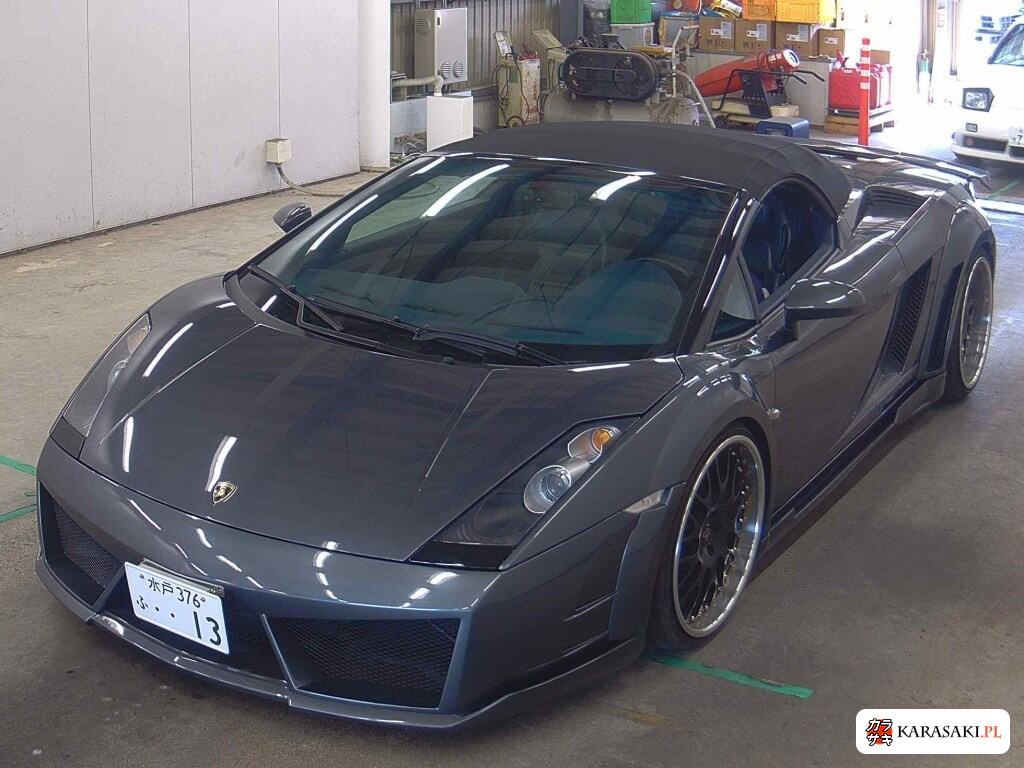
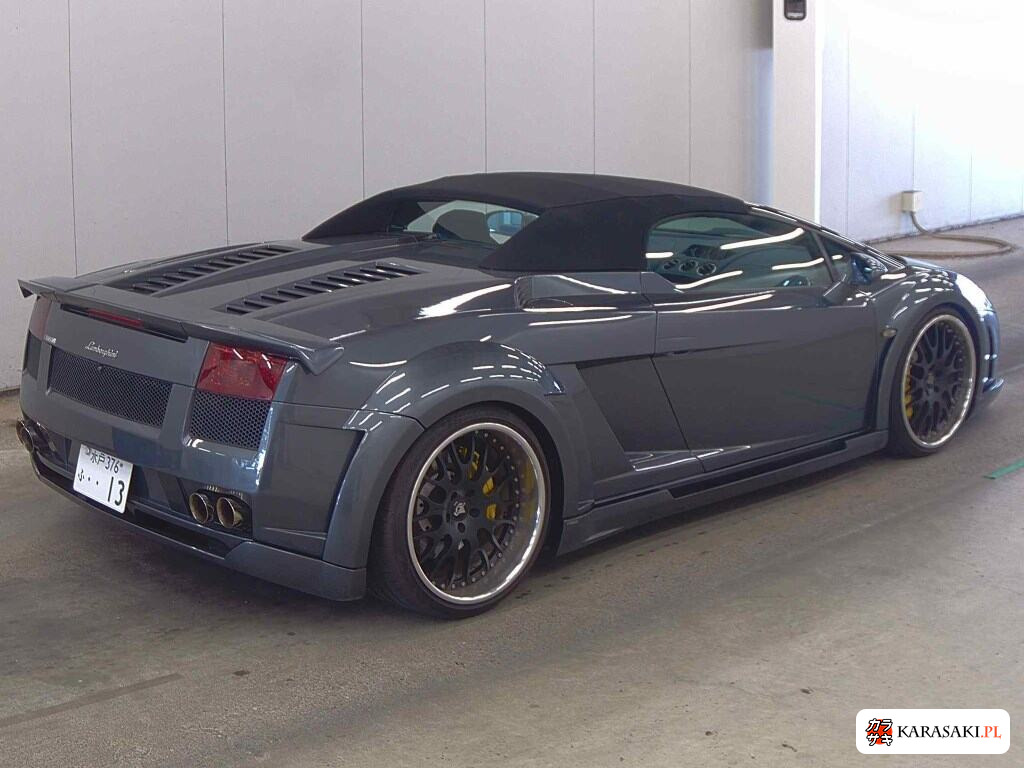
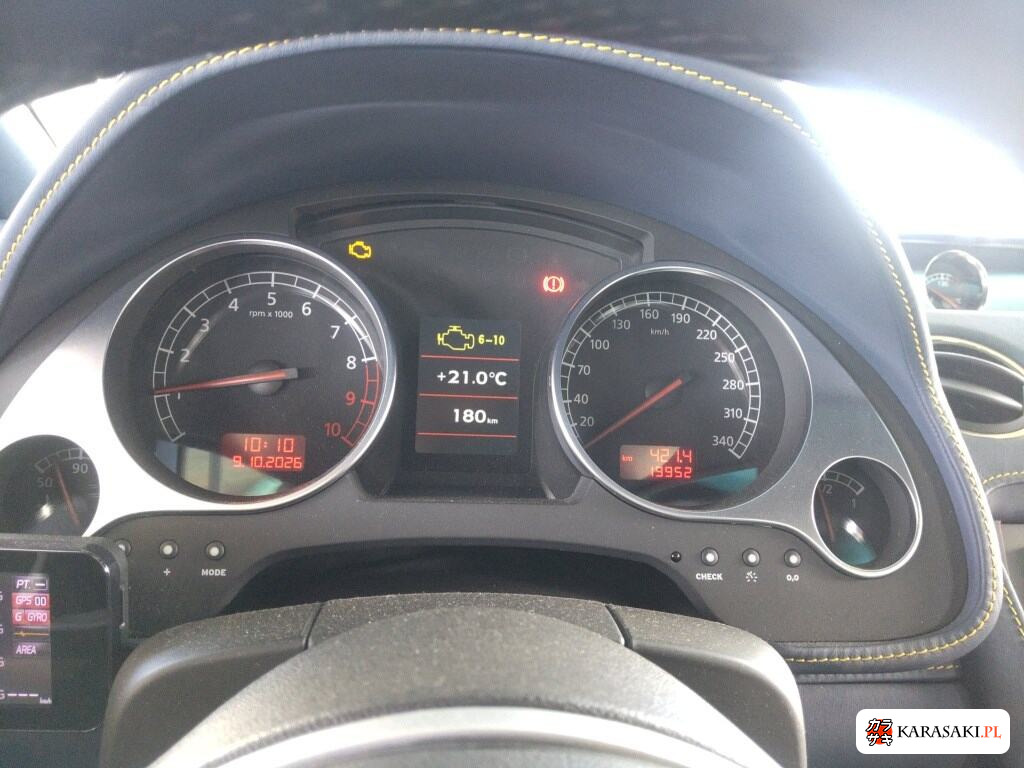
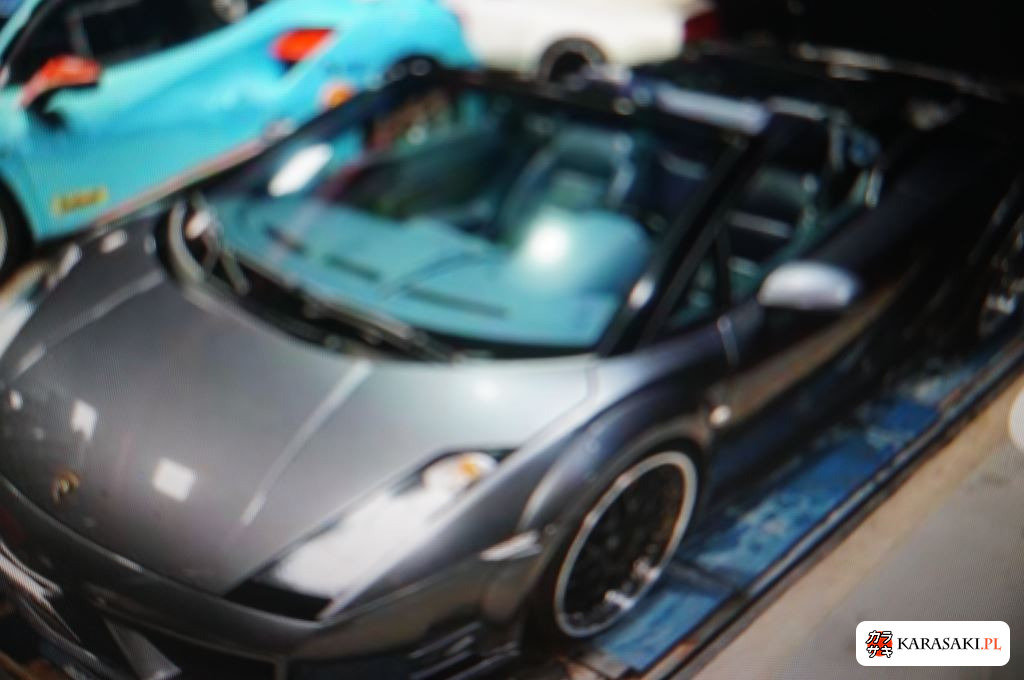
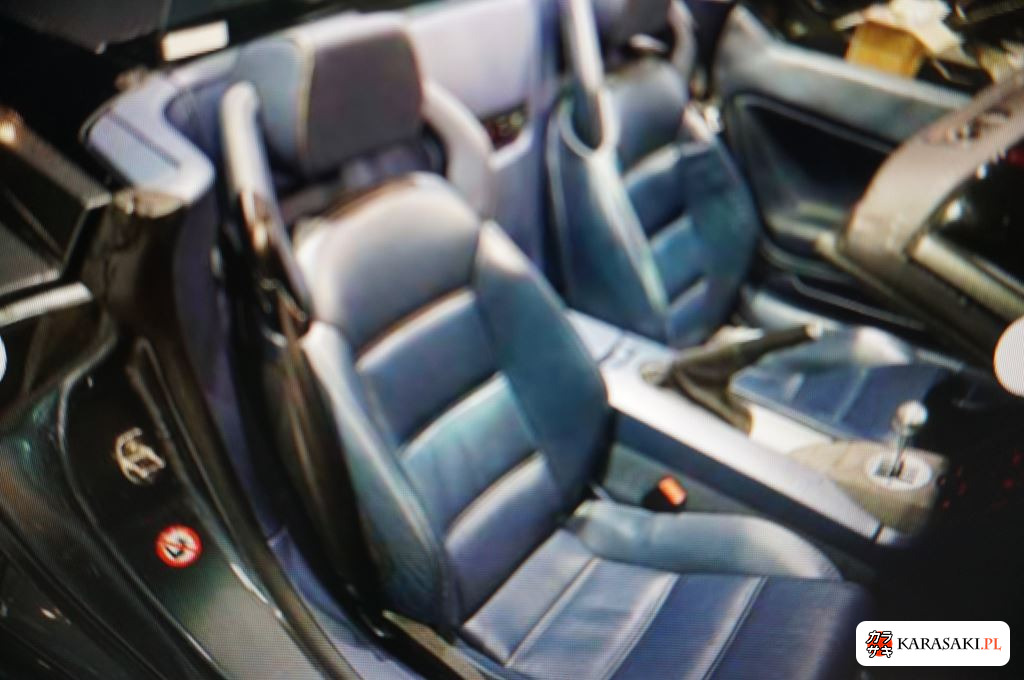
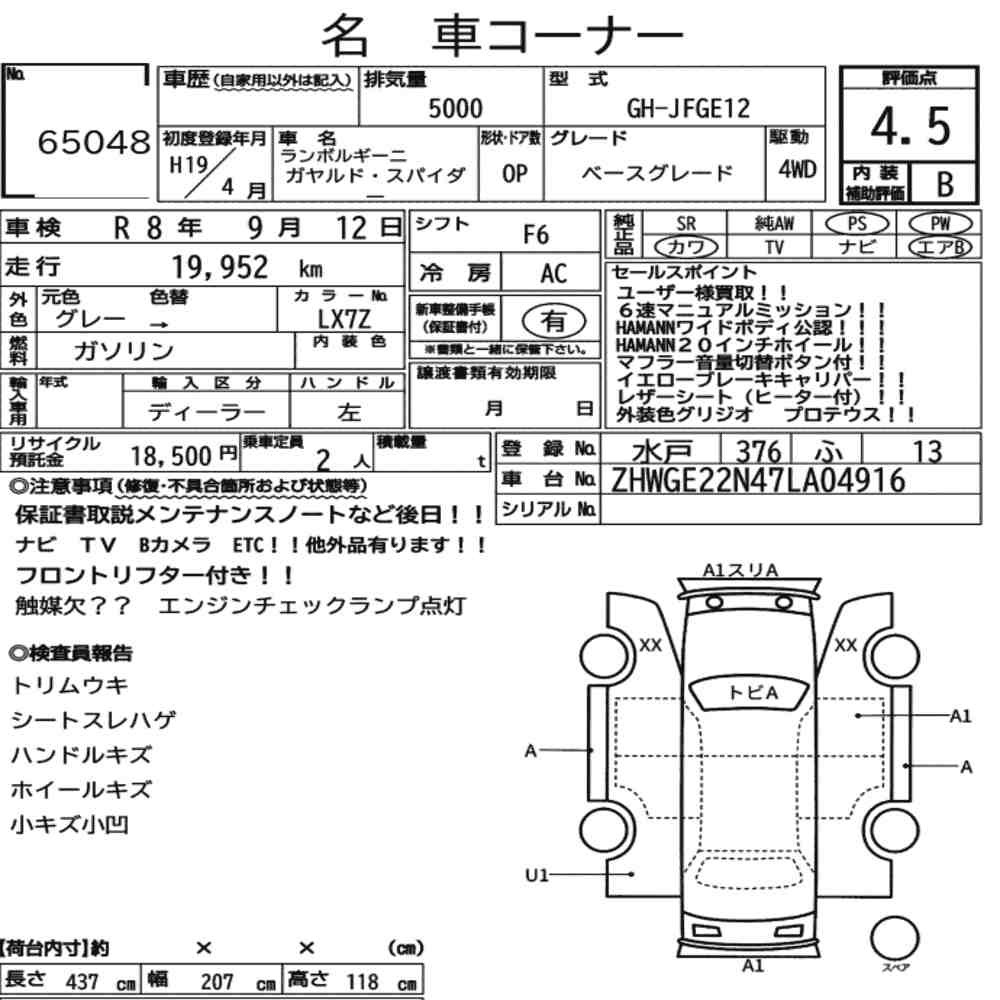
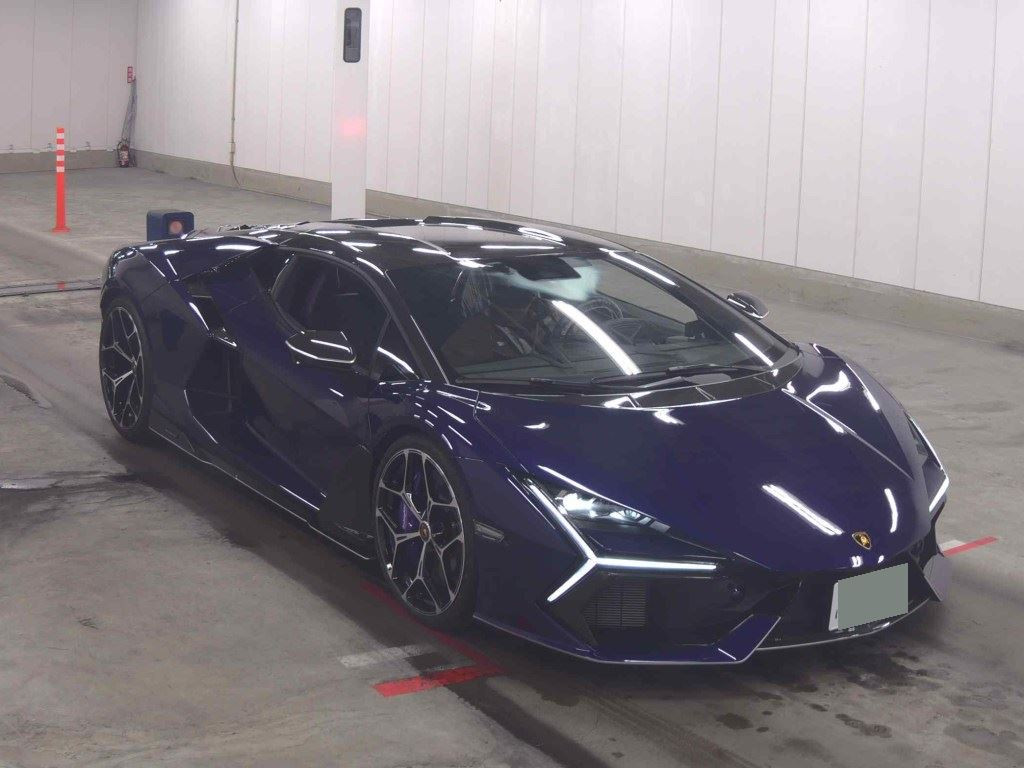
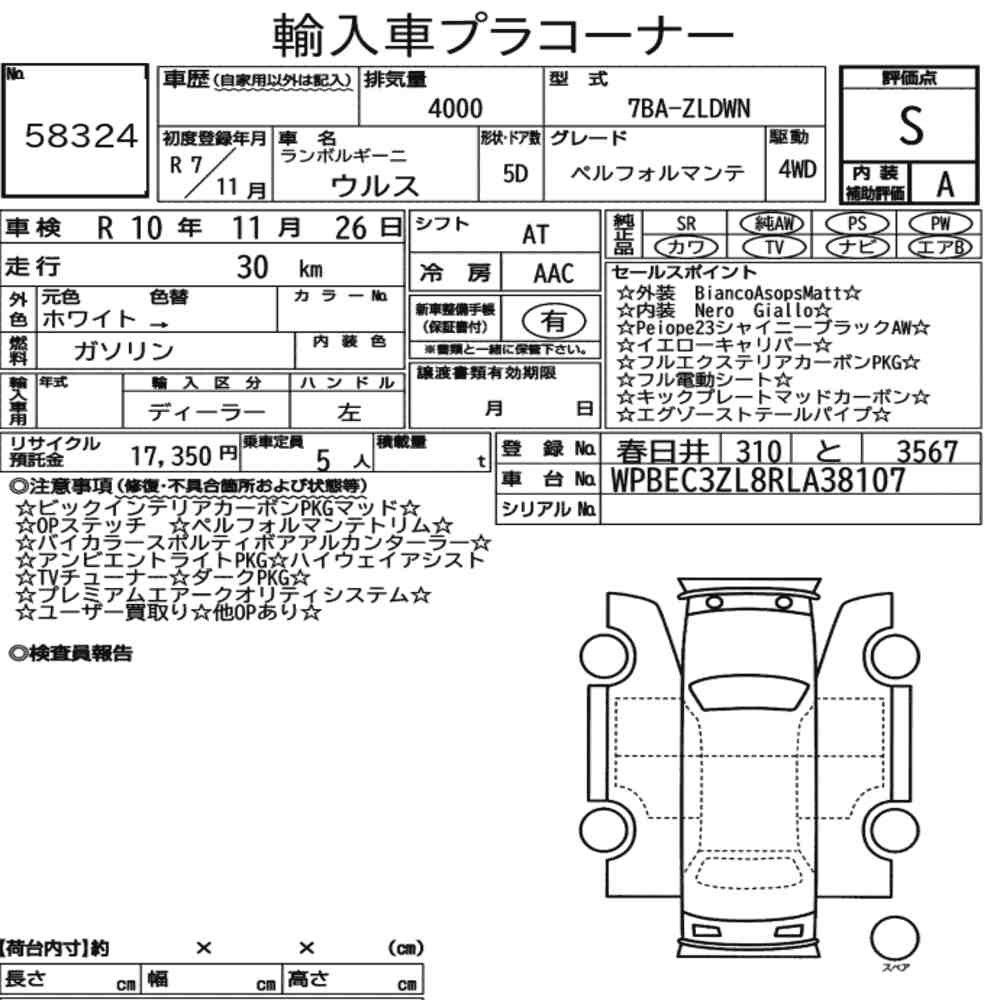
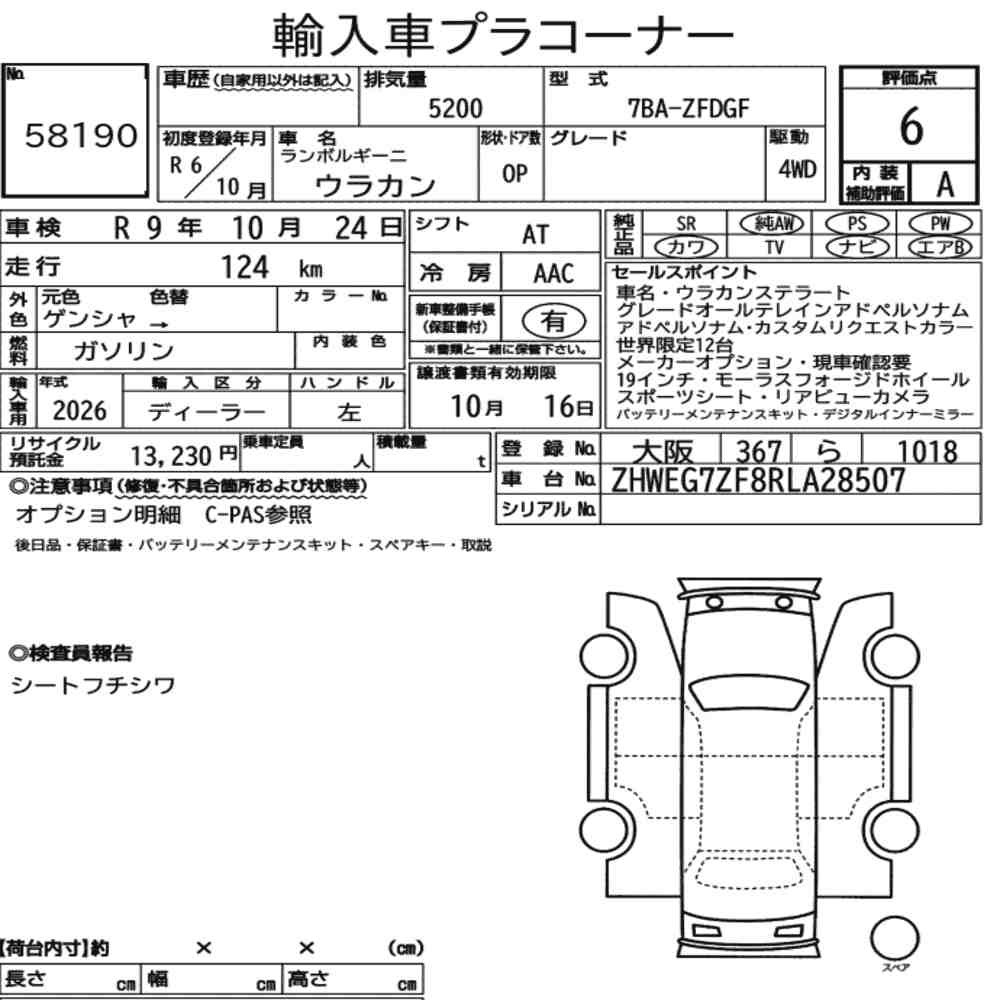
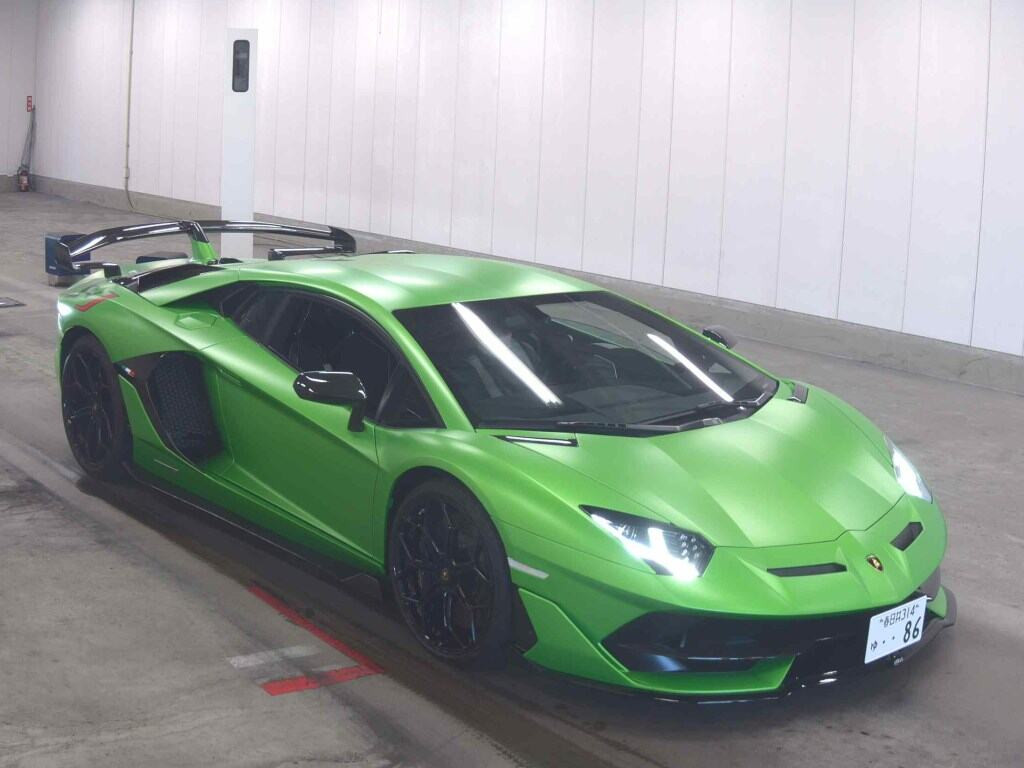
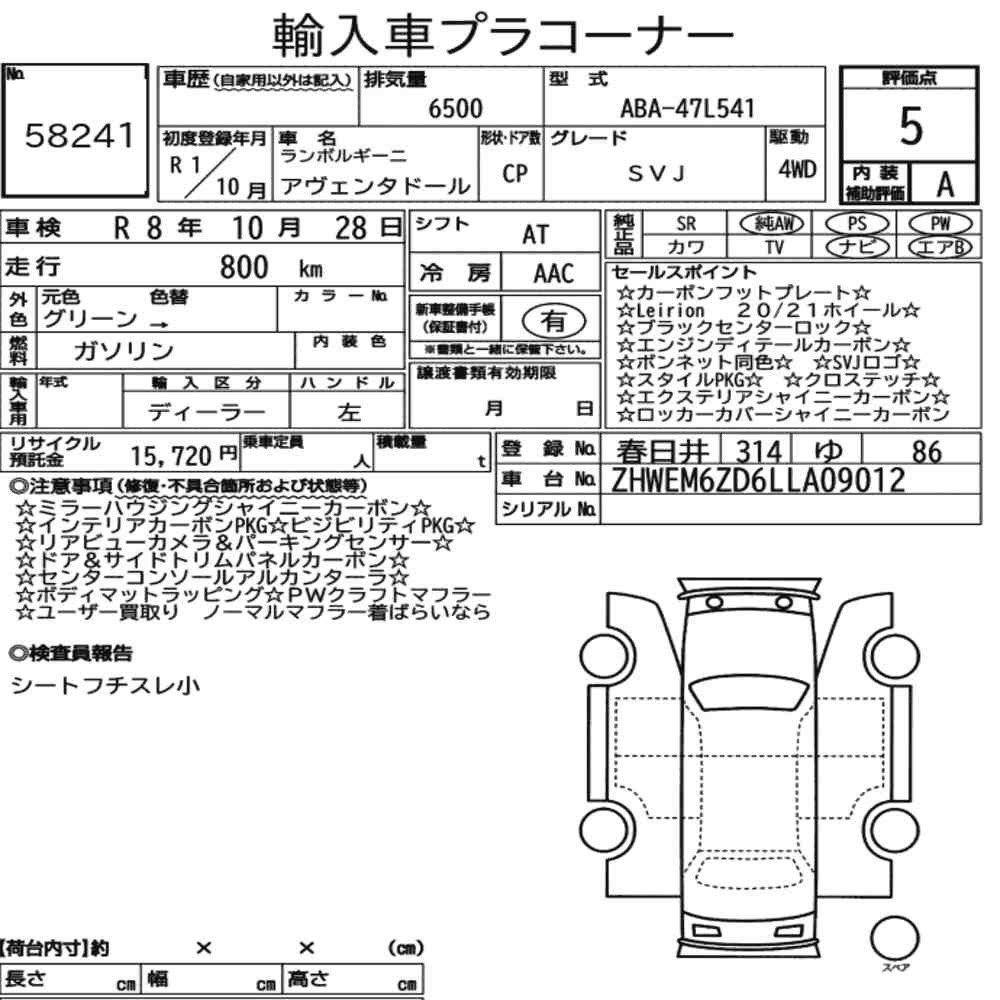
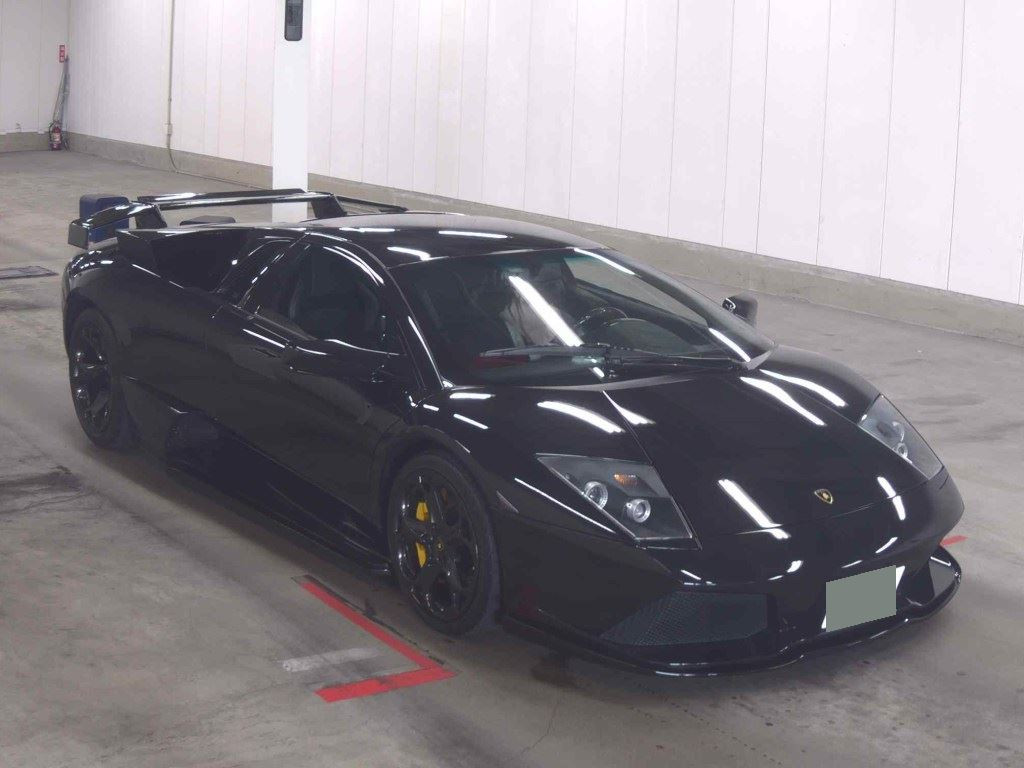
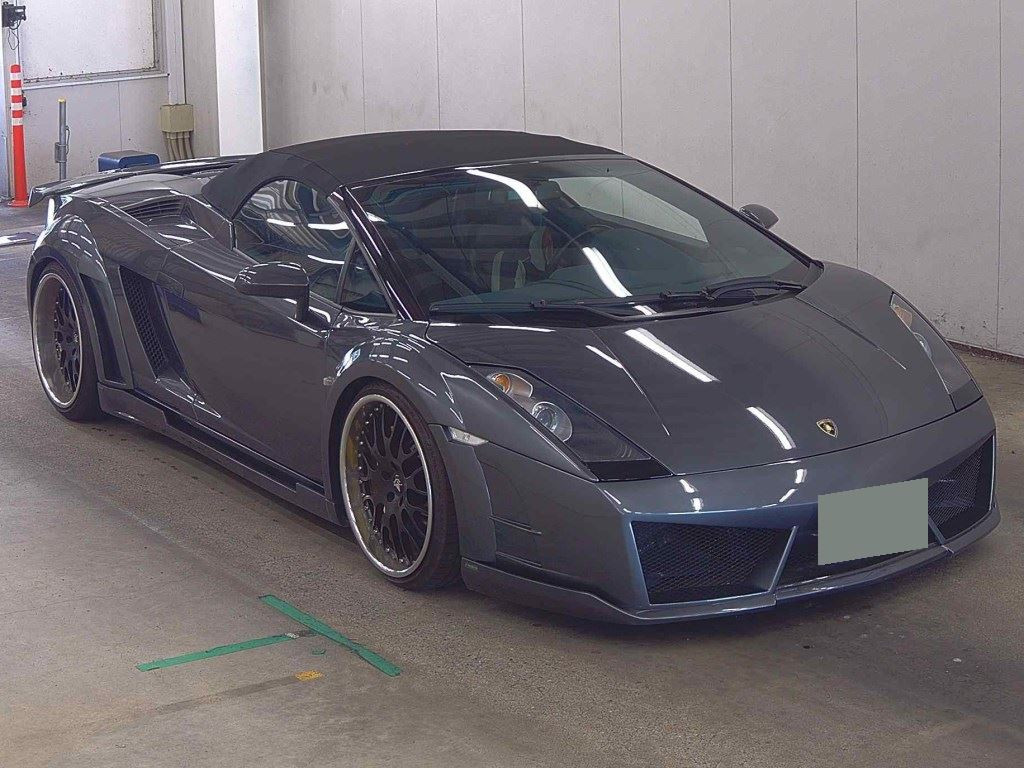
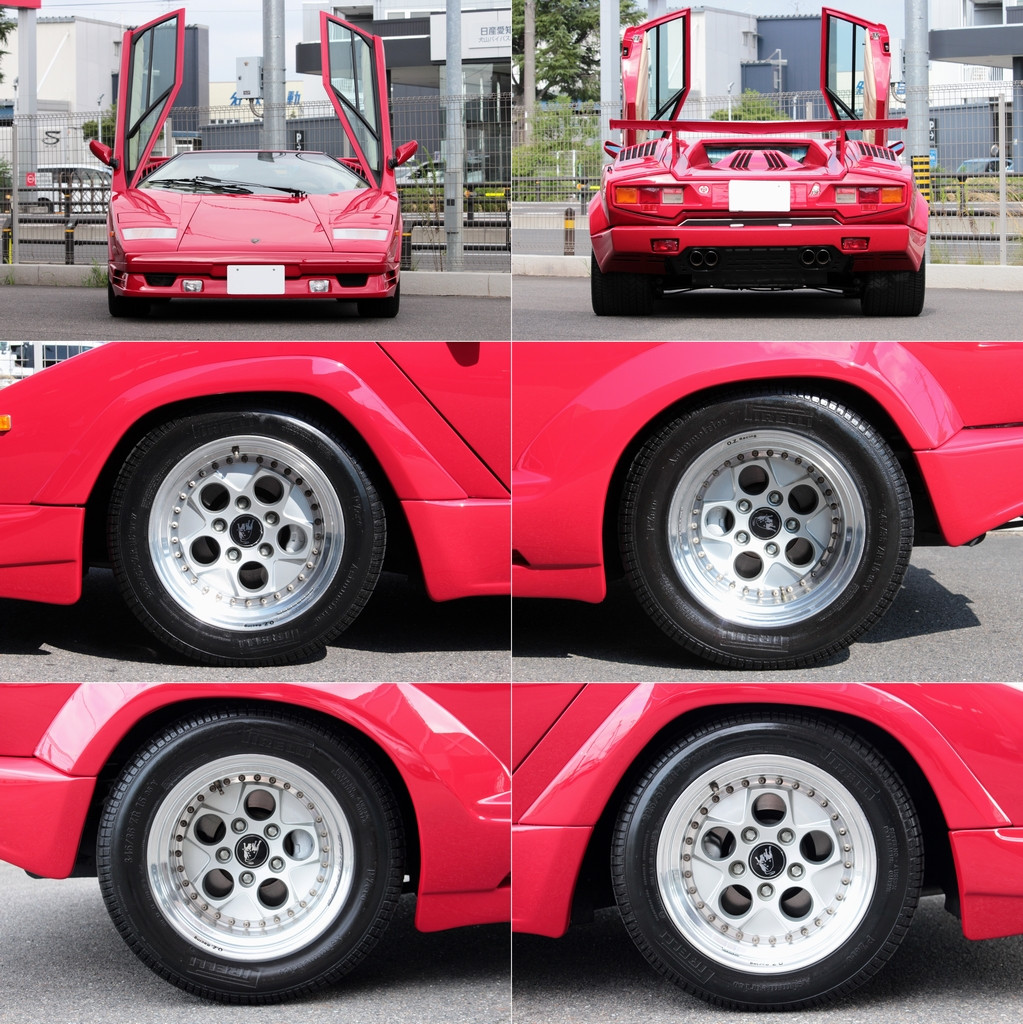
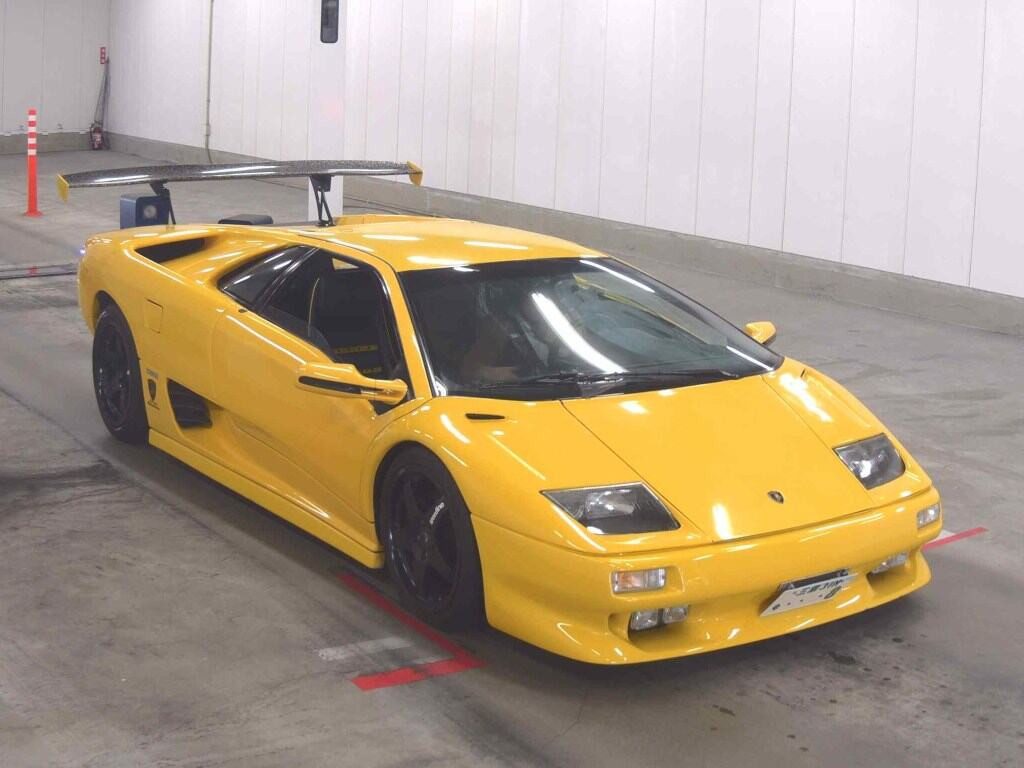
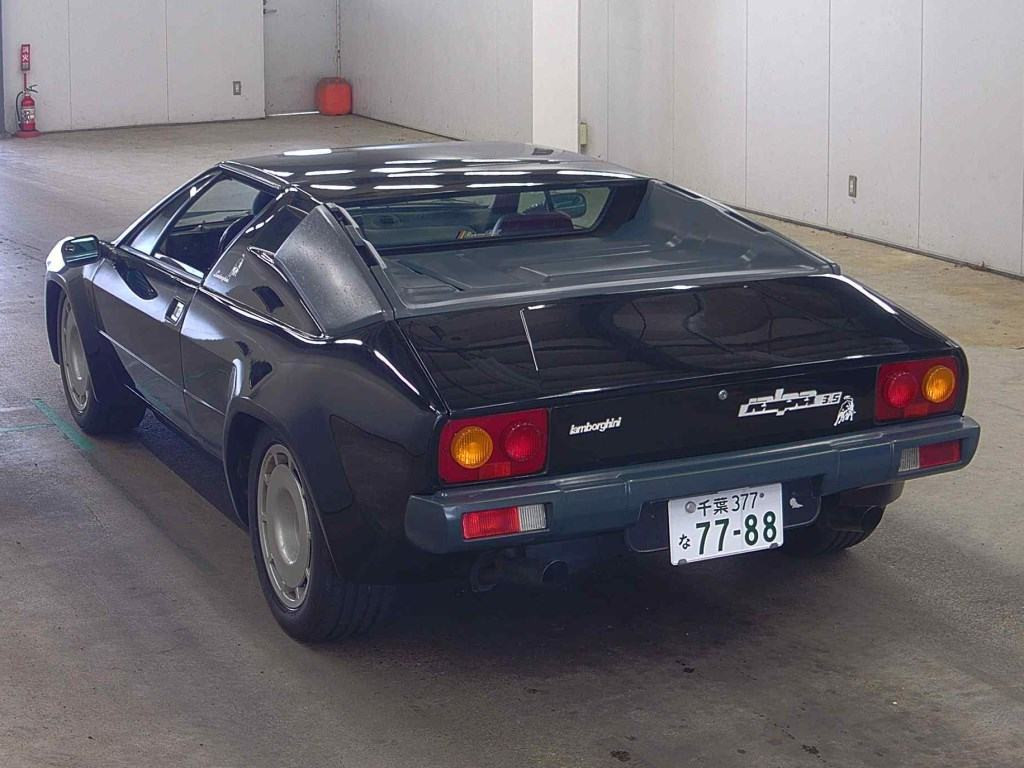
Lamborghini builds supercars around two engines: an atmospheric V10 in the mid models and a big V12 in the flagships. The V10 line is the Gallardo and its stiffened Superleggera, then the Huracán in LP610-4, track-focused Performante and the sharpest STO form (5.2 litres, close to 640 cv, rear-wheel drive). The V12 line is led by the Aventador, from the LP700-4 to the limited SVJ (6.5 litres, 770 cv, 900 coupé units, the first production V12 Lamborghini with active ALA aerodynamics), preceded by the classic Murciélago LP640 and SV and the Diablo SV and 6.0 VT. Standing apart is the Urus, the brand's first super-SUV, which opened Lamborghini to an entirely new group of buyers.
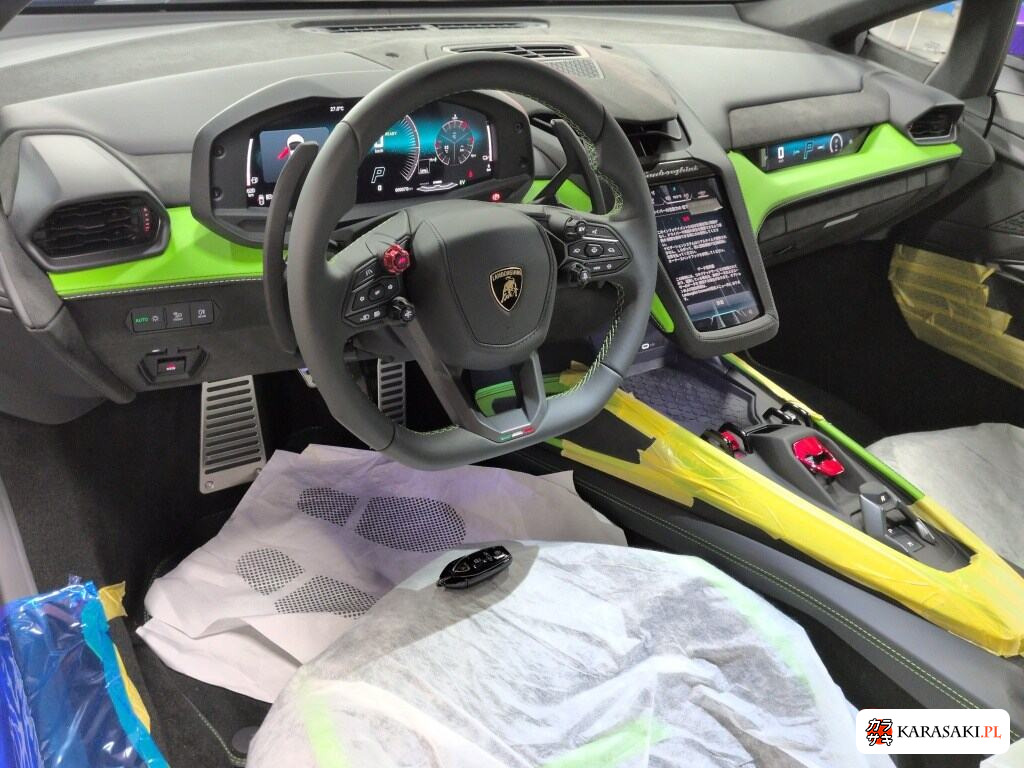
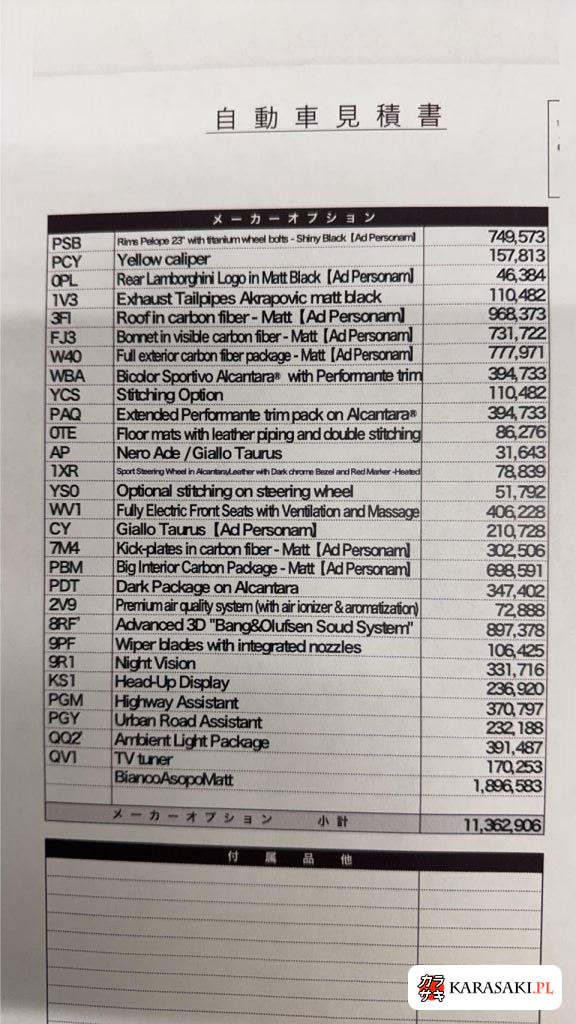
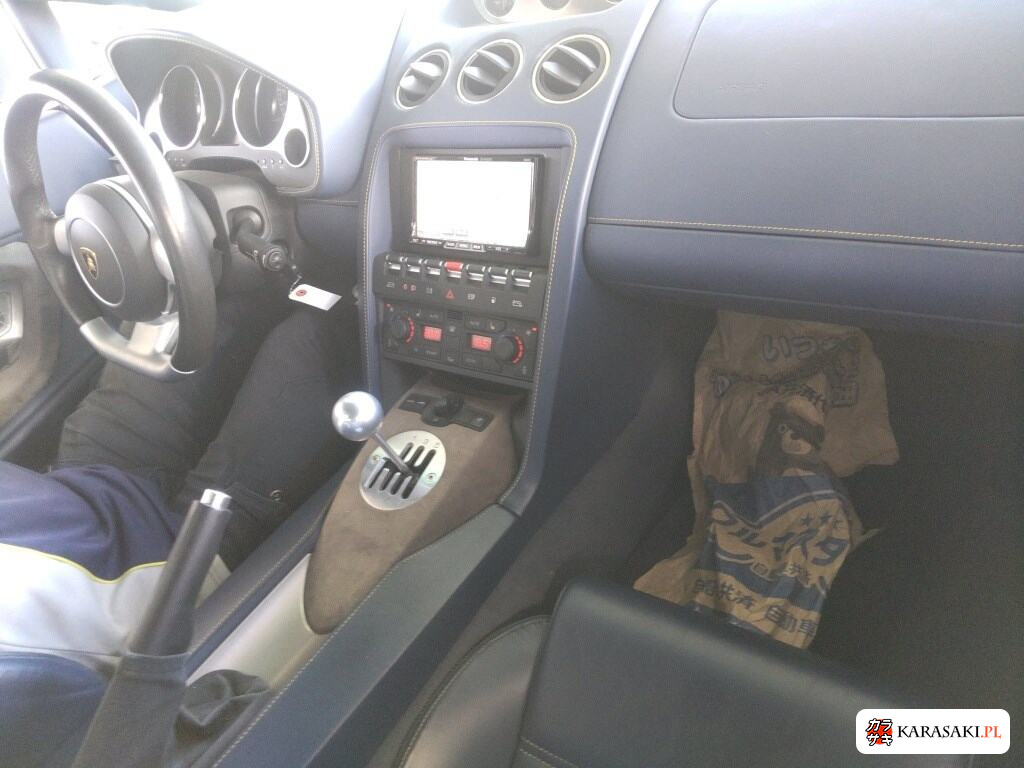
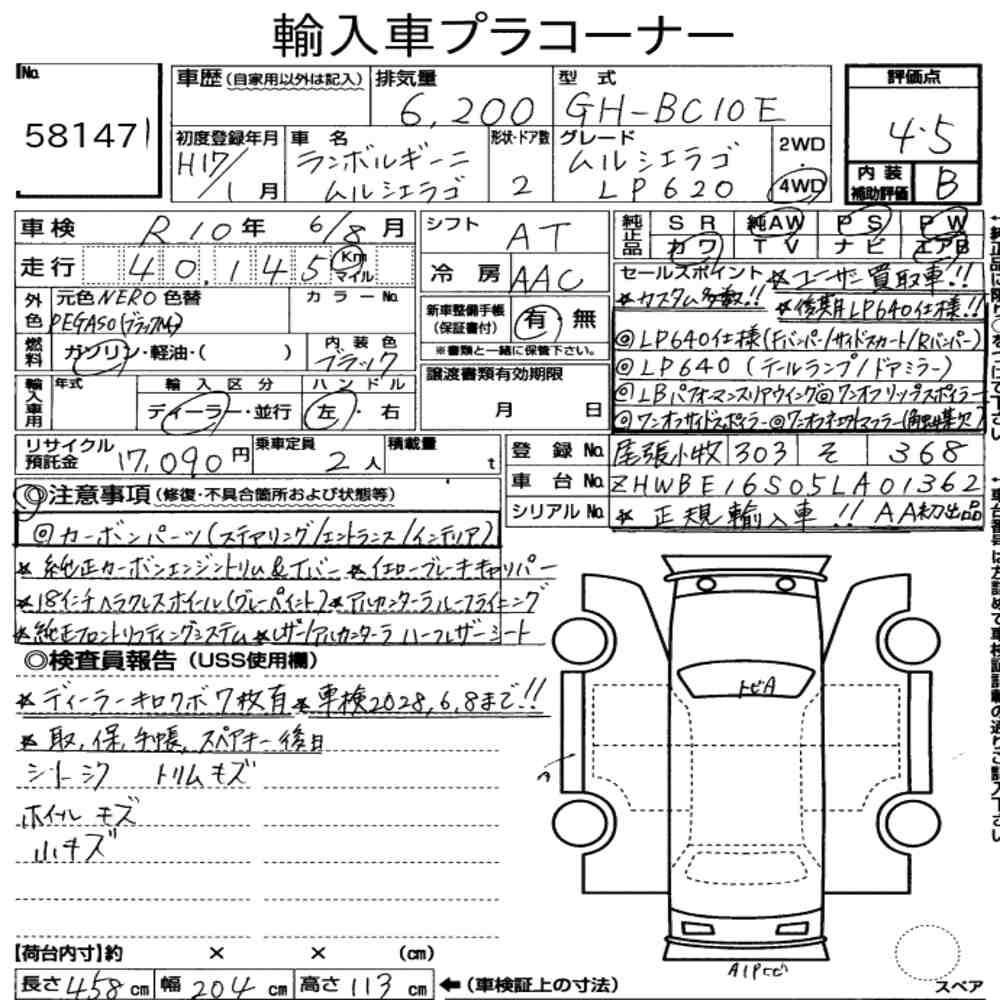
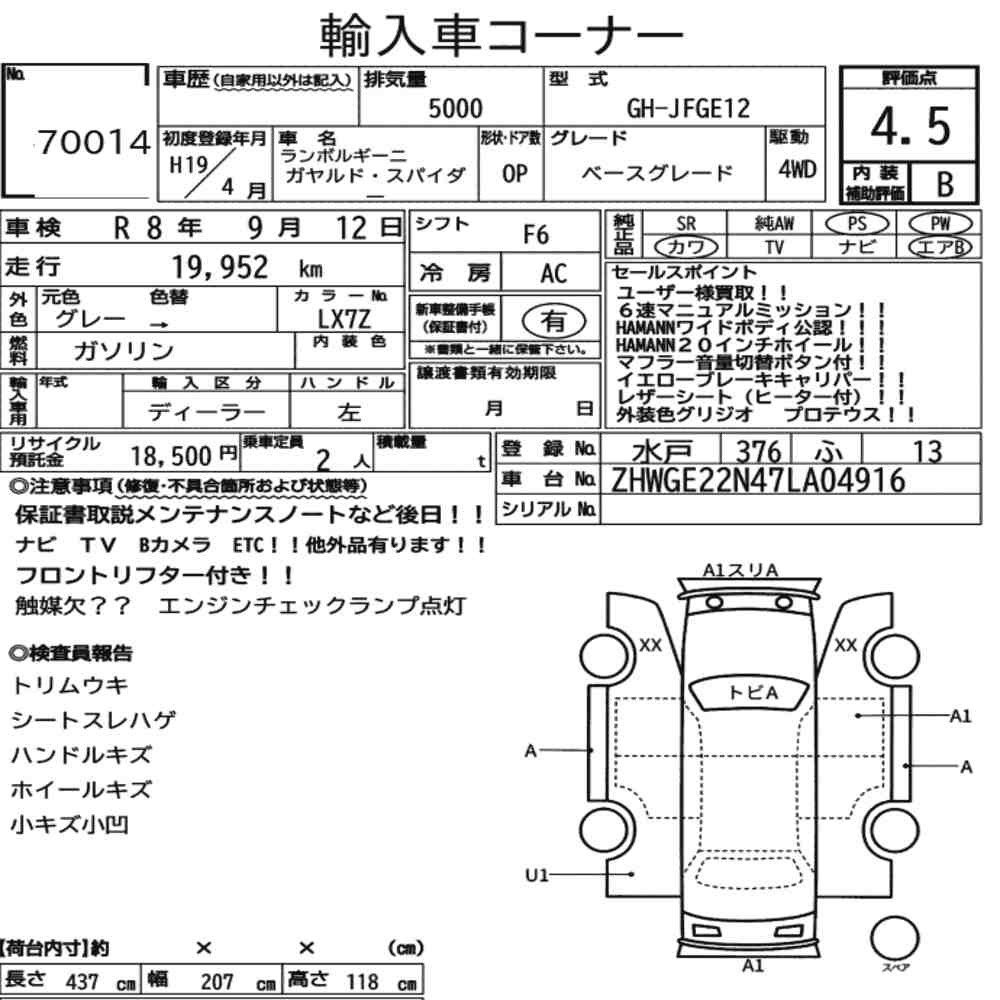
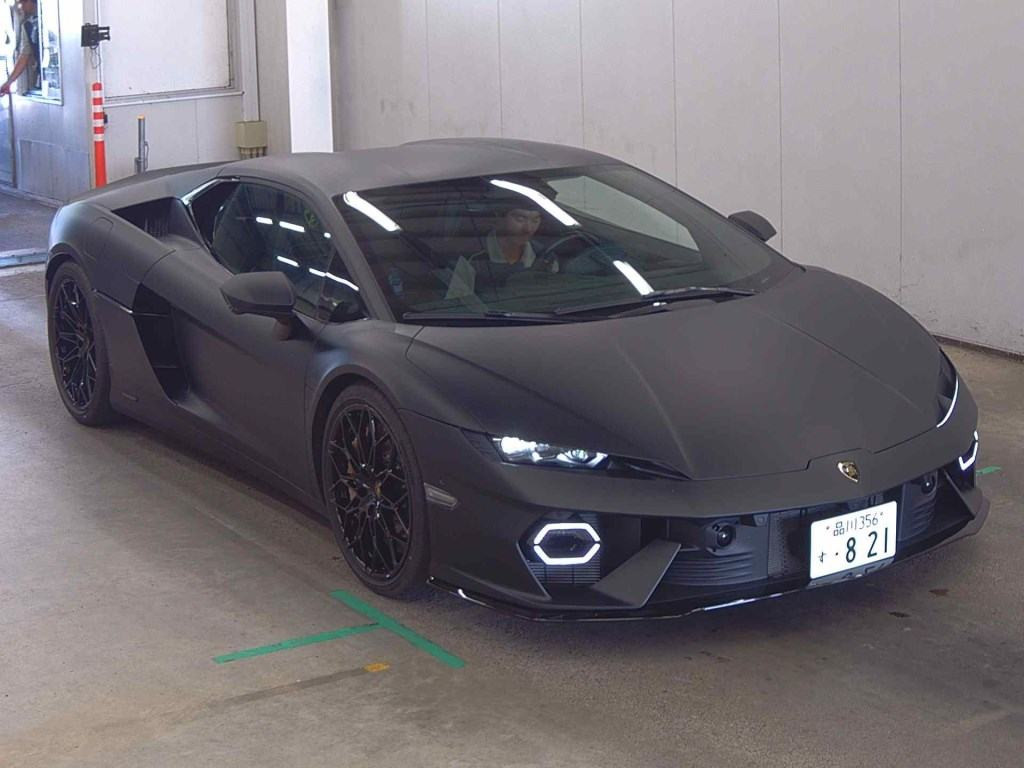
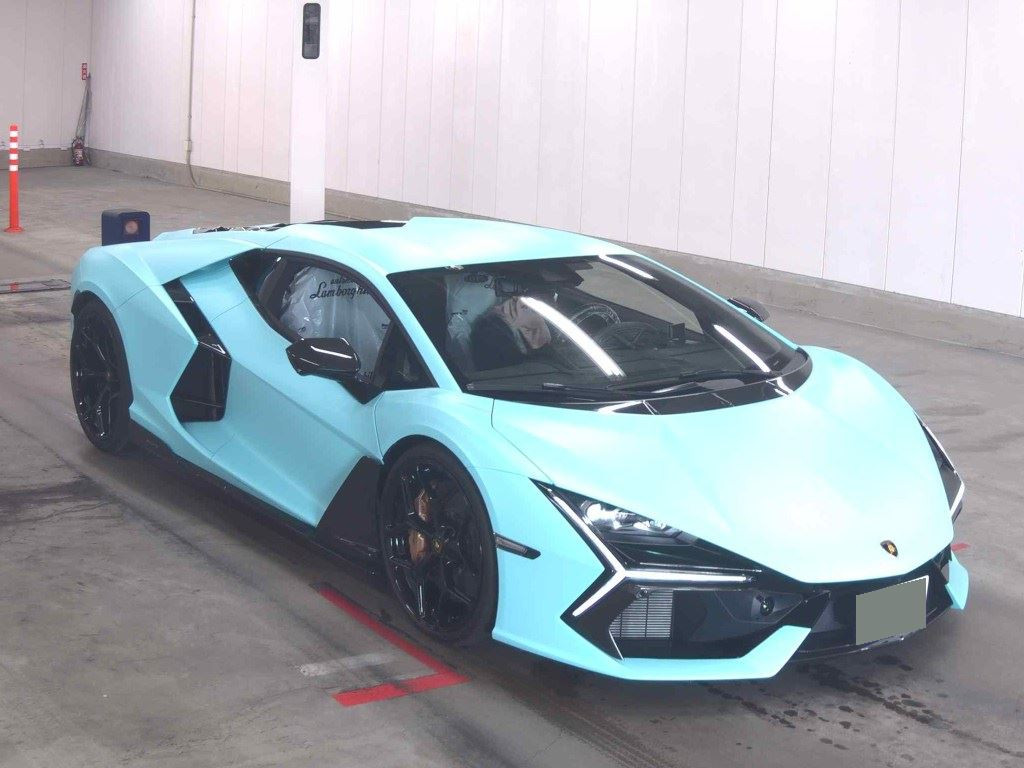
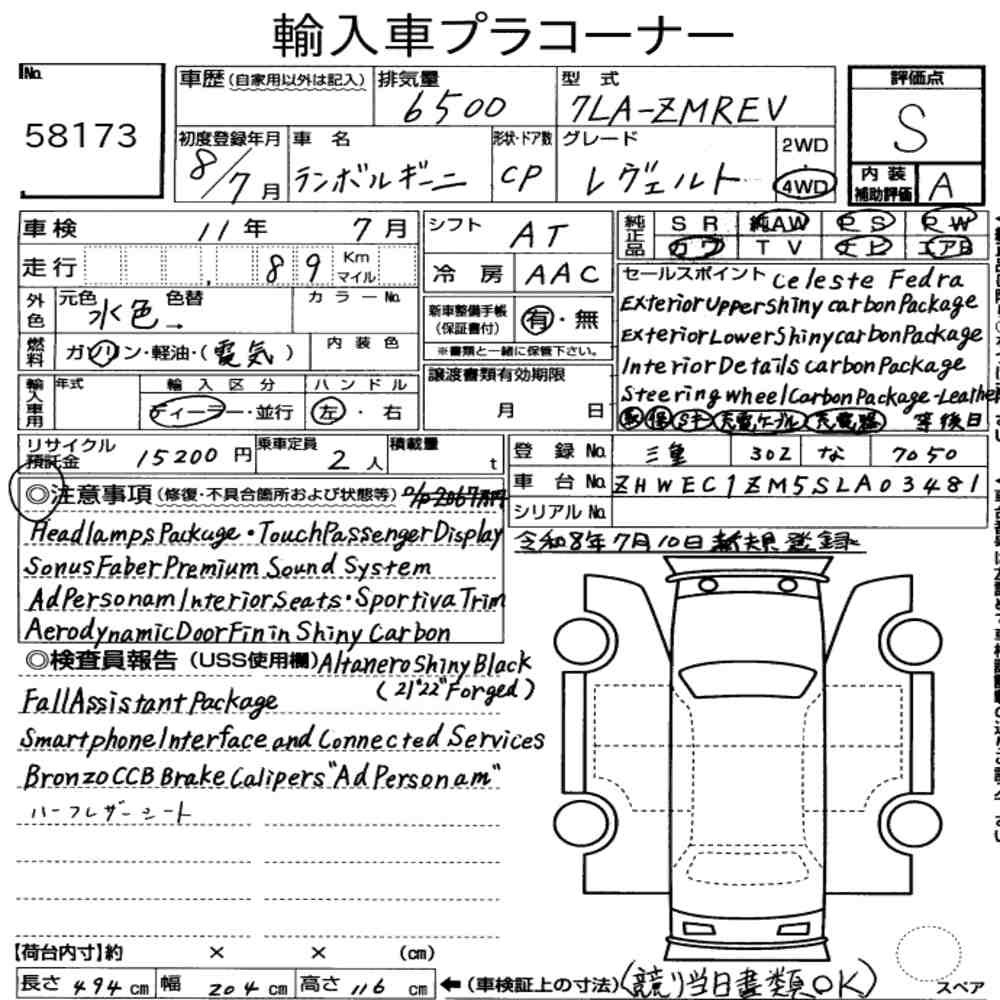
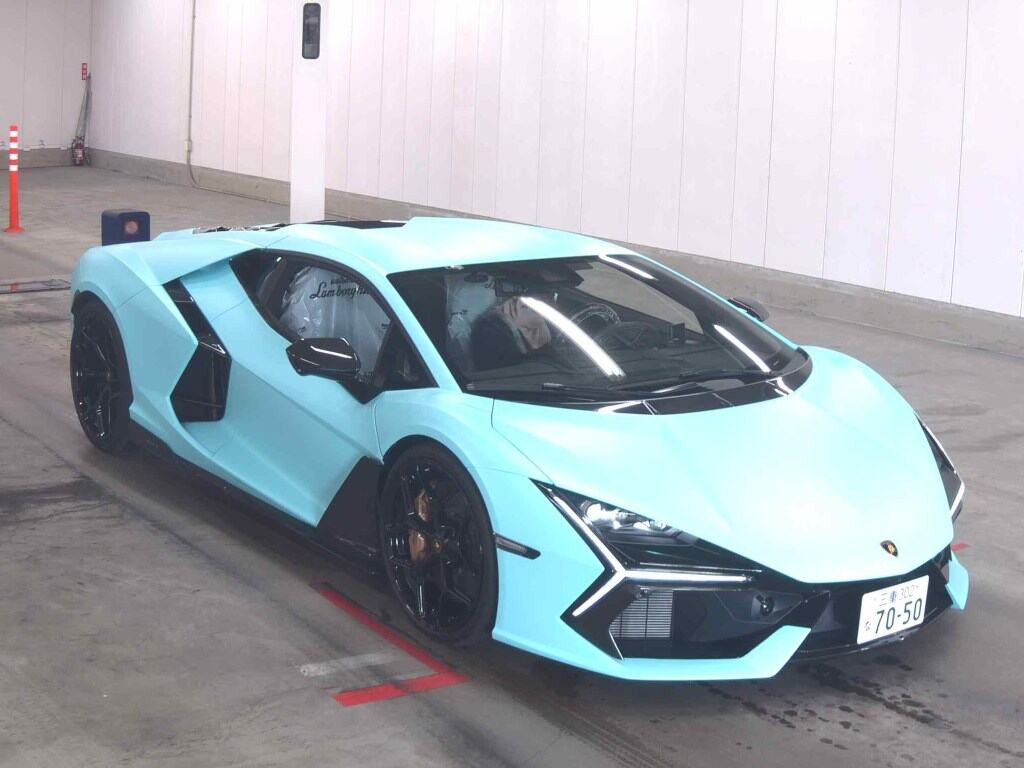
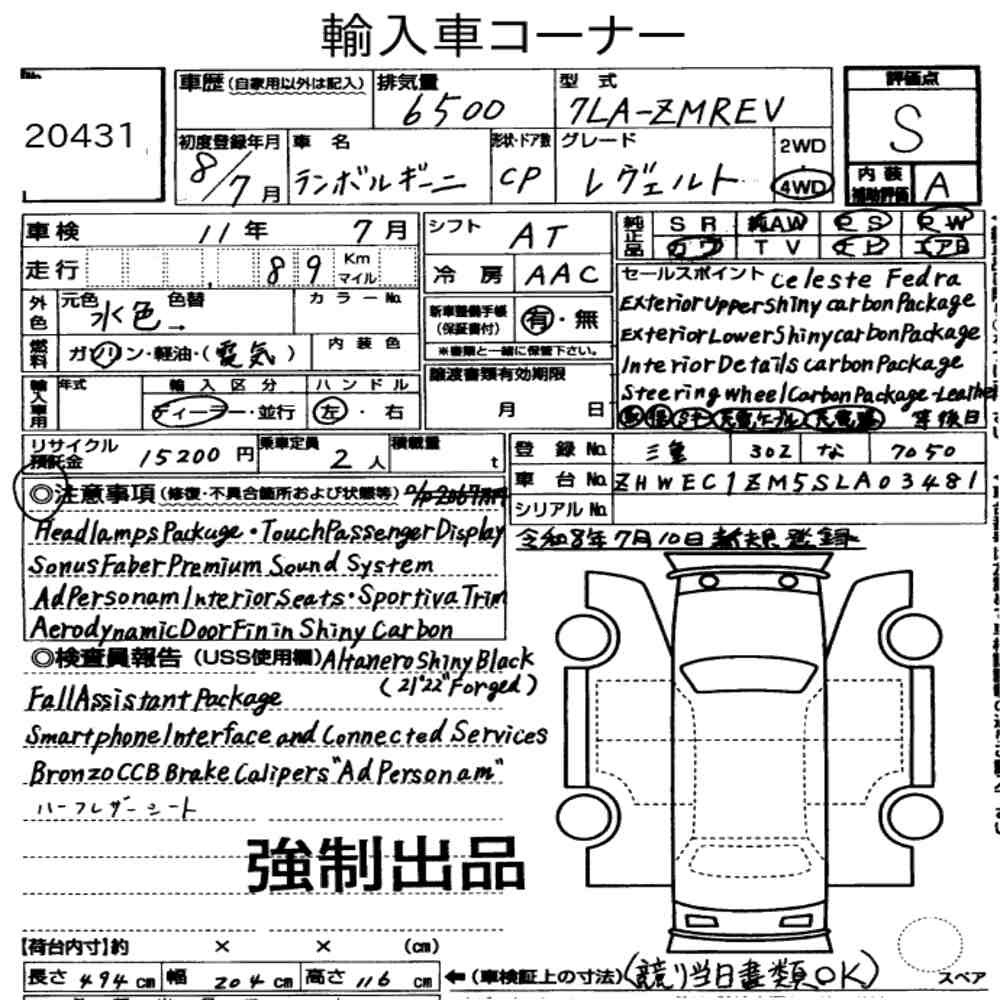
At USS Tokyo and HAA Kobe Lamborghinis surface less often than Ferraris but regularly: our data shows close to 30 a week, usually from private Tokyo and Osaka collections. Japan has long been one of the brand's most important markets, so collector-grade cars turn up here, including limited editions and rare Ad Personam paints. Most examples are LHD — so-called original European spec — because Japanese Lamborghini buyers generally ordered left-hand drive.
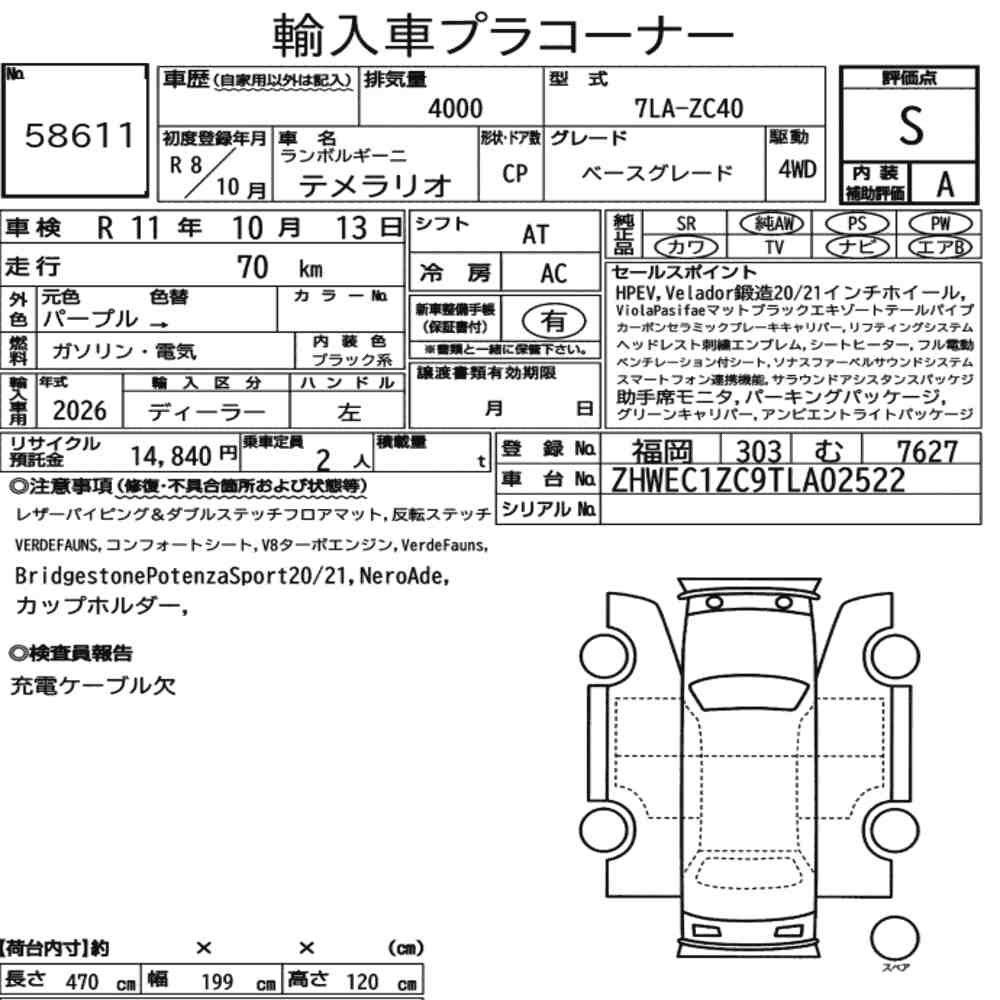
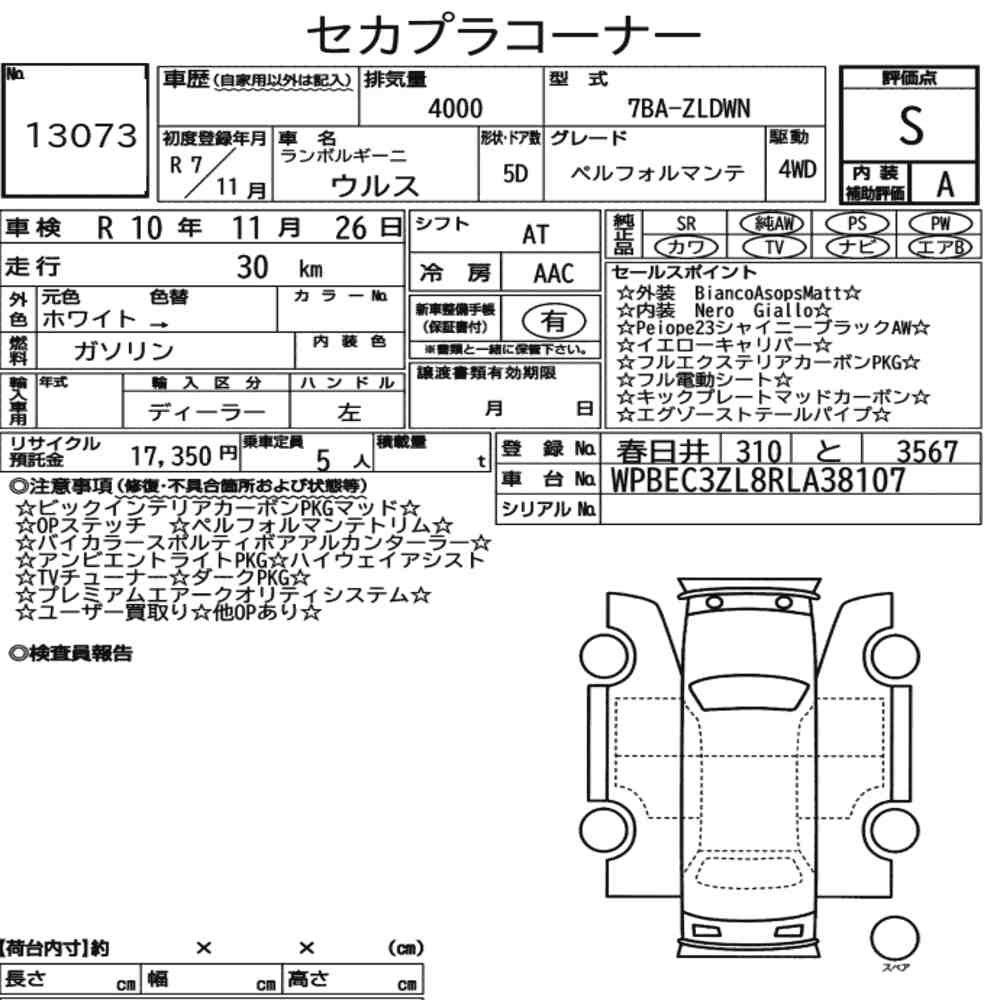
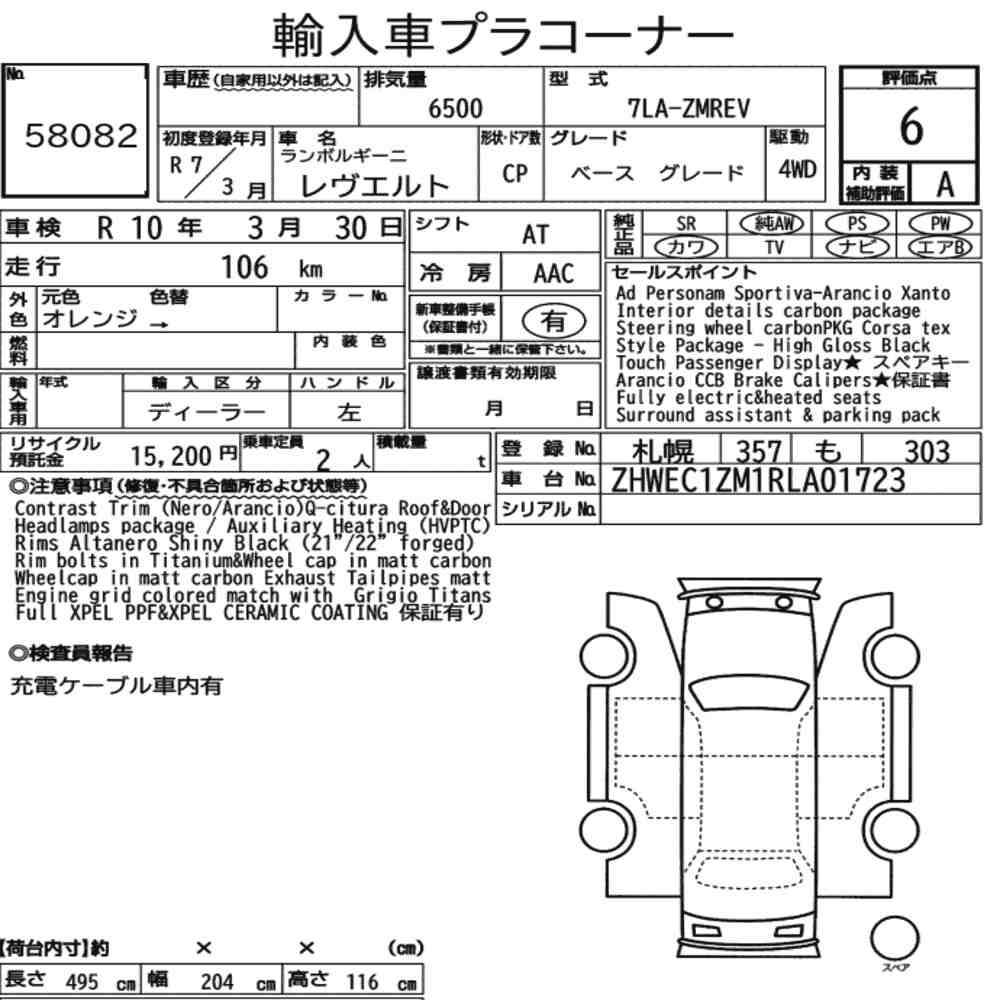
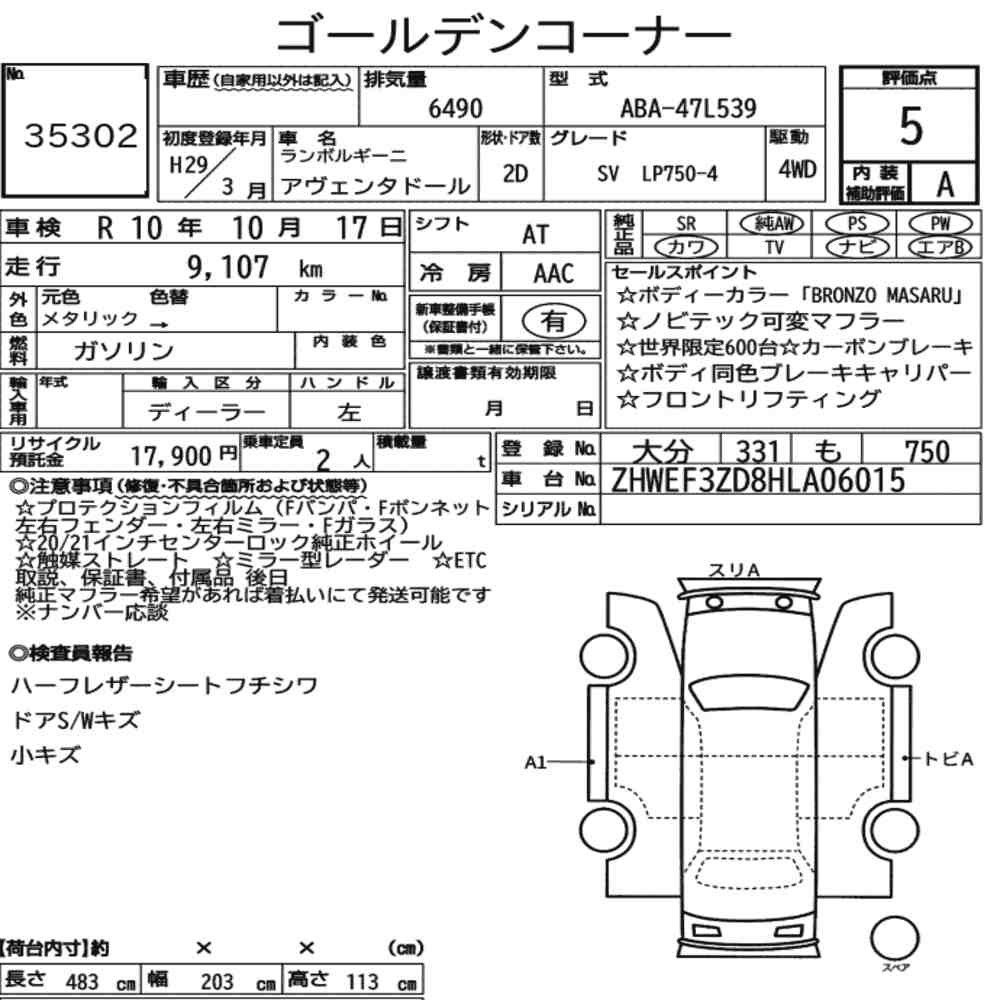
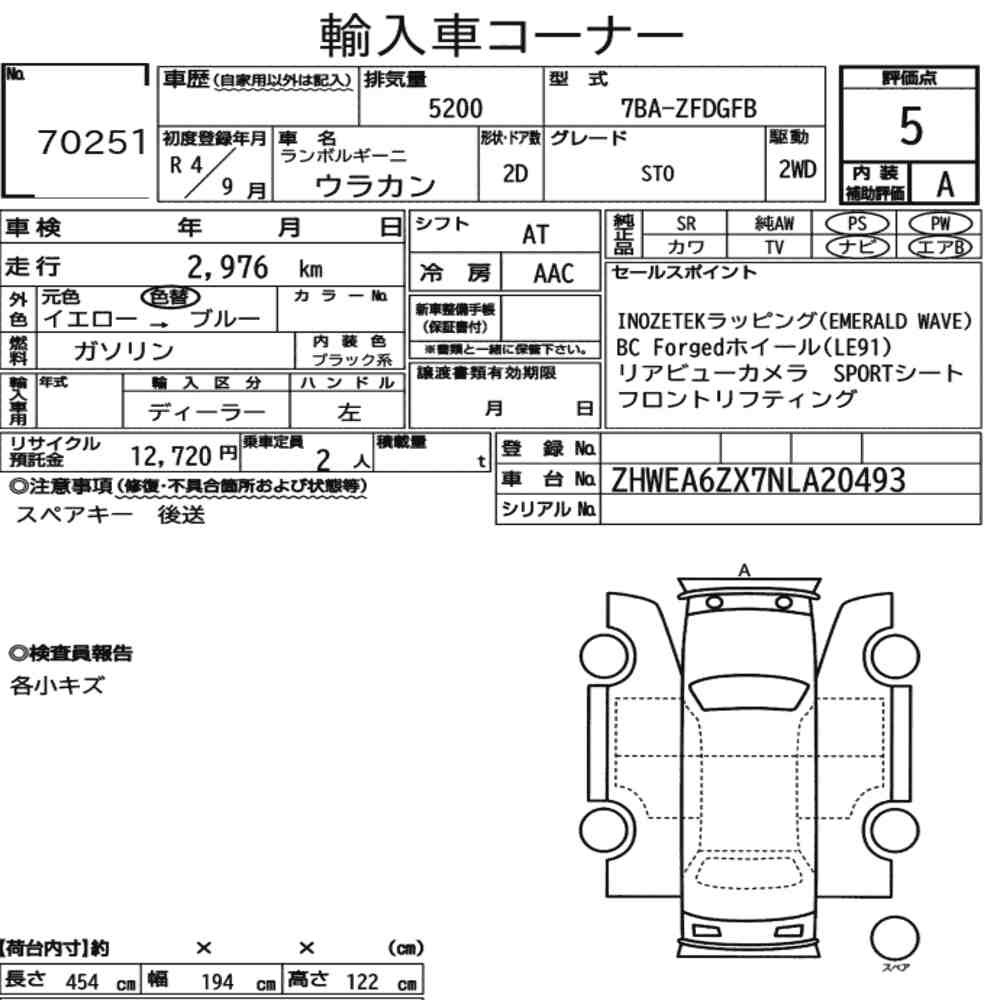
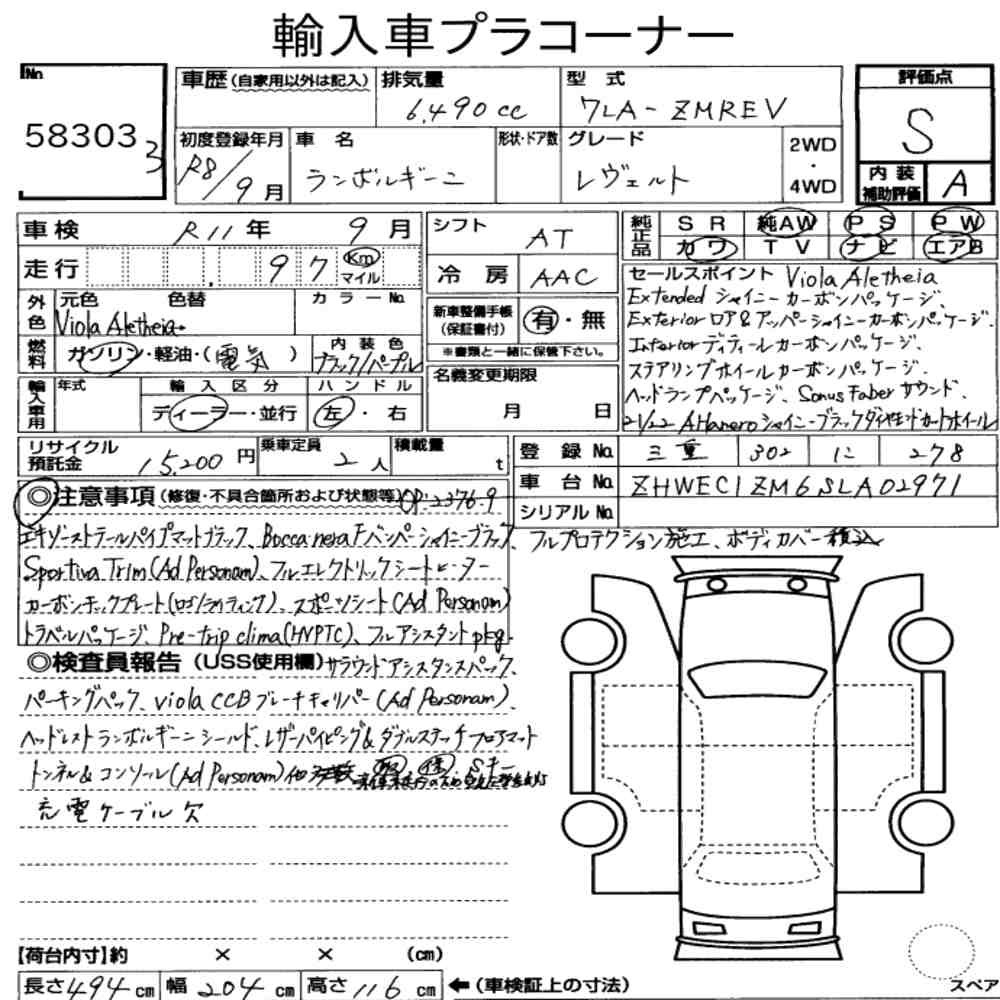
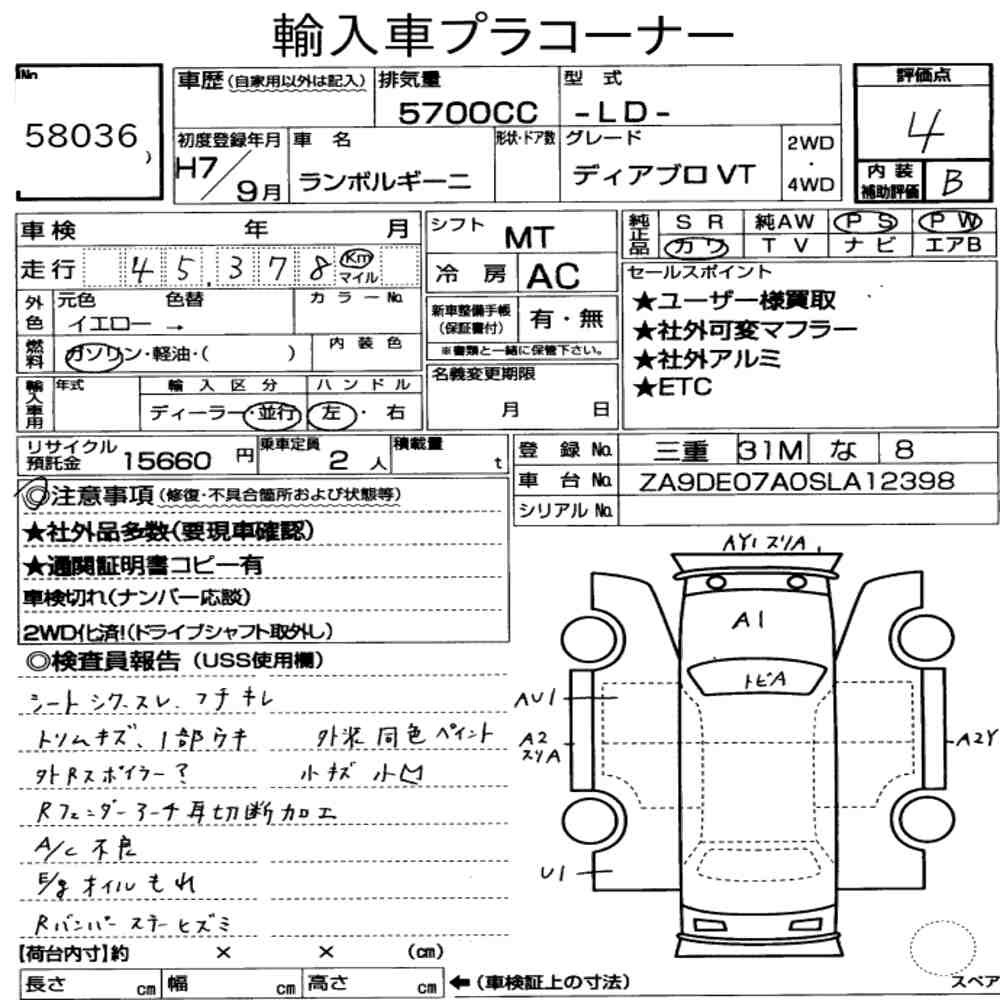
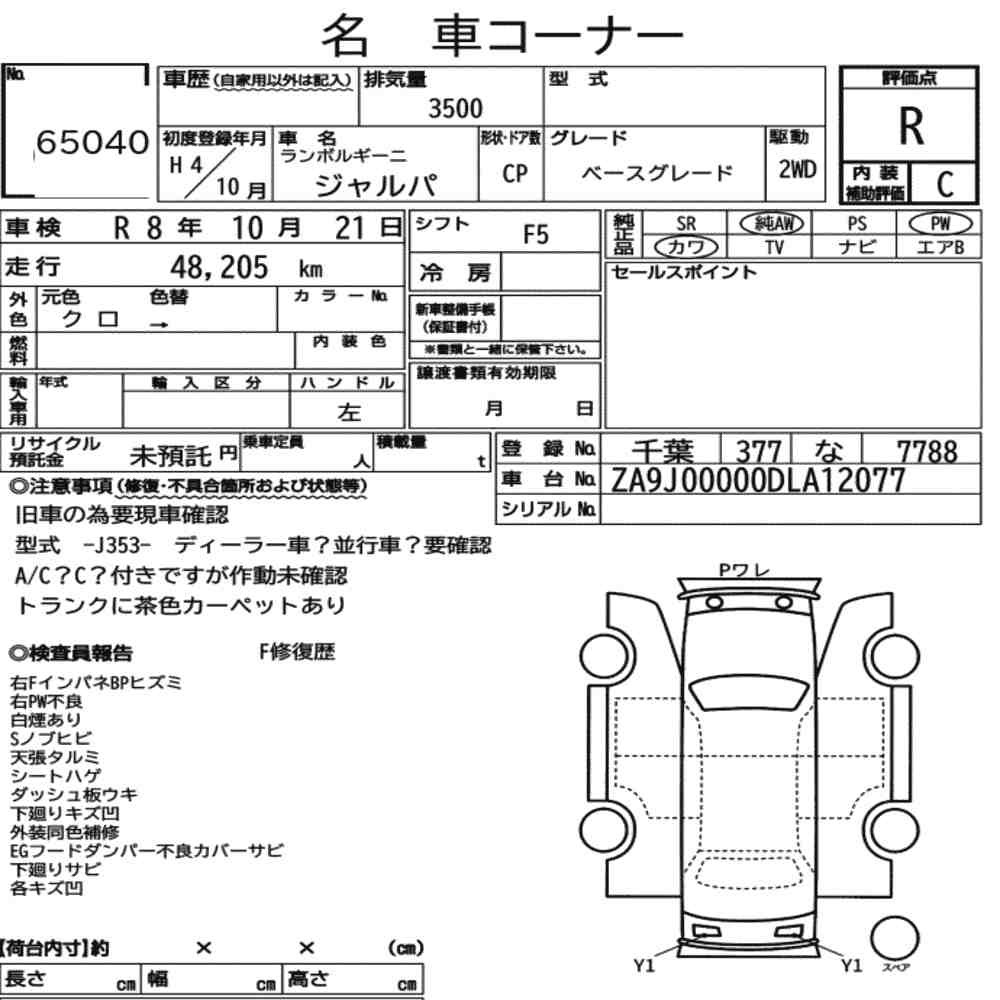
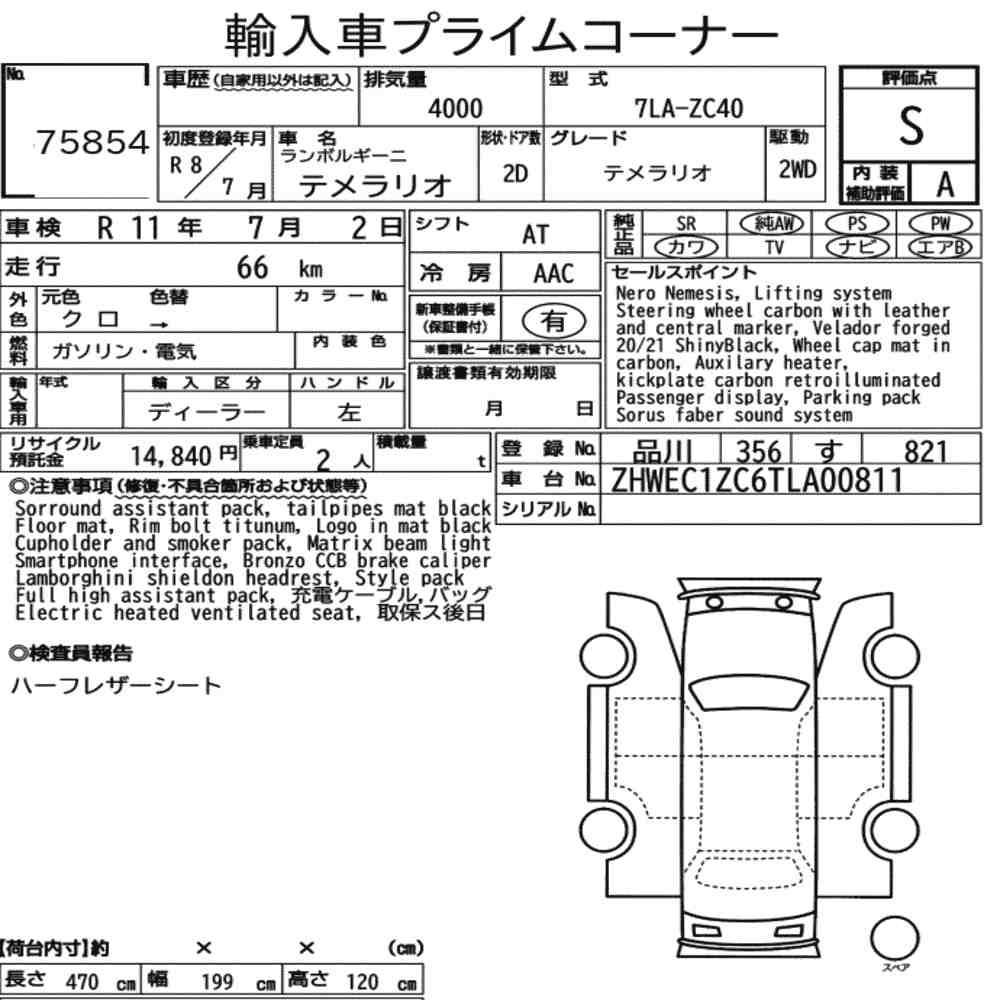
What we do exceptionally well. Our inspector visits every Lamborghini we seriously bid on — verifying original paint with a coating-thickness gauge, the completeness of the service record and the dealer history. On the Gallardo and early Huracán we check clutch condition (it can be costly on the older e-gear box), and on the Aventador we check for track wear and the ALA system on the SVJ. On the sheet we look for any engine or body swap. Cars sourced from Japan are usually in better shape than their European counterparts: lower mileage, garaged, and a meticulous service culture.