
In March 2026, Toyota Supra production ended for the second time in the model's history. The first time, in 2002, the last A80 rolling off the line marked the start of a legend that has pushed factory-stock cars to a quarter of a million dollars. Our catalog of Japanese auctions holds 392 Supras, from classic A70s to the final Supra MK5 model years, and every single one is right-hand drive. We break down what separates the 2JZ-powered A80 from the new A90, what the median starting prices in our data say, and what importing a Supra to Poland actually costs, item by item.
Supra MK5: production ends, the legend returns
The Supra MK5, codenamed A90, is the fifth generation of Toyota's cult coupe, built from March 2019 to March 2026 at the Magna Steyr plant in Graz, Austria, alongside the BMW Z4. Its B58 3.0 turbo straight-six started at 340 PS, rising to exactly 387 PS from the 2021 model year.
The name itself comes from Latin and means "above" or "to surpass". The story began in April 1978 with the Celica Supra, a stretched six-cylinder version of the regular Celica, and in 1986 the A70 became a standalone model. But the real myth was built by an absence. When Toyota withdrew the A80 in 2002, there was no Supra at all for seventeen years, and prices of clean cars outran every forecast. Today the same mechanism starts over: the pool of A90s built has just closed, and it will never grow again.
For a buyer in Poland, the natural source of both generations is Japan. It is the Supra's home market, with versions Europe never got, like the two-litre SZ and SZ-R, and with limited editions such as the RZ Horizon Blue. Add Japan's servicing culture and the low mileages you can see in our data below. How buying at auction actually works is covered in our guide to Japanese car auctions.
From the 2JZ-powered A80 to the A90: what changed
The A80, built from May 1993 to August 2002, was engineered with headroom to spare. Its heart is the 2JZ-GTE, a 2,997 cc straight-six with a cast-iron block and two sequential turbochargers: the first builds torque from low revs, the second joins in around 4,000 rpm. The Japanese version was rated at 280 PS, the ceiling of the manufacturers' informal agreement, but export cars got stronger hardware: 325 PS for America and 330 PS for Europe. Add the six-speed Getrag V160 and a body at least 91 kg lighter than its predecessor thanks to an aluminium bonnet, targa roof and suspension components. The workshop consensus has not moved in years: the factory bottom end takes power figures other engines can only dream of, without opening the block. We cover that phenomenon in our piece on the legendary JDM engines.
Pop culture finished the job. The orange A80 from the first Fast and Furious film, driven on set by Paul Walker, sold at the Barrett-Jackson Las Vegas auction in June 2021 for $550,000, the most ever paid for the model. The twist: the movie car, in Candy Orange paint with a Bomex body kit, had an ordinary automatic, with a manual shift knob added purely for filming. Three years earlier, at around 4 a.m. on 4 November 1998, Kazuhiko "Smokey" Nagata of Top Secret took his gold, heavily built Supra to an indicated 197 mph, around 317 km/h, on England's A1(M) motorway. Police clocked him at 194 mph, to this day the highest speed ever recorded on a British public road. It ended with a fine, a licence ban and deportation, and Nagata became the face of JDM culture overnight.
The A90 came to life differently. Toyota worked out that a bespoke platform for a two-seat coupe would not add up, so it split the work with BMW: the Germans supplied the architecture, the B48 and B58 engines, the eight-speed ZF automatic and the cabin electronics, while chief engineer Tetsuya Tada's team tuned the suspension, the steering and a coupe body stiffer than the Z4 roadster. The three-litre B58 made an even 340 PS in the 2019 and 2020 model years, 387 PS from 2021, and a six-speed manual joined in 2022 for the 2023 model year. The farewell Final Edition, with 324 kW, around 440 PS, and 571 Nm of torque, was limited to just 300 cars, 150 each for Japan and Europe. The internet long dismissed the A90 as a "Z4 in a costume", but the more cars reached drivers and tuners, the quieter that charge became: the two cars differ clearly in character, and the B58 has proven a worthy successor to the 2JZ.
Supry z Japonii na aukcji

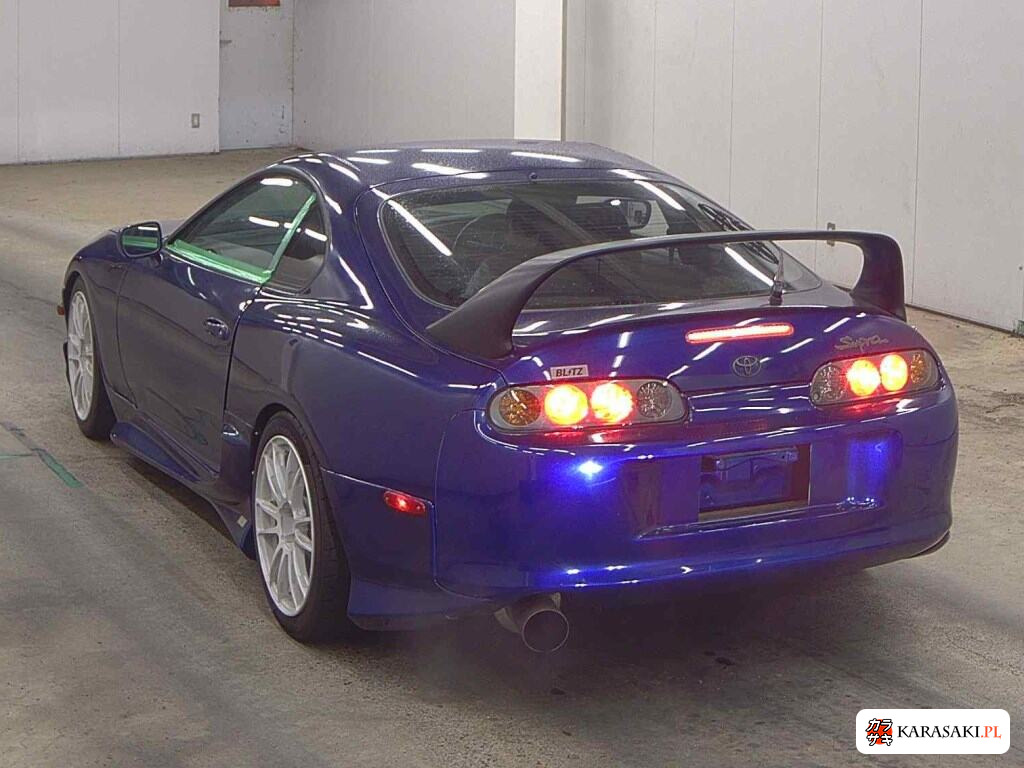
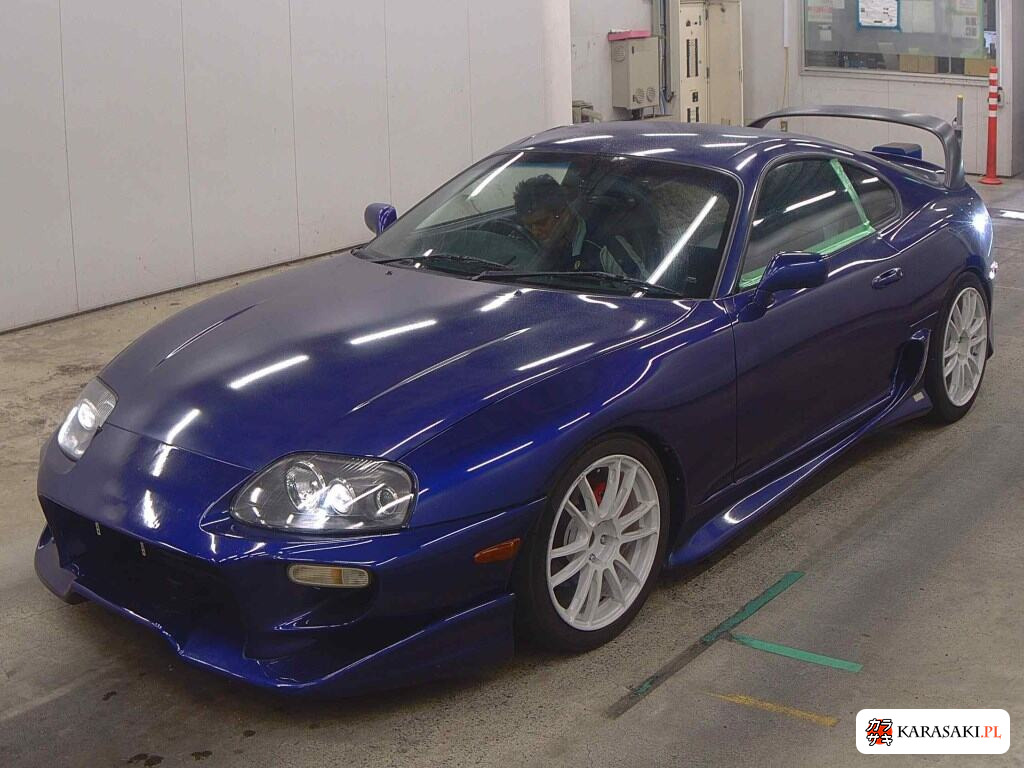
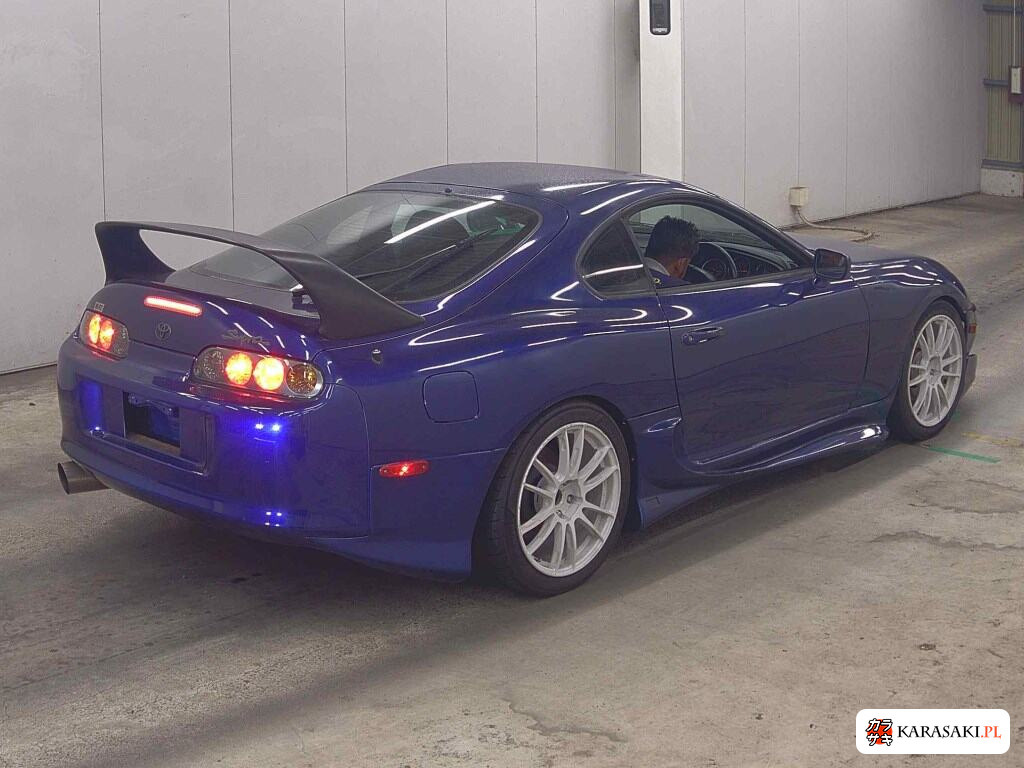
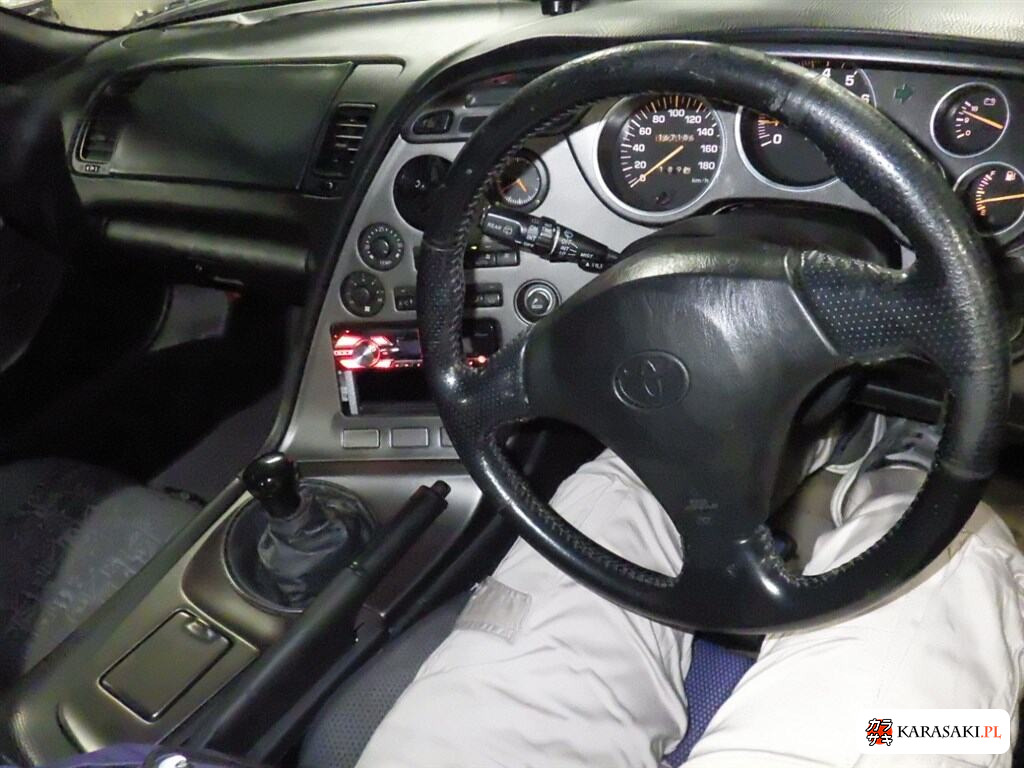
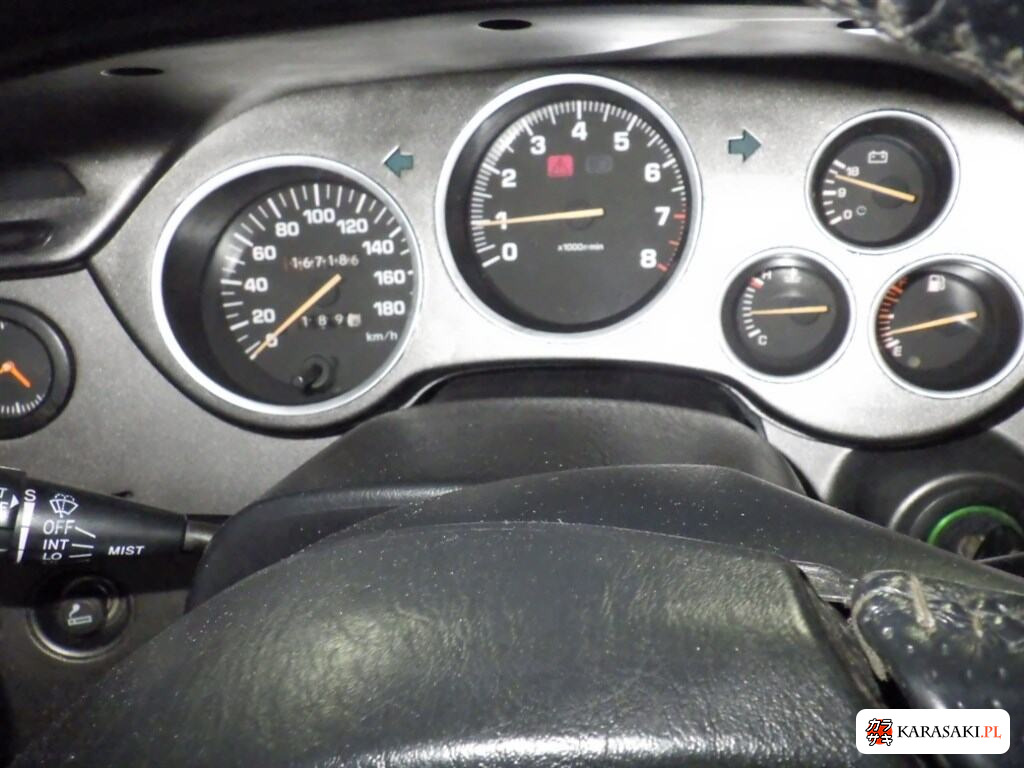
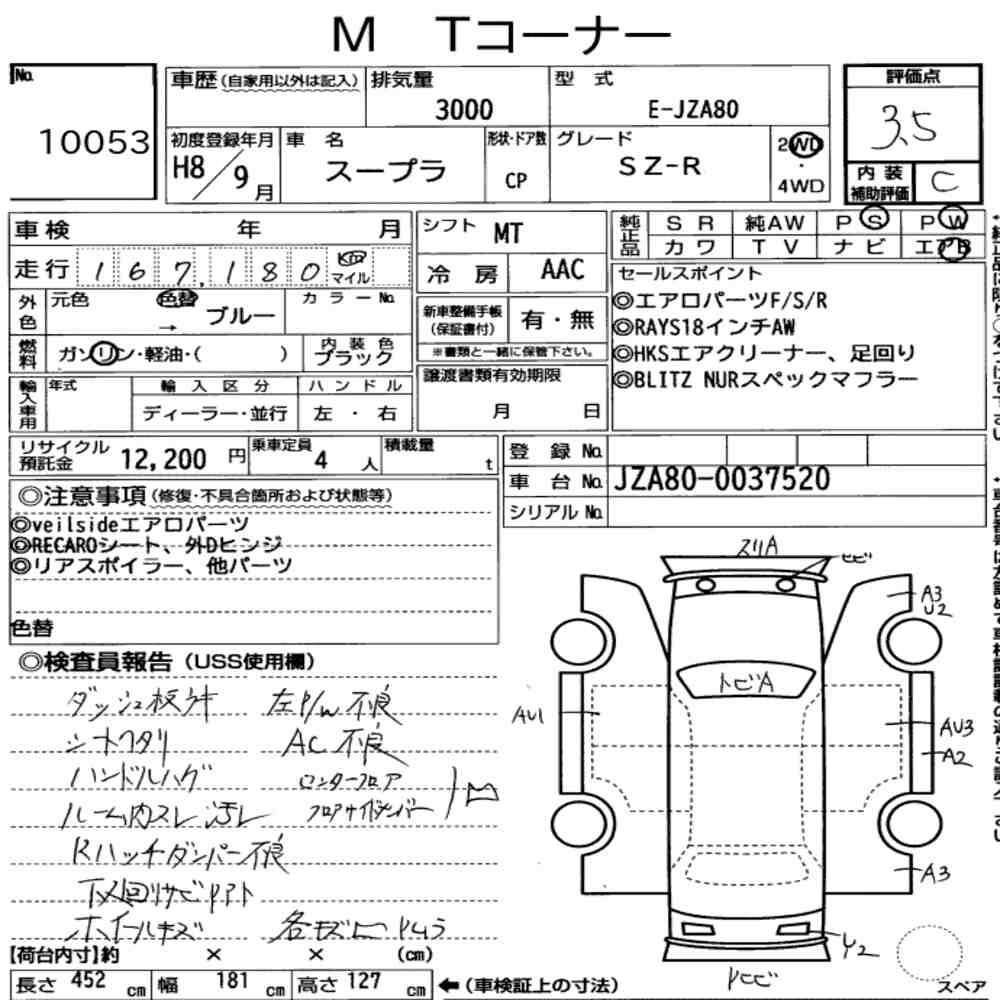

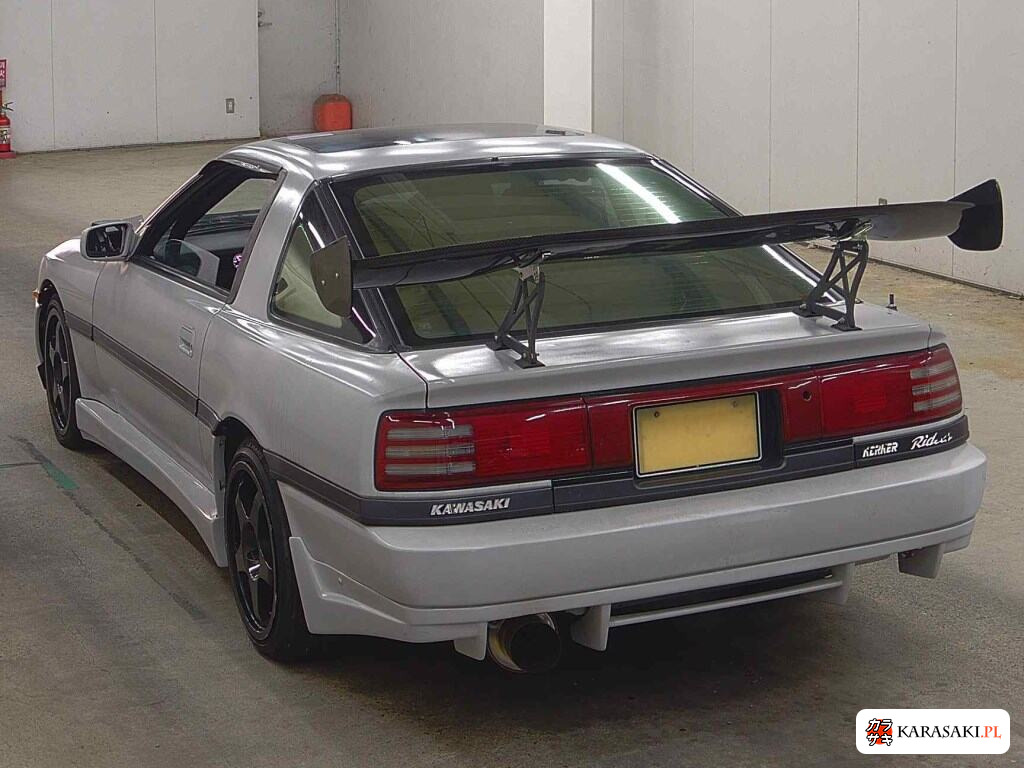
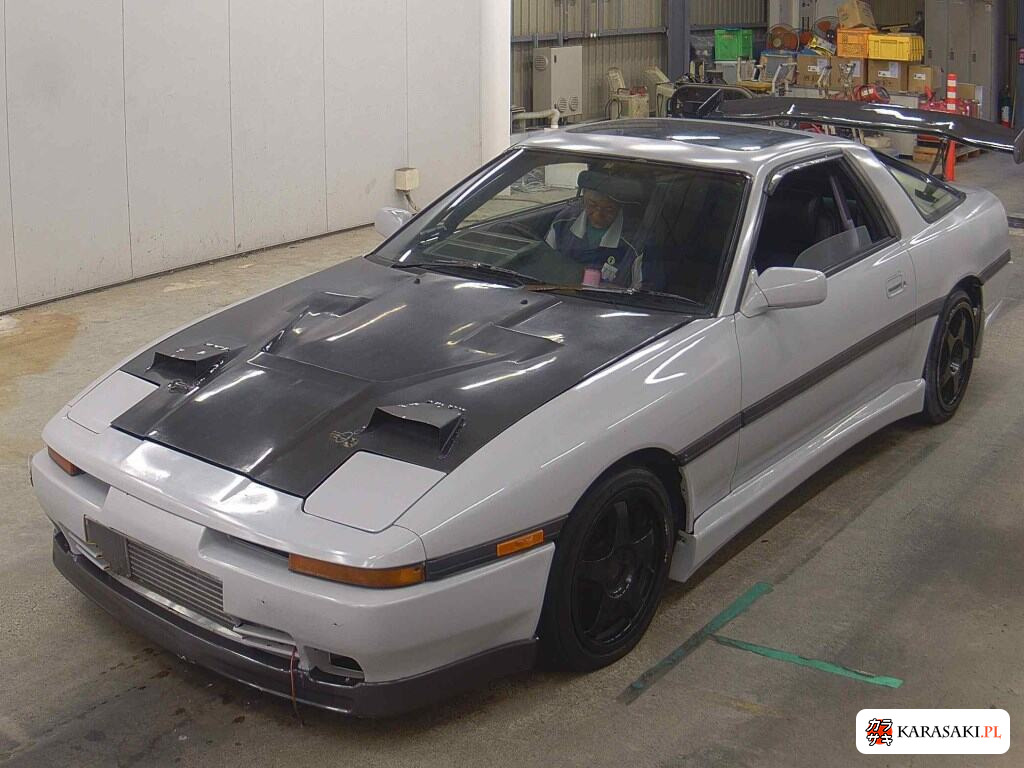
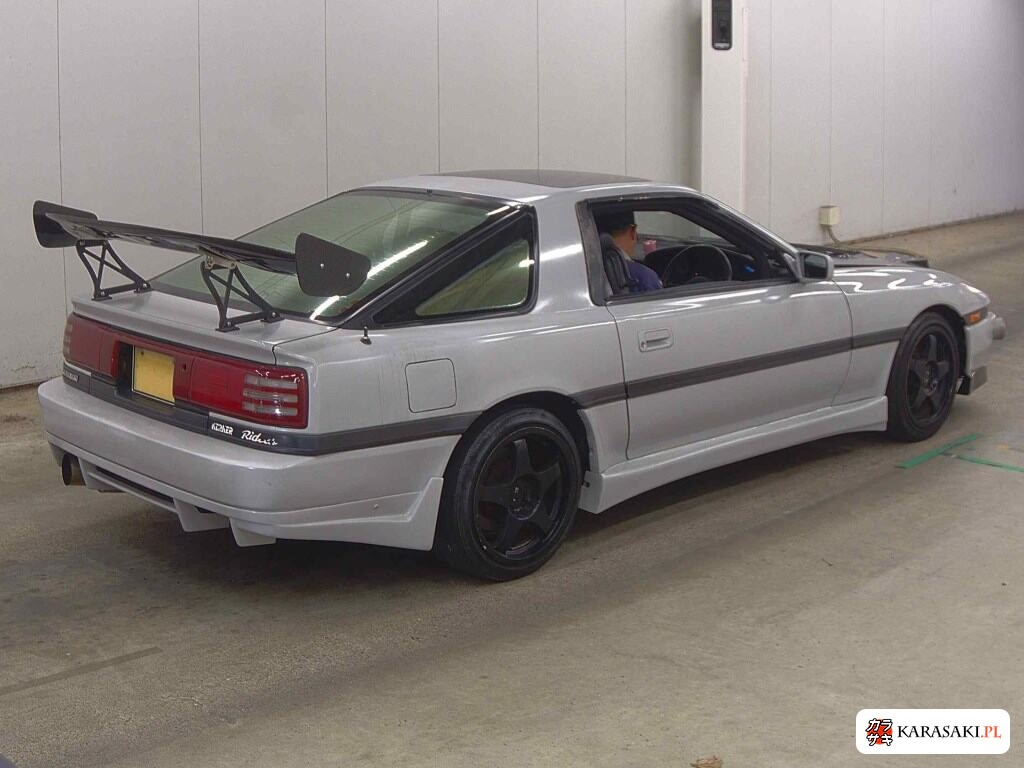
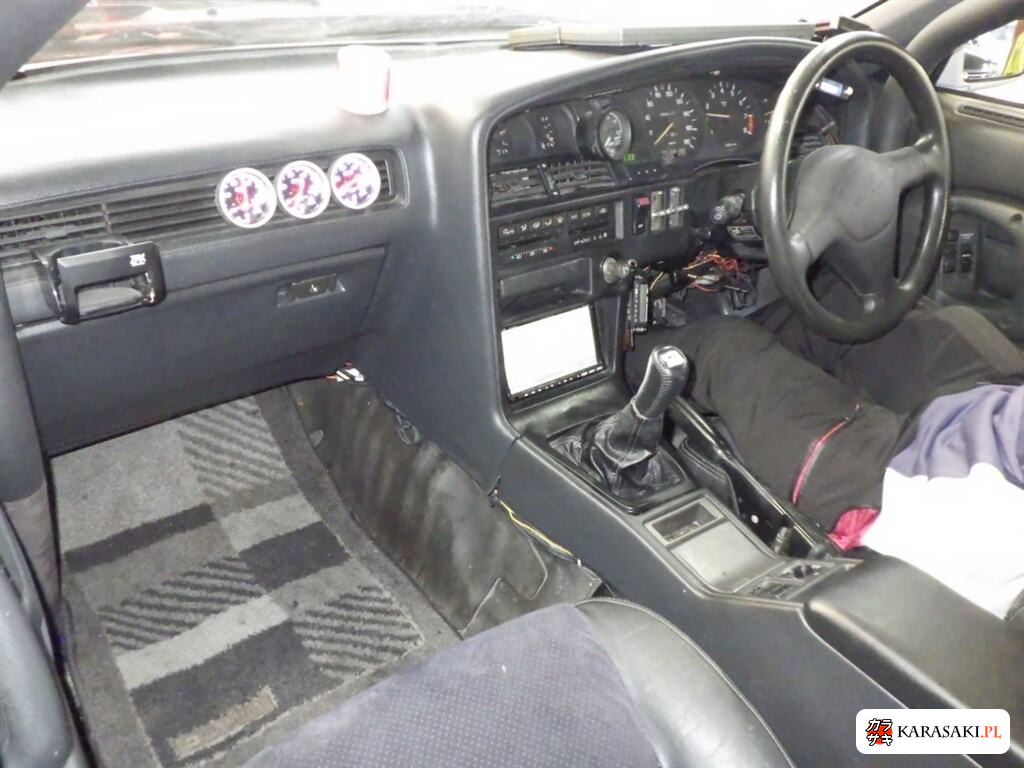
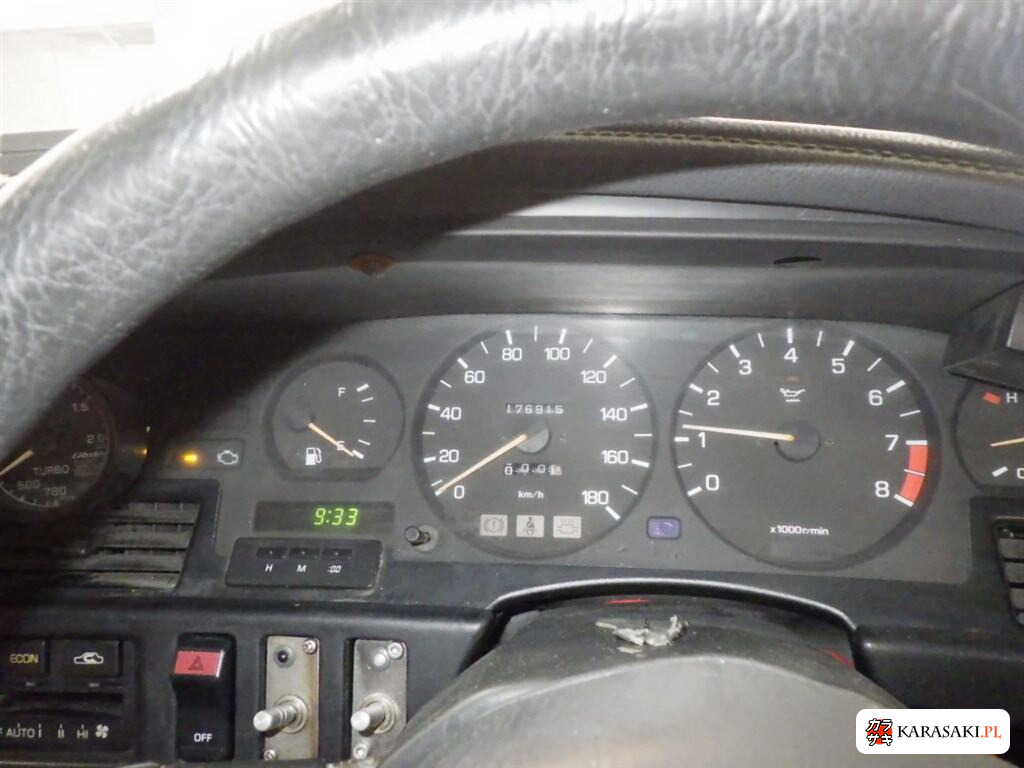
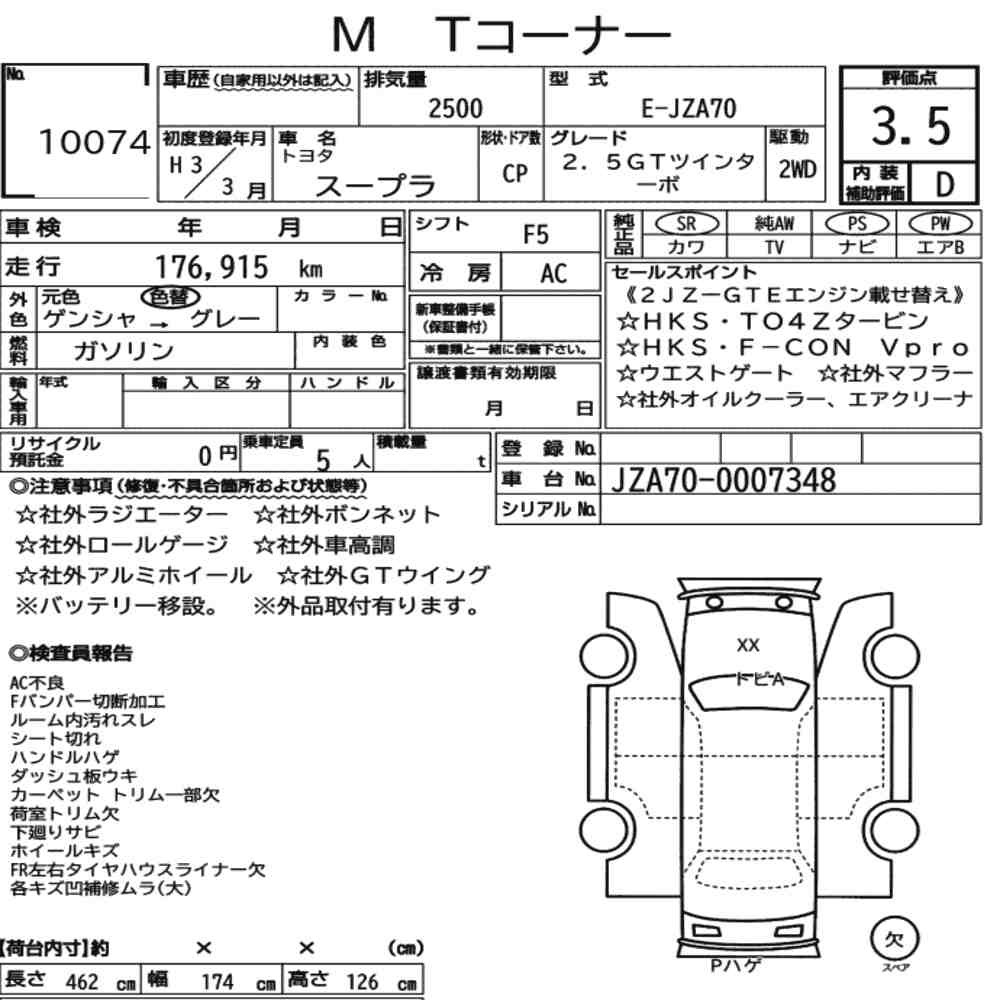

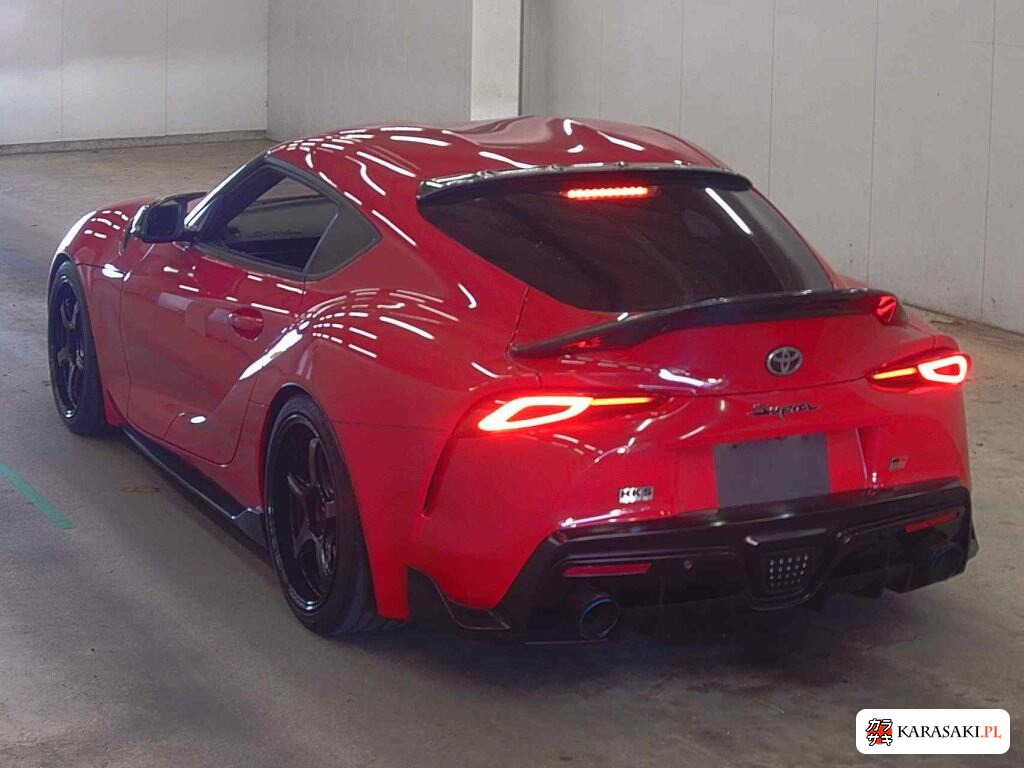
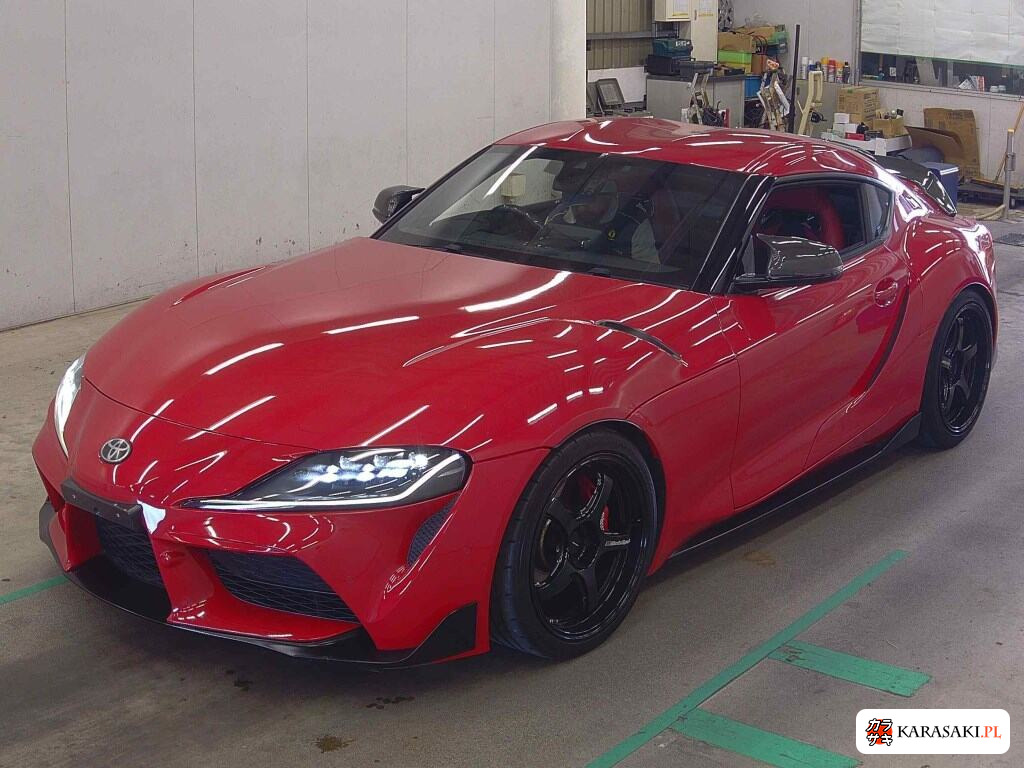
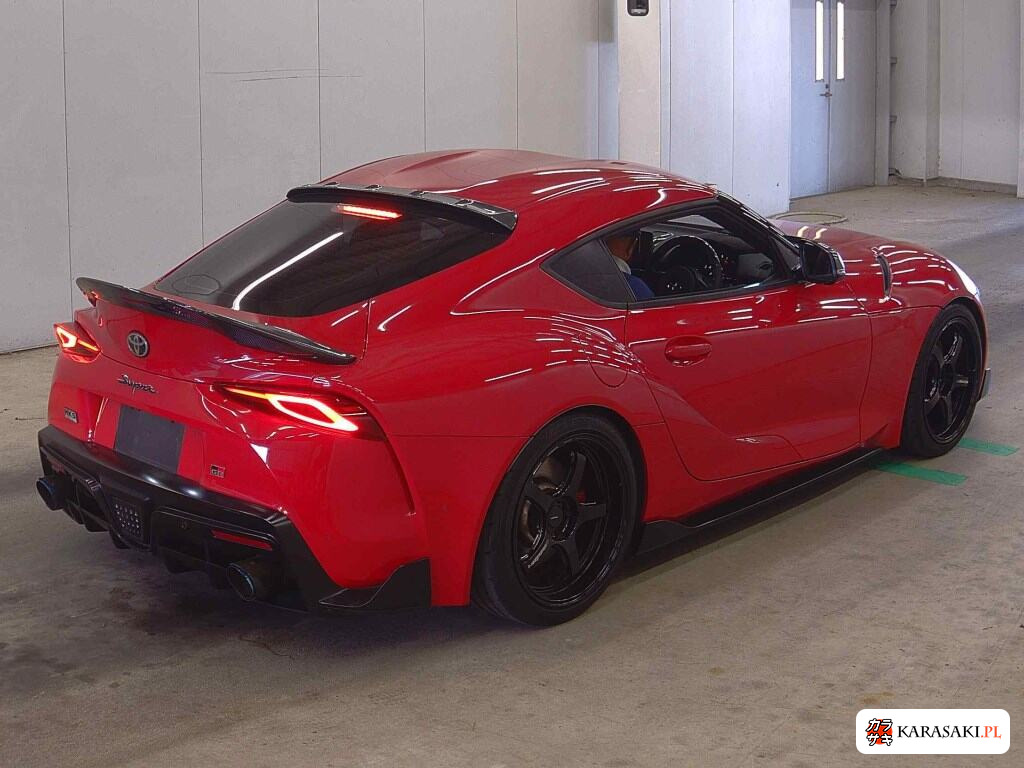
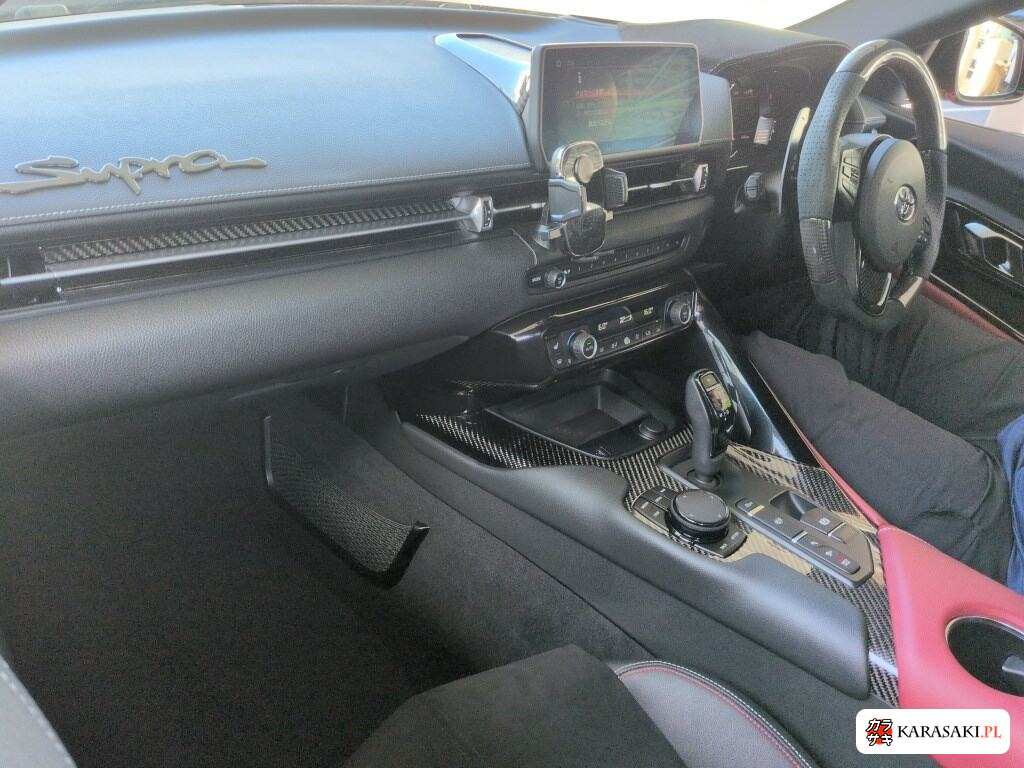
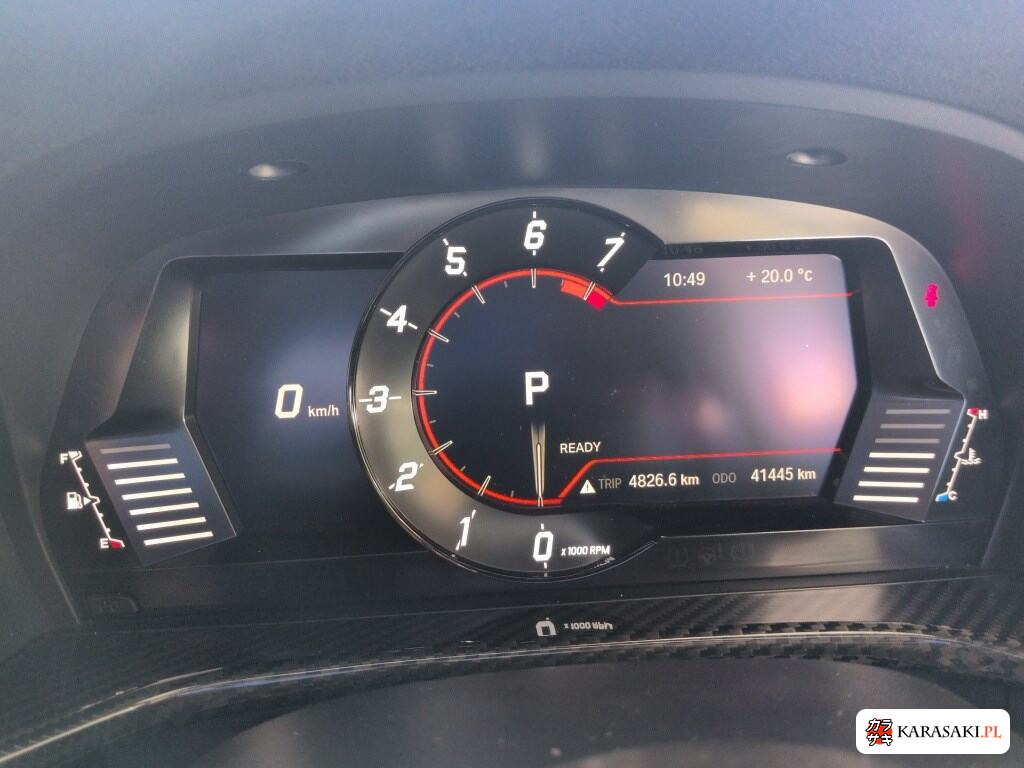
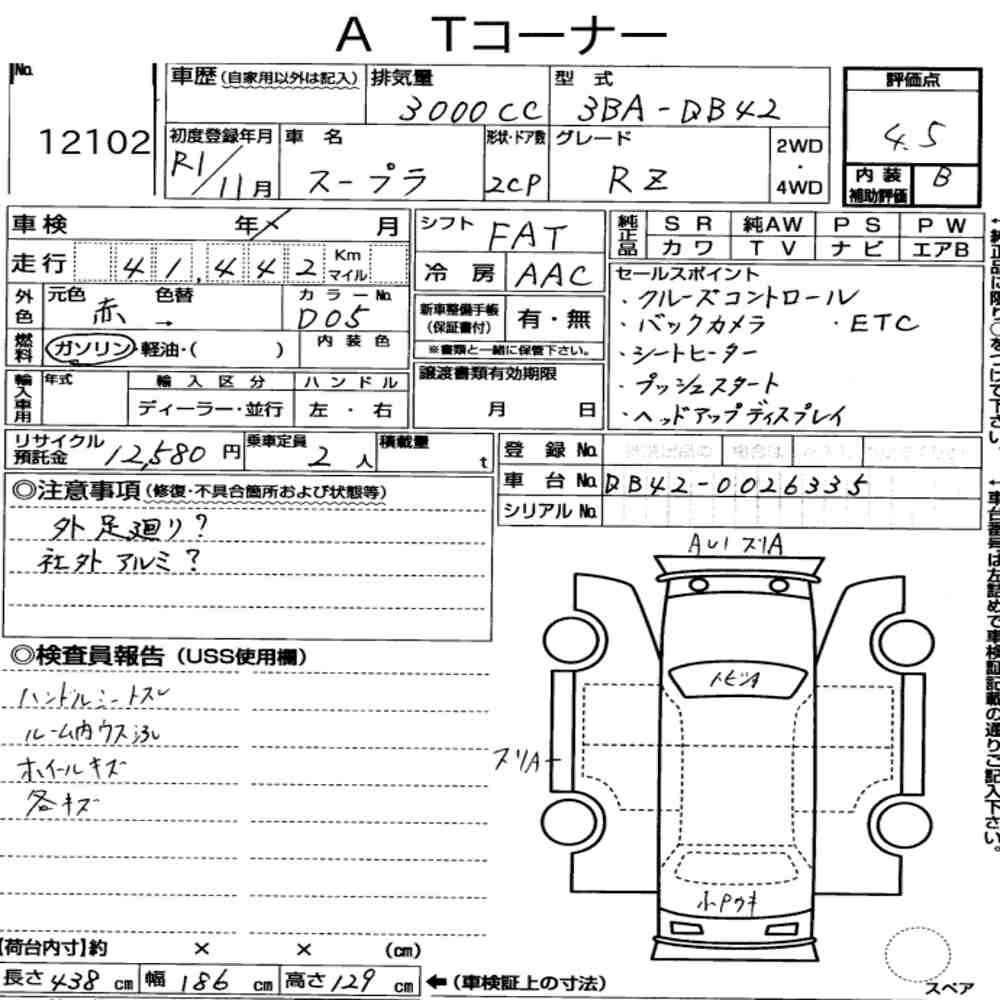

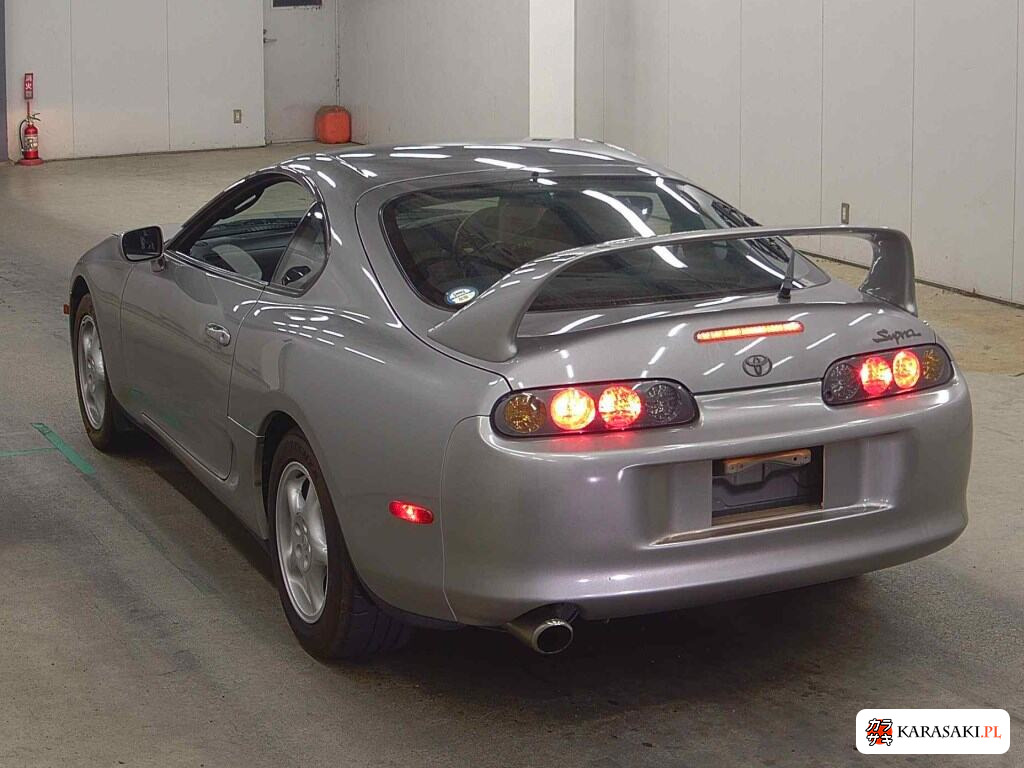
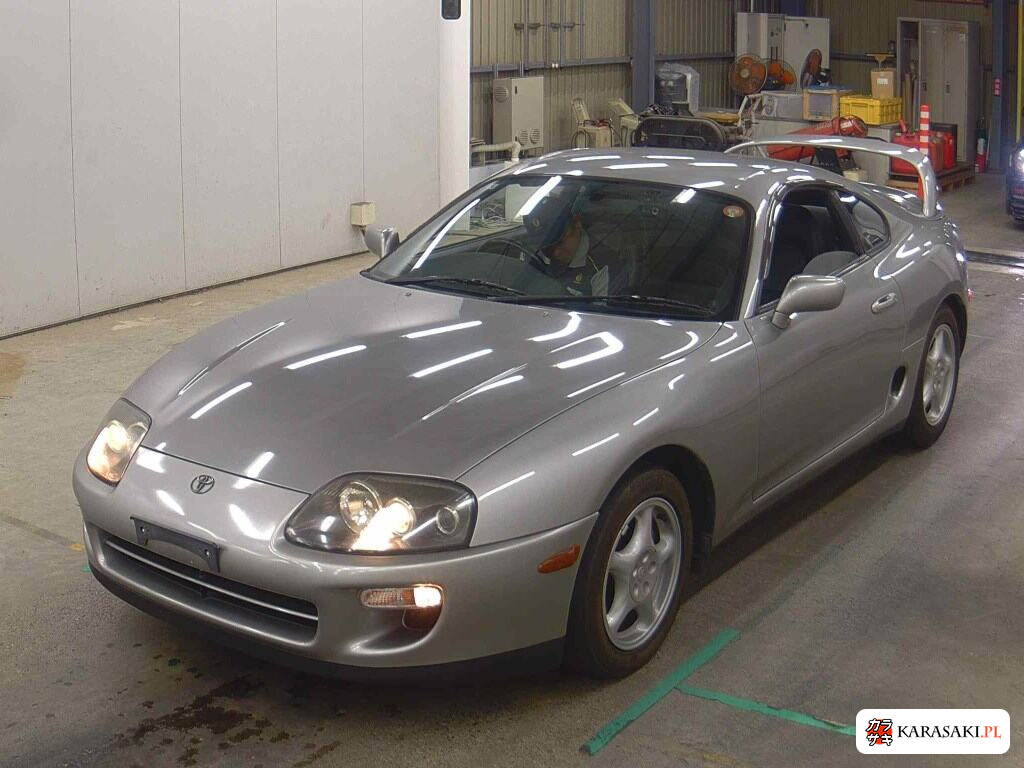
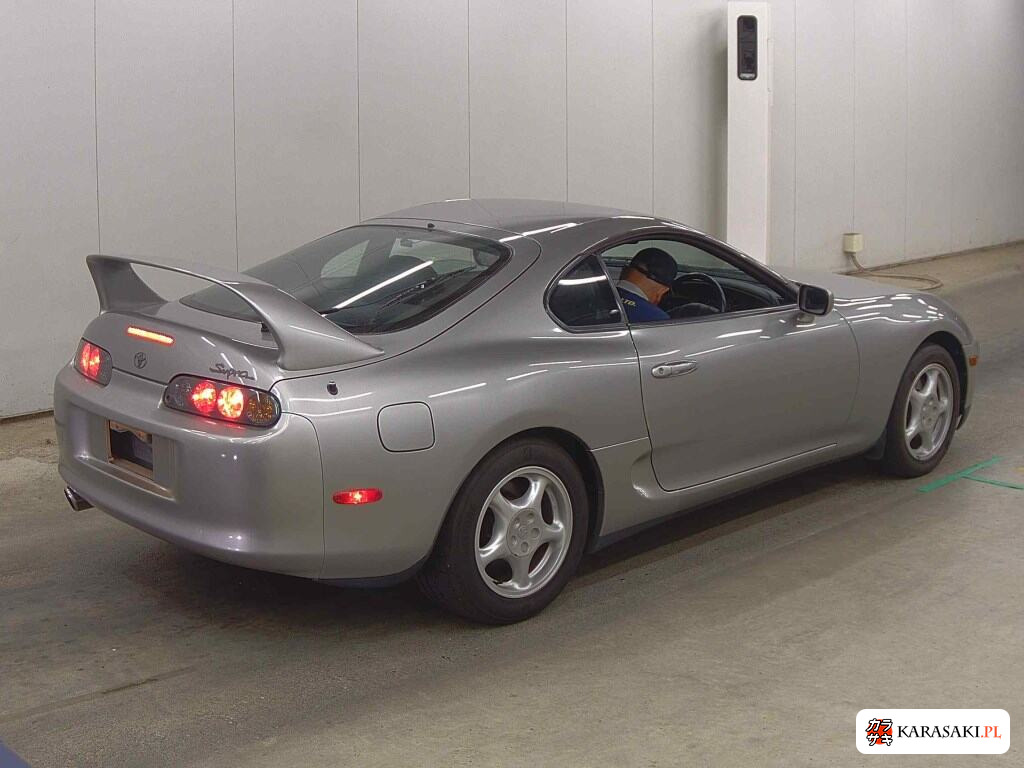
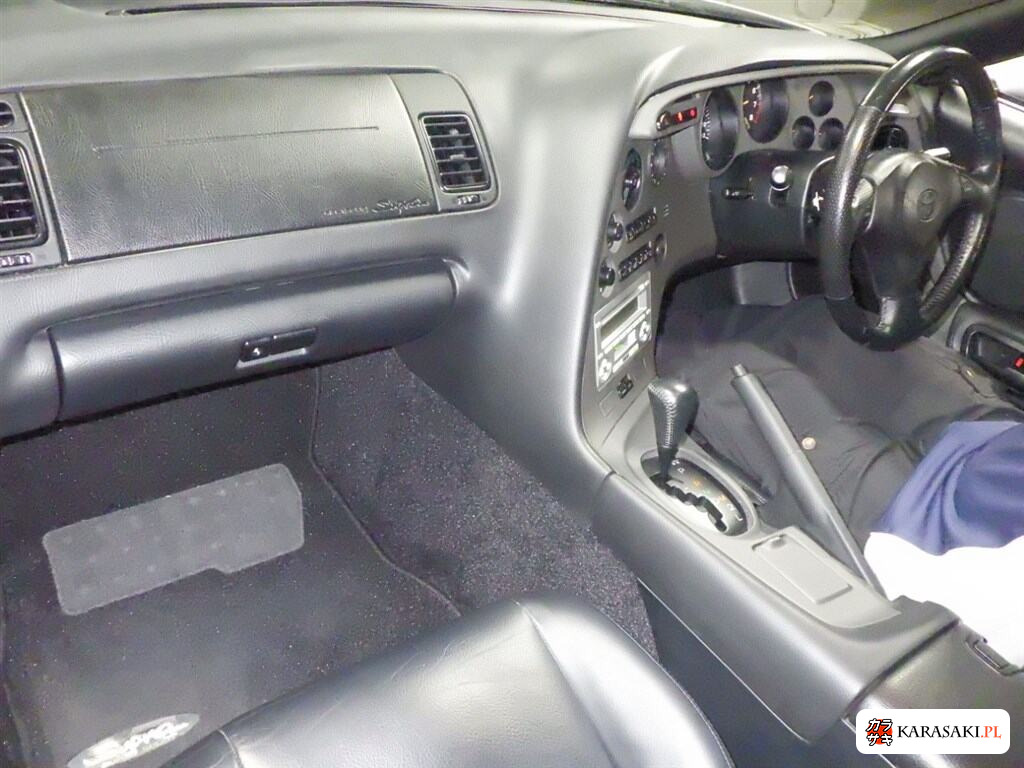
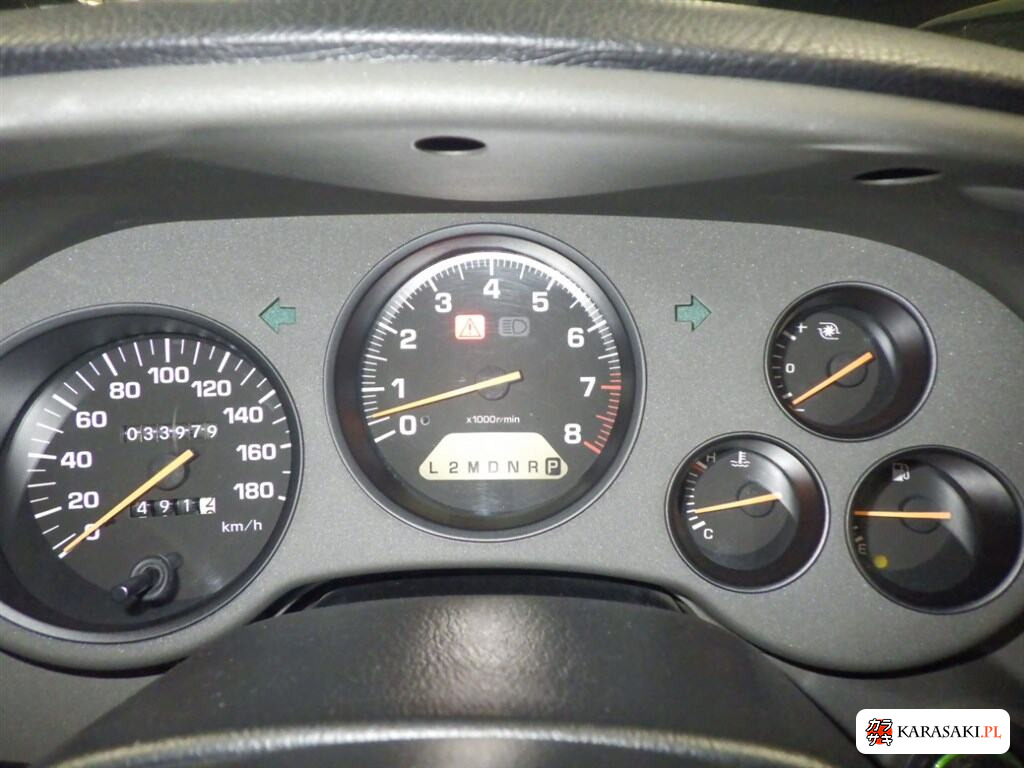
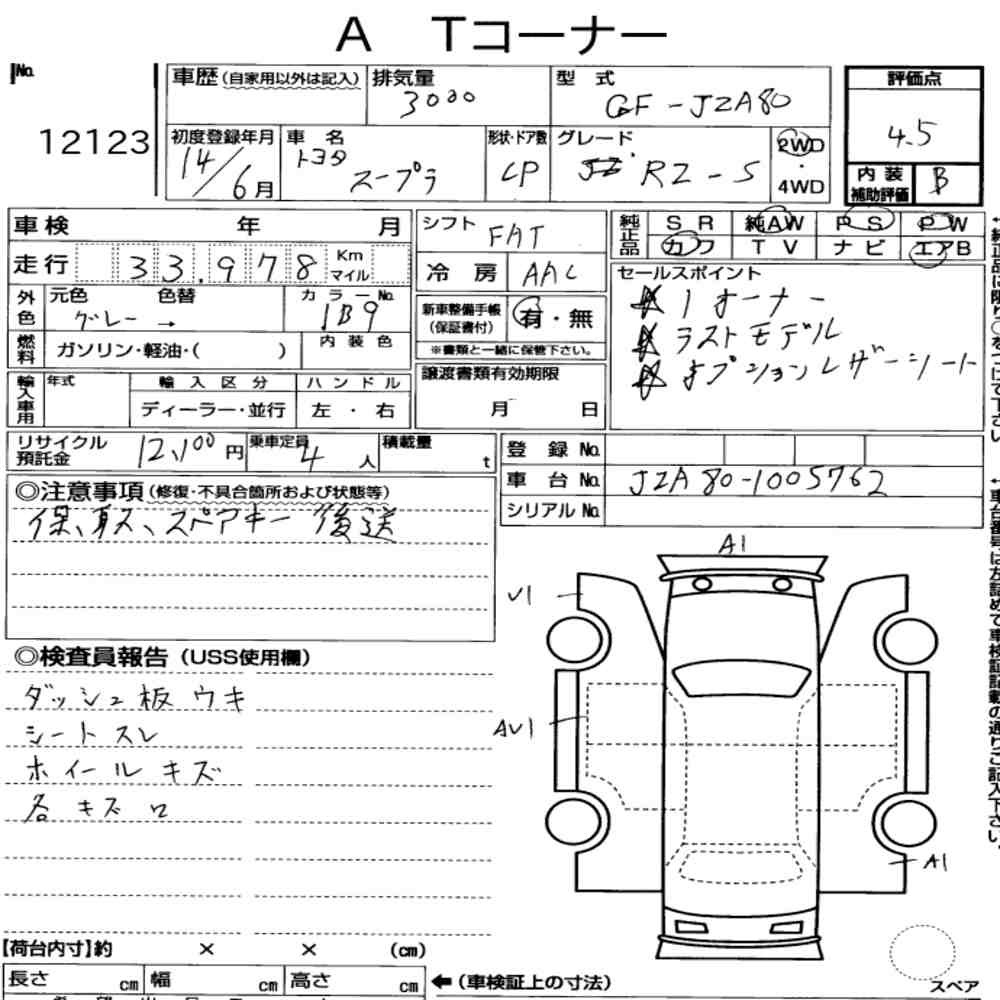

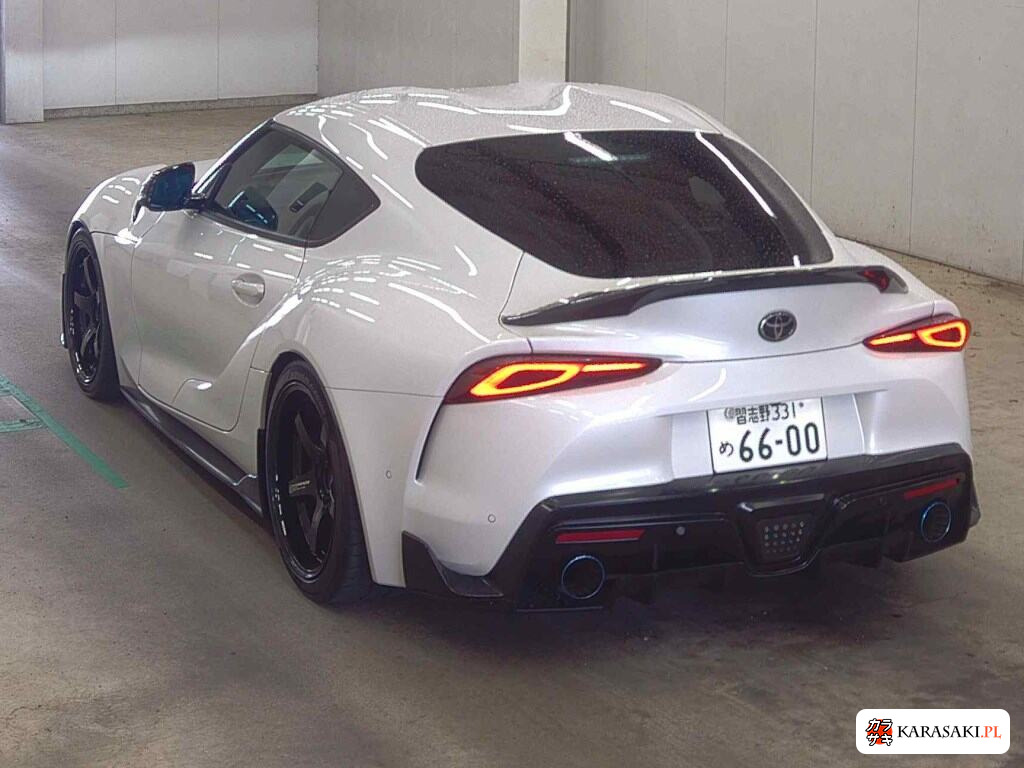
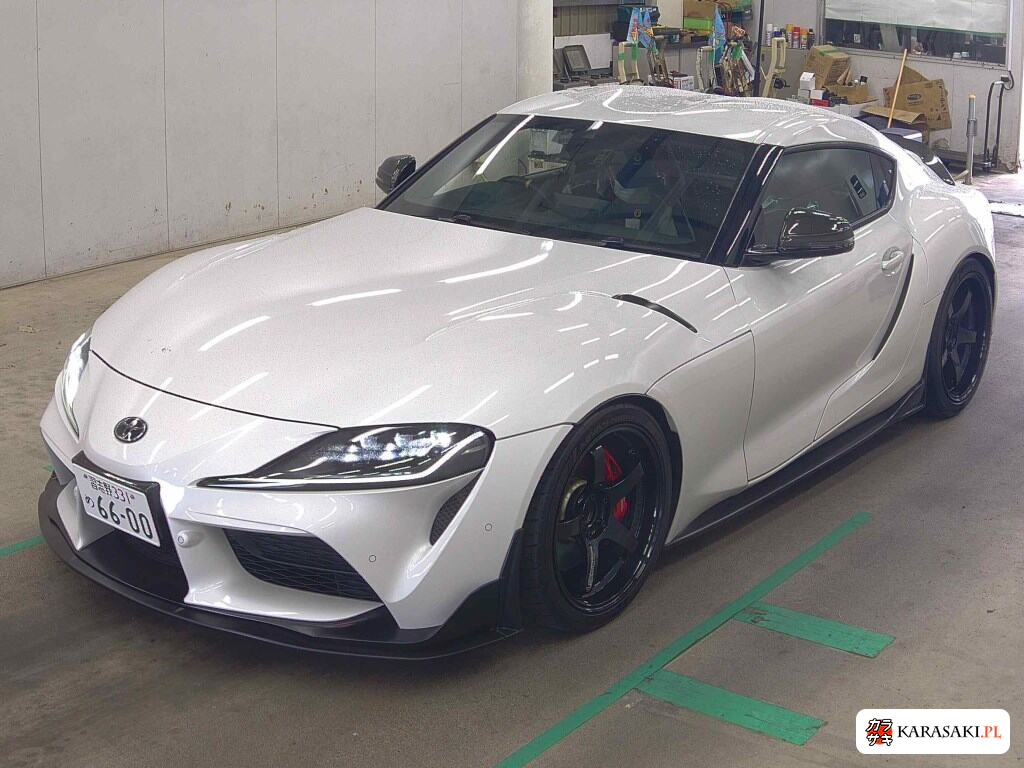
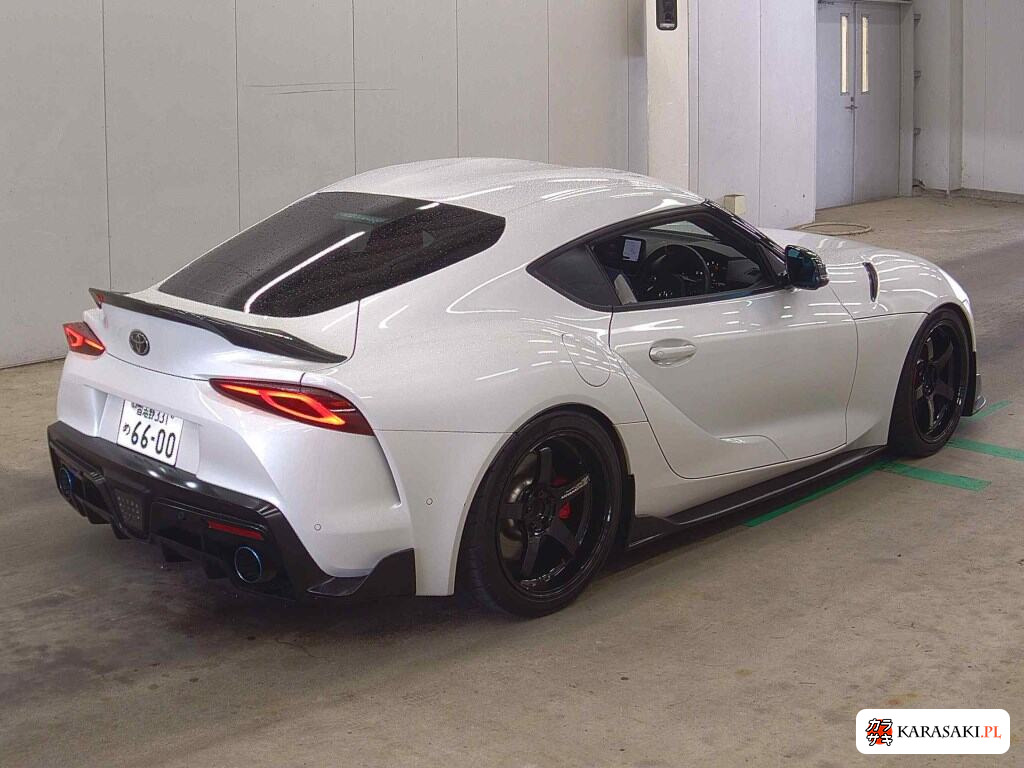
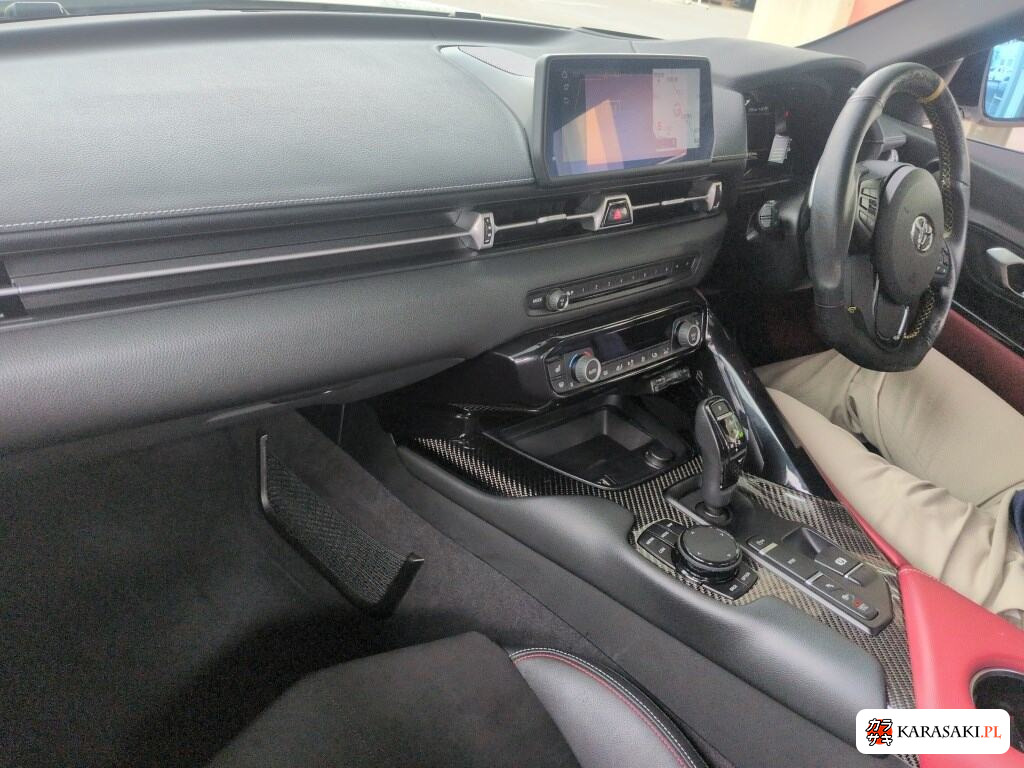
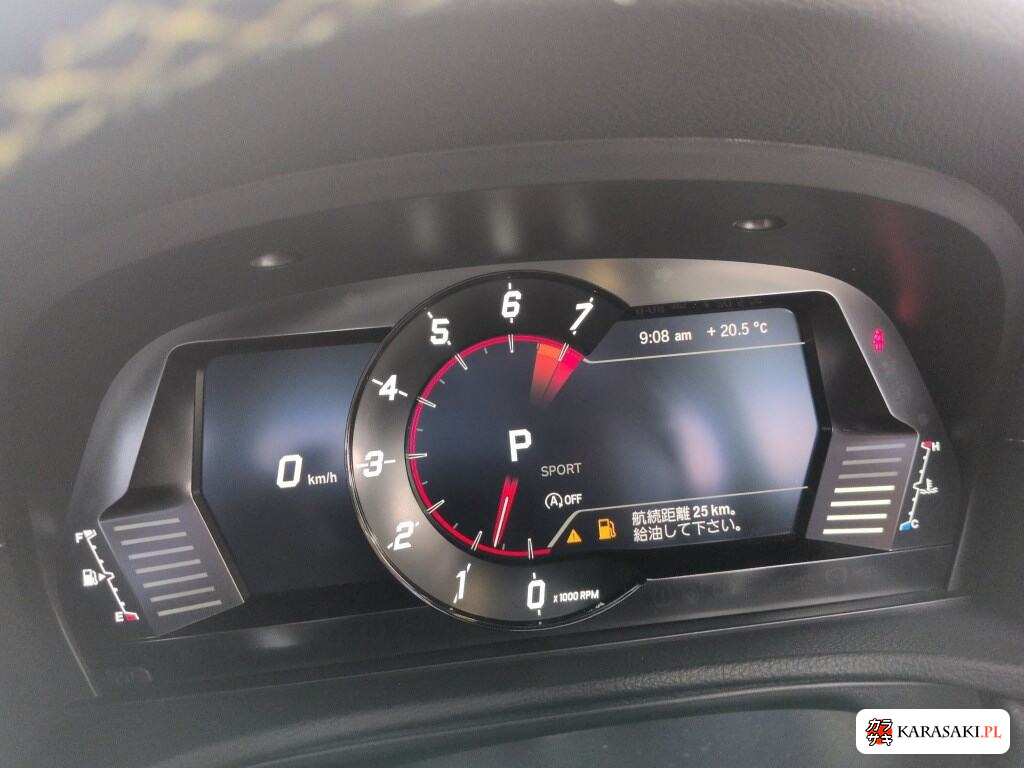
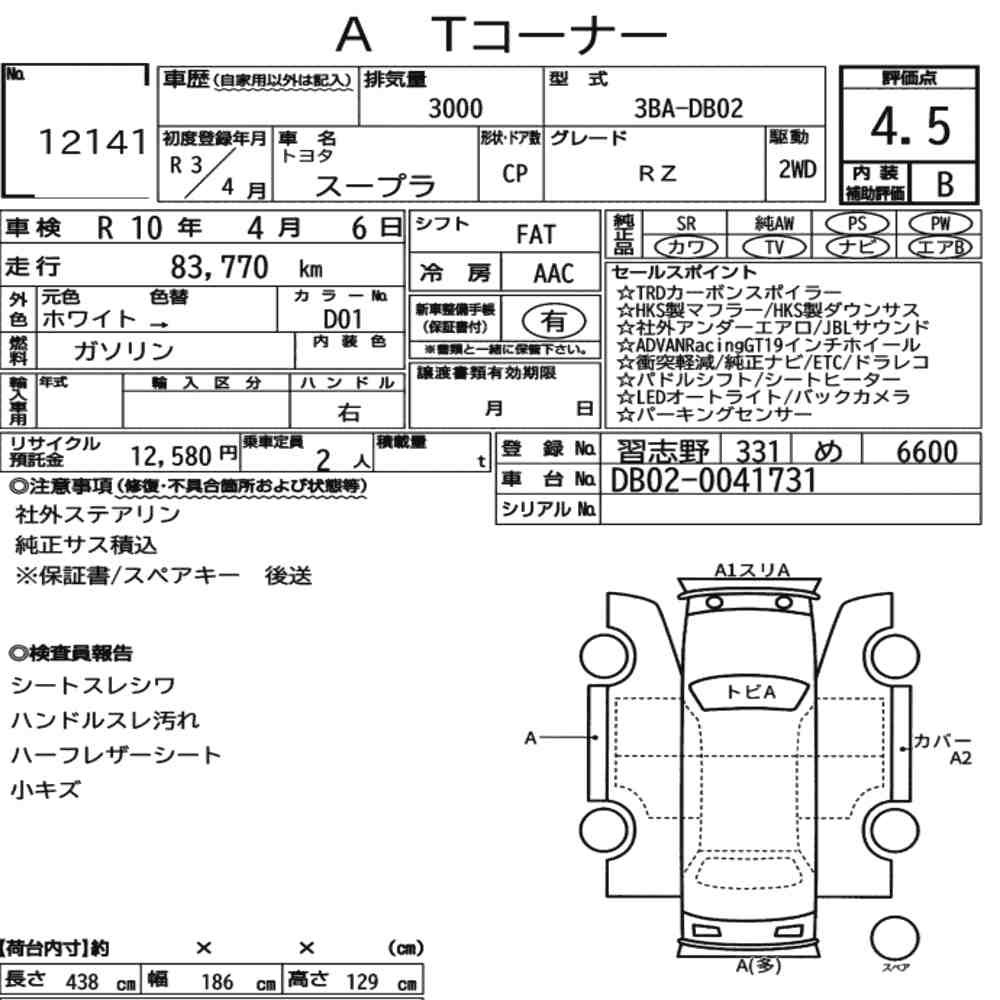

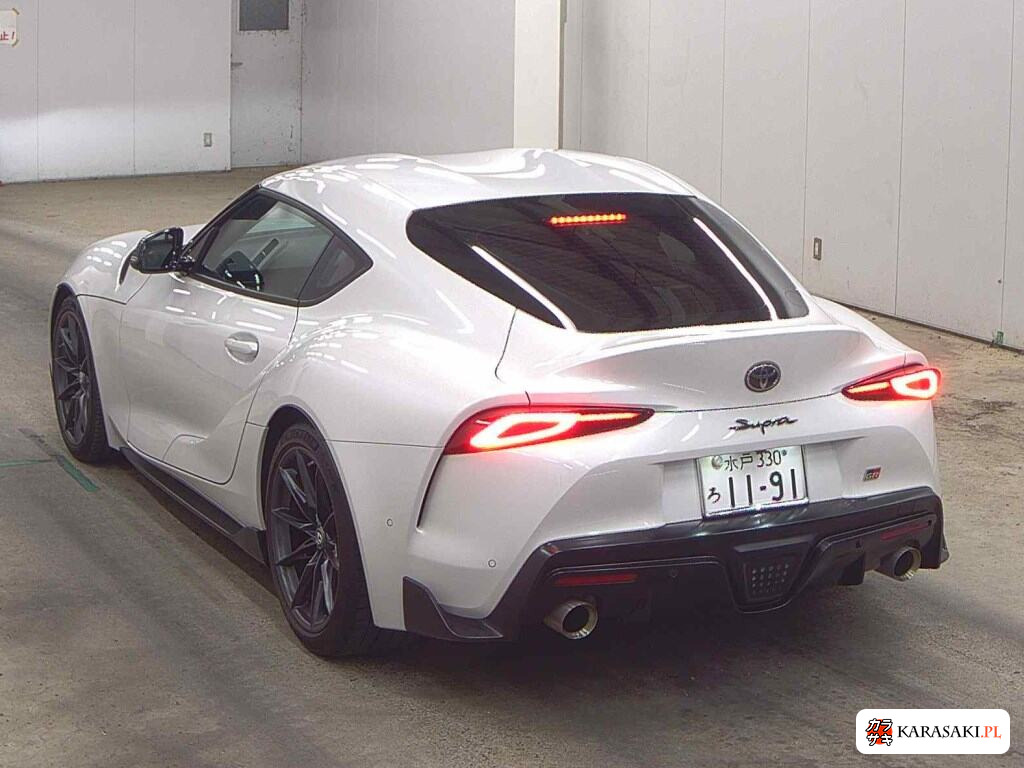
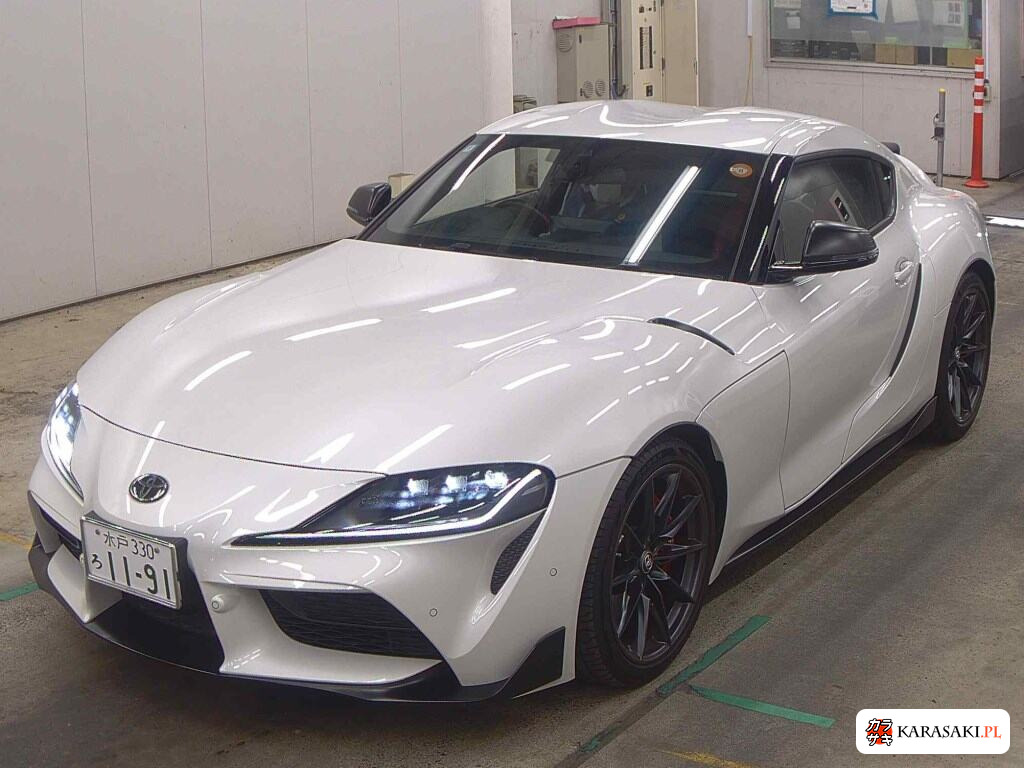
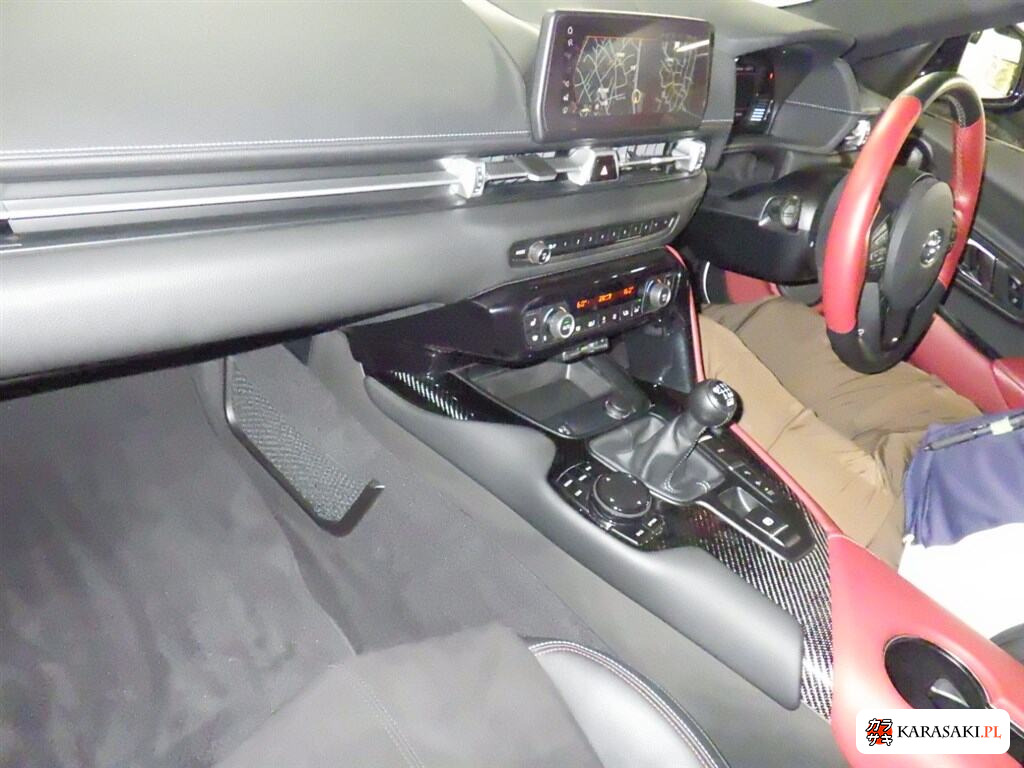
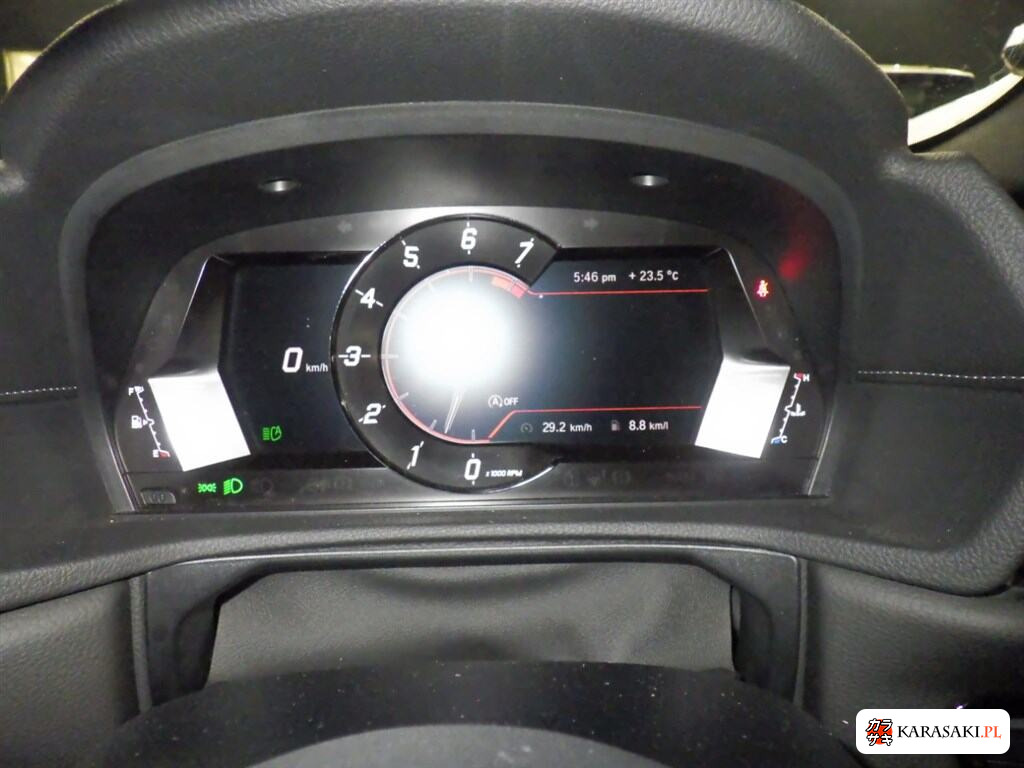
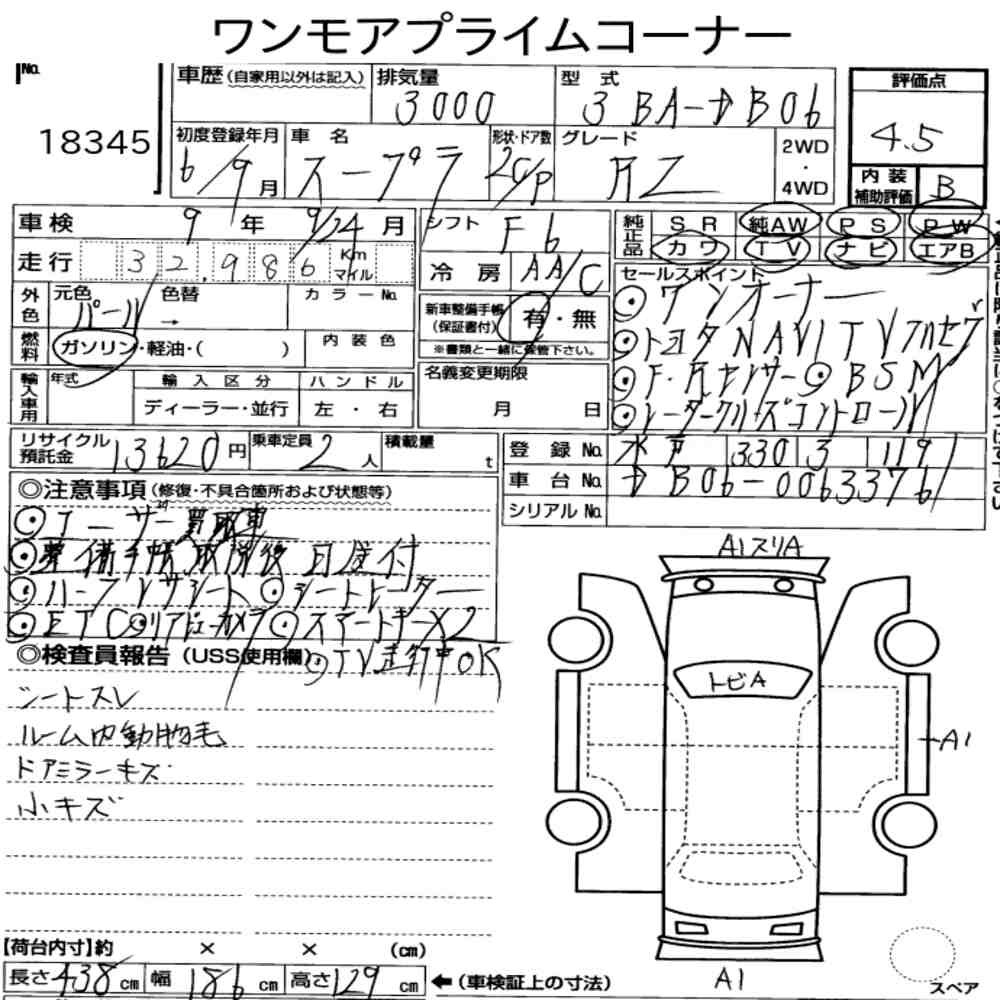

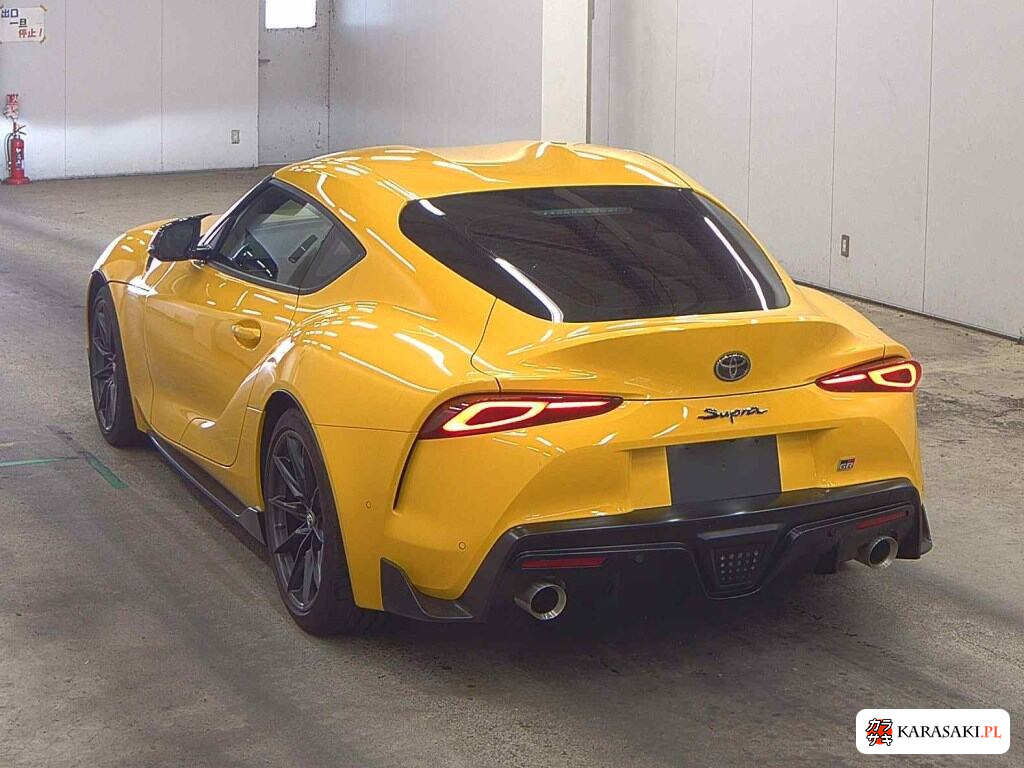
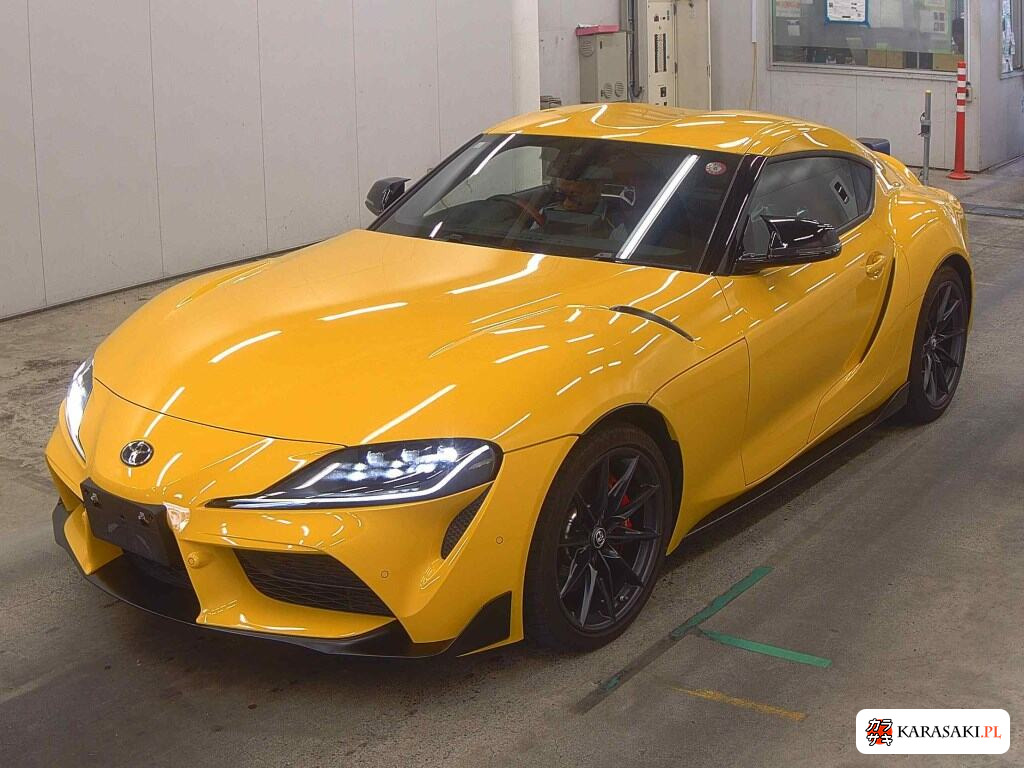
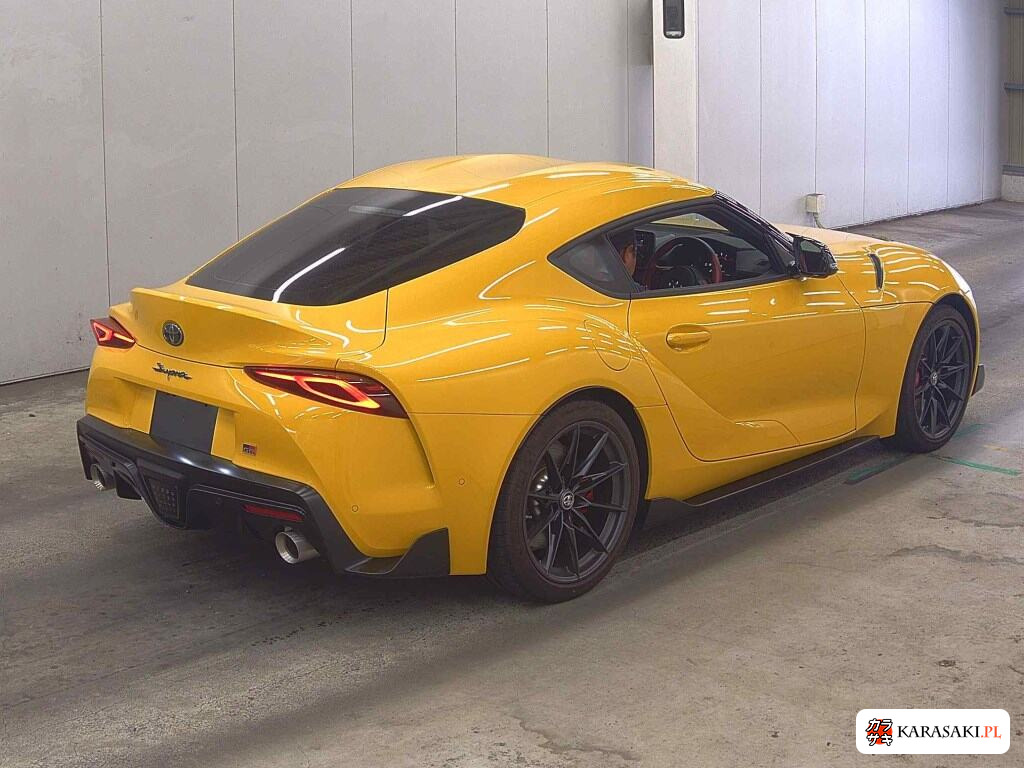
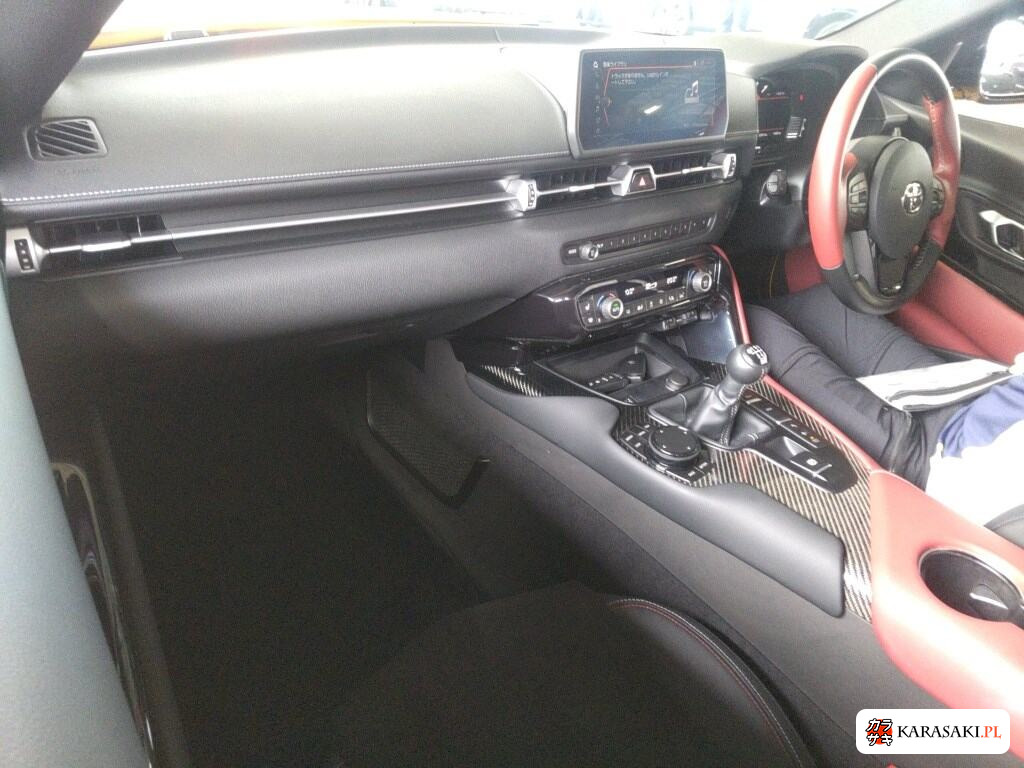
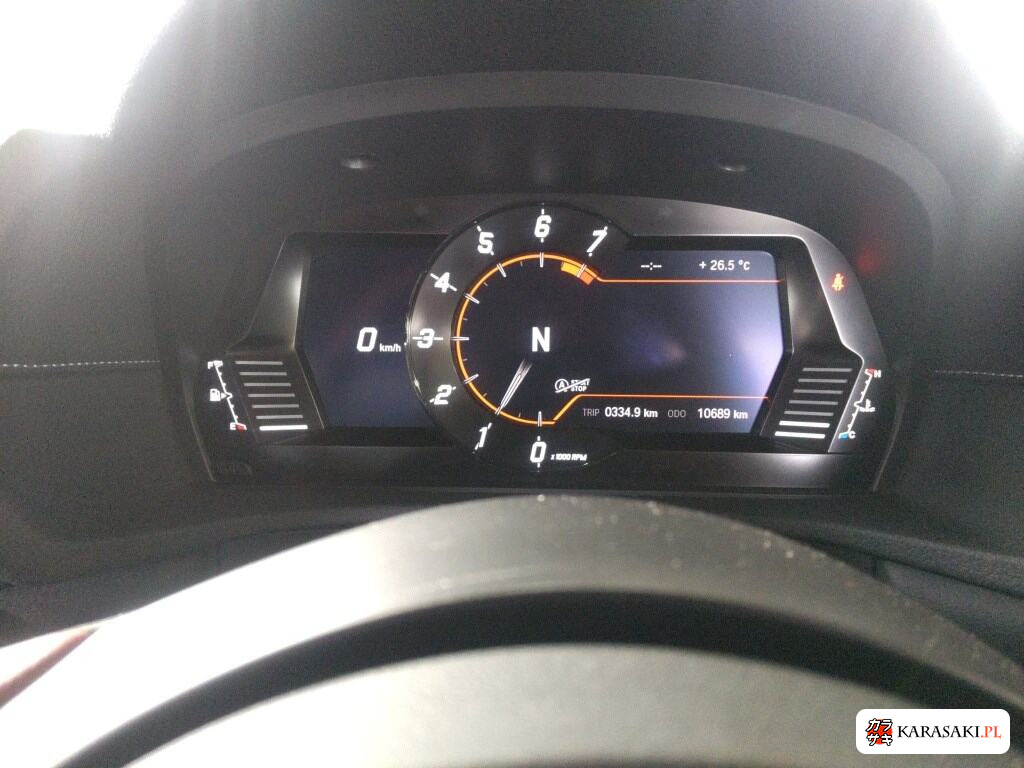
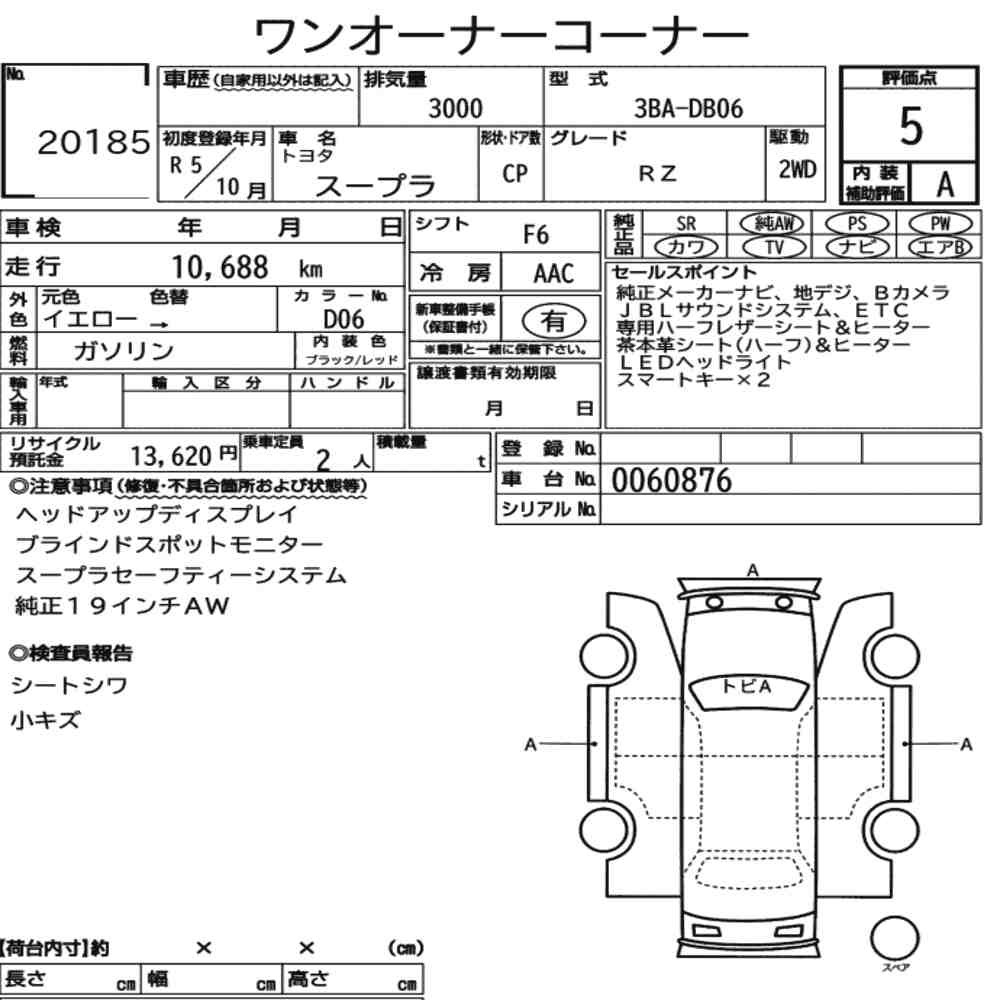

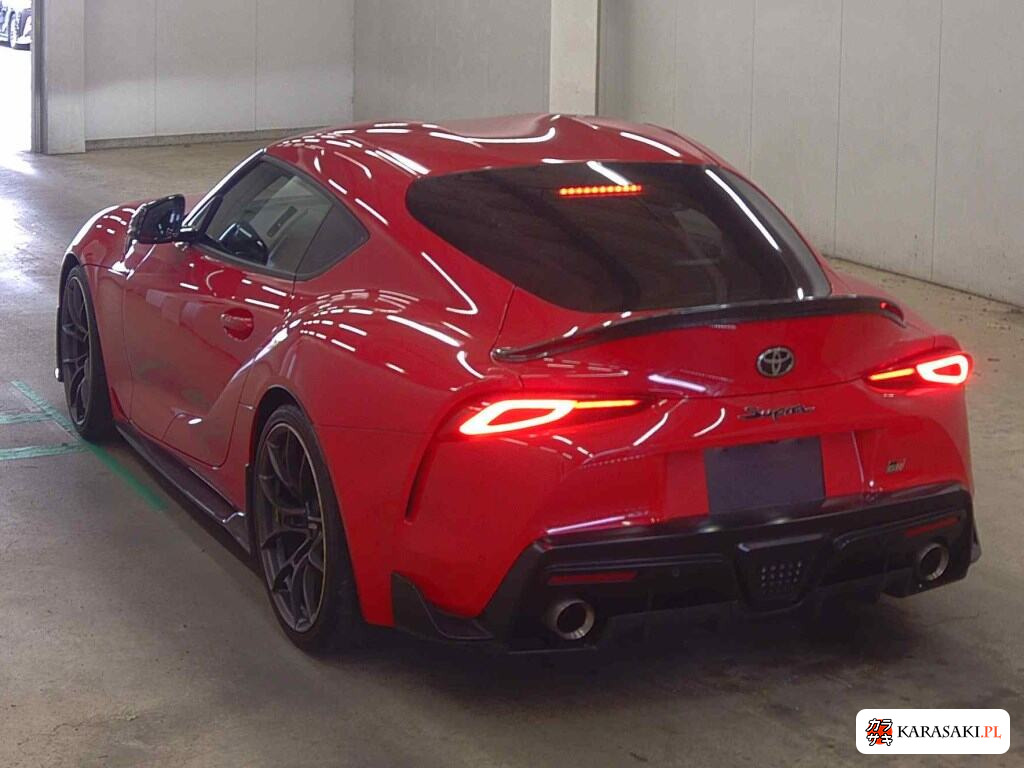
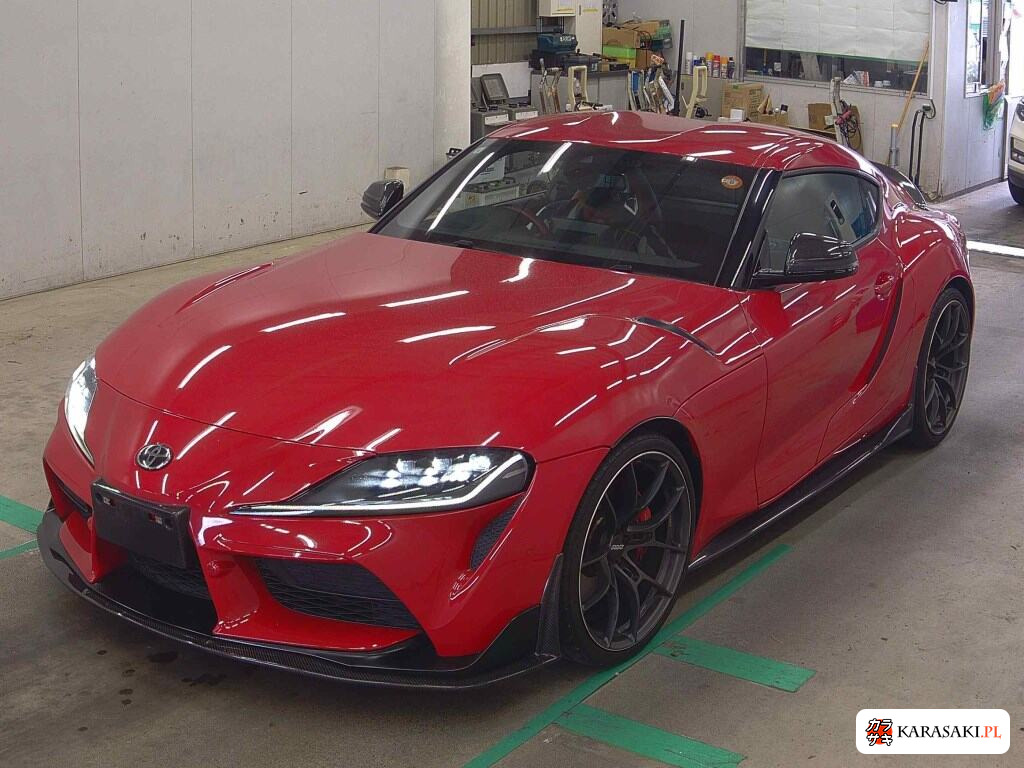
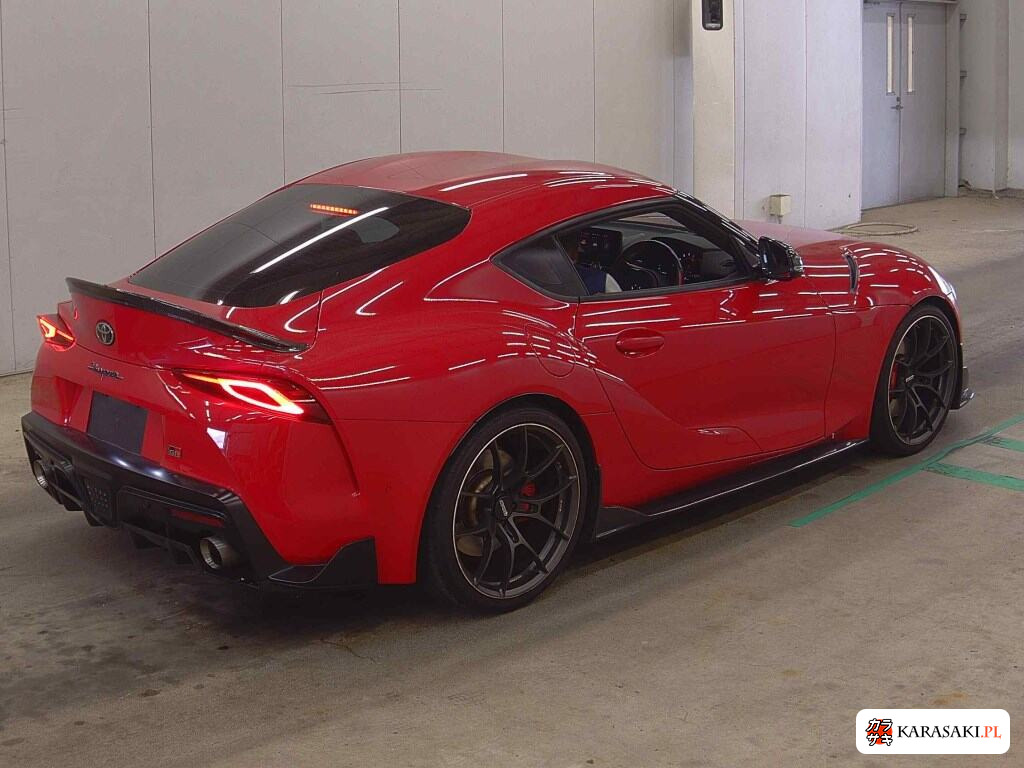
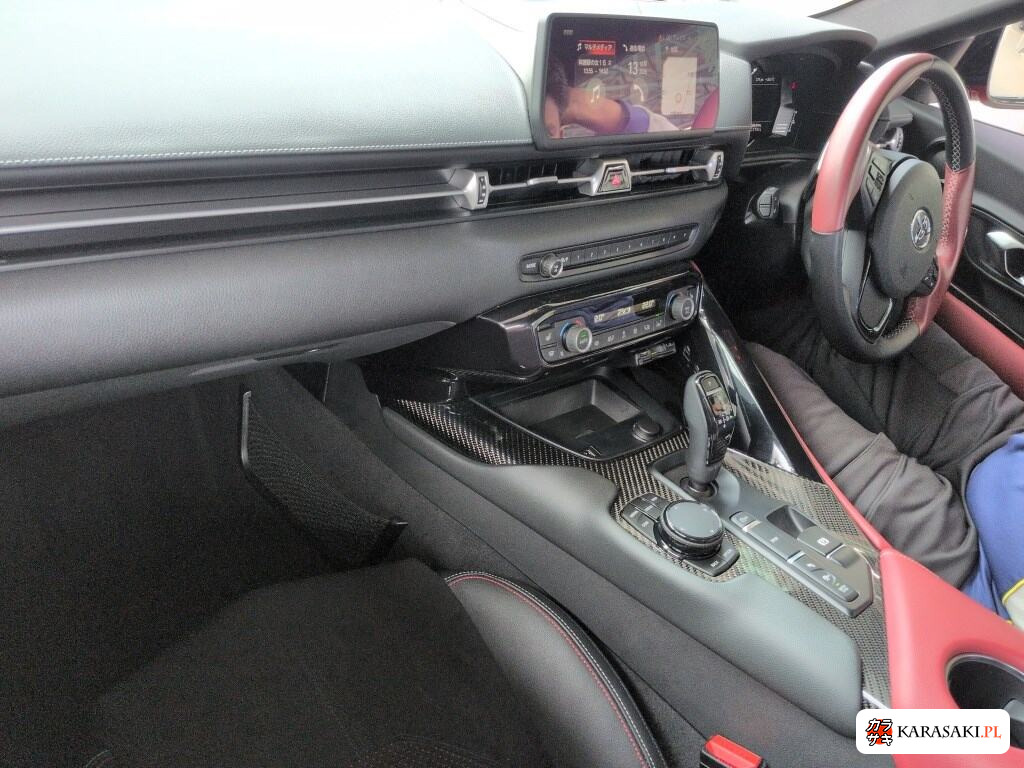
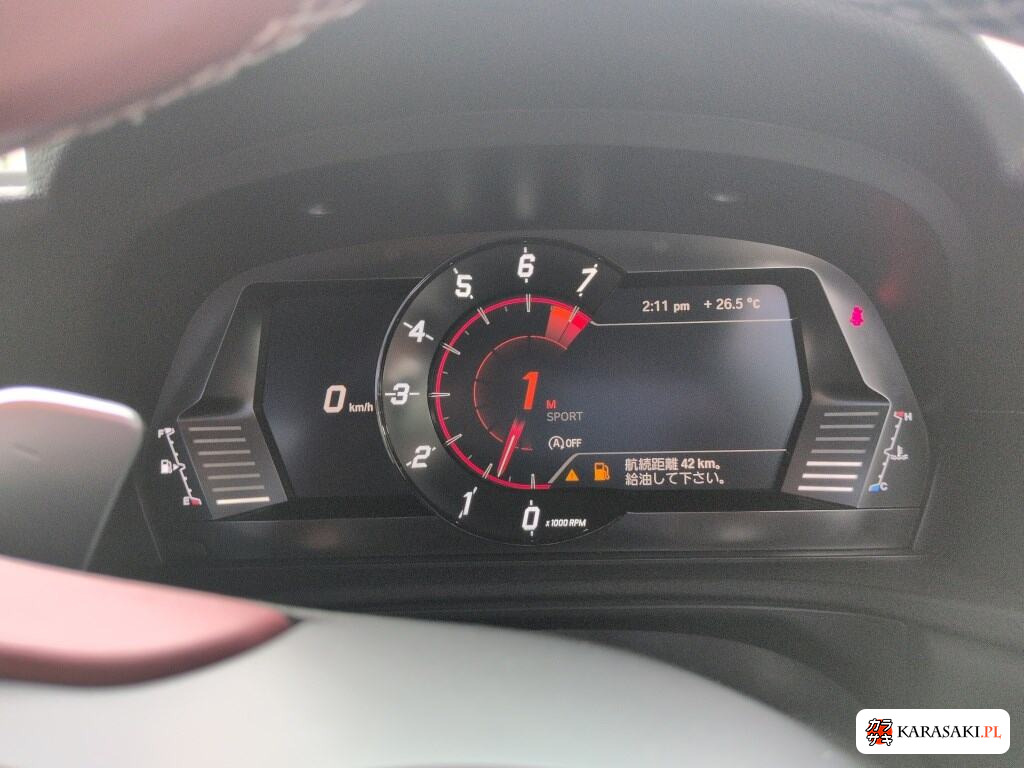
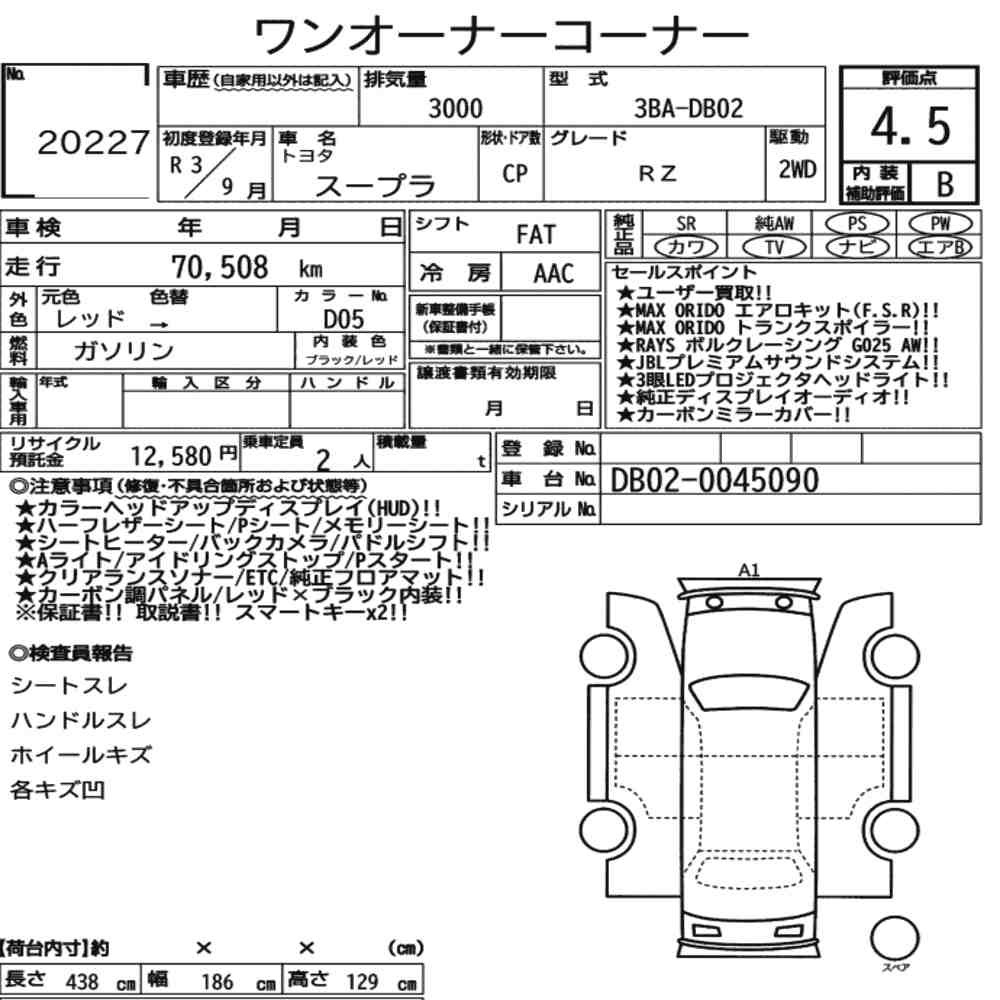

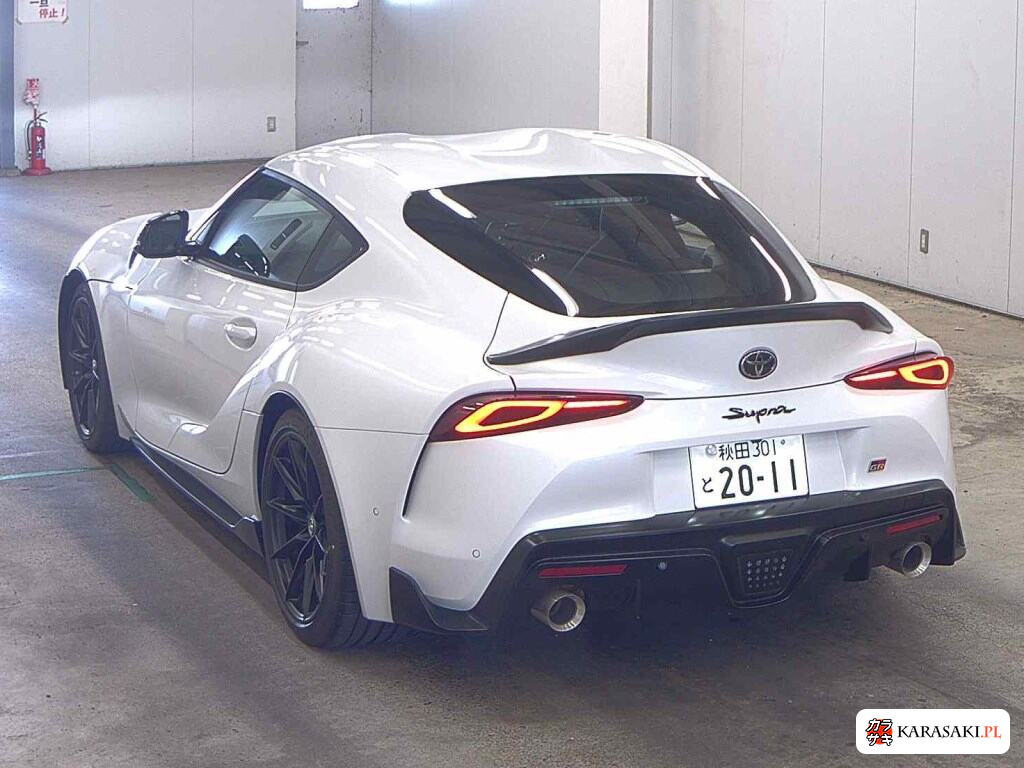
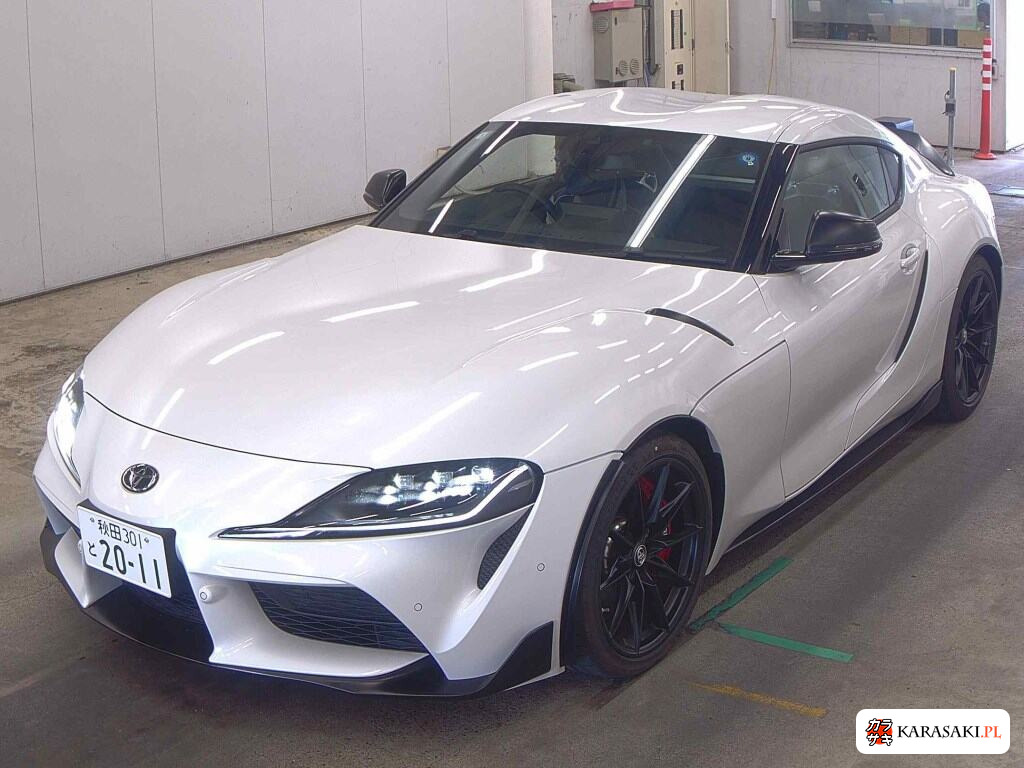
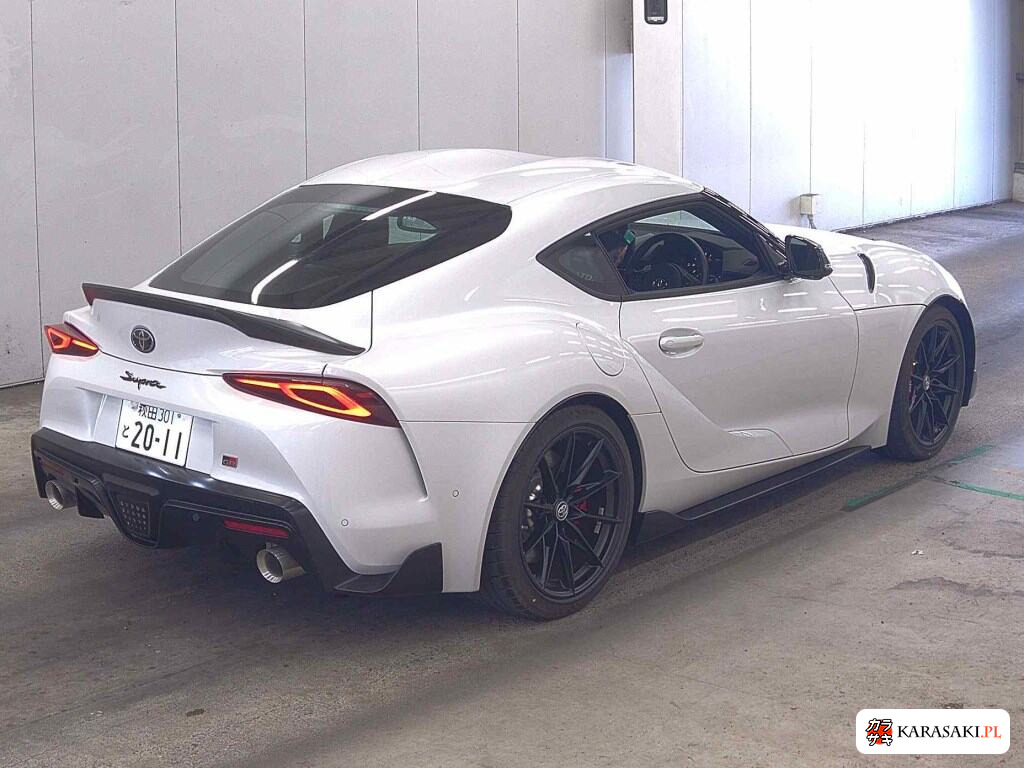
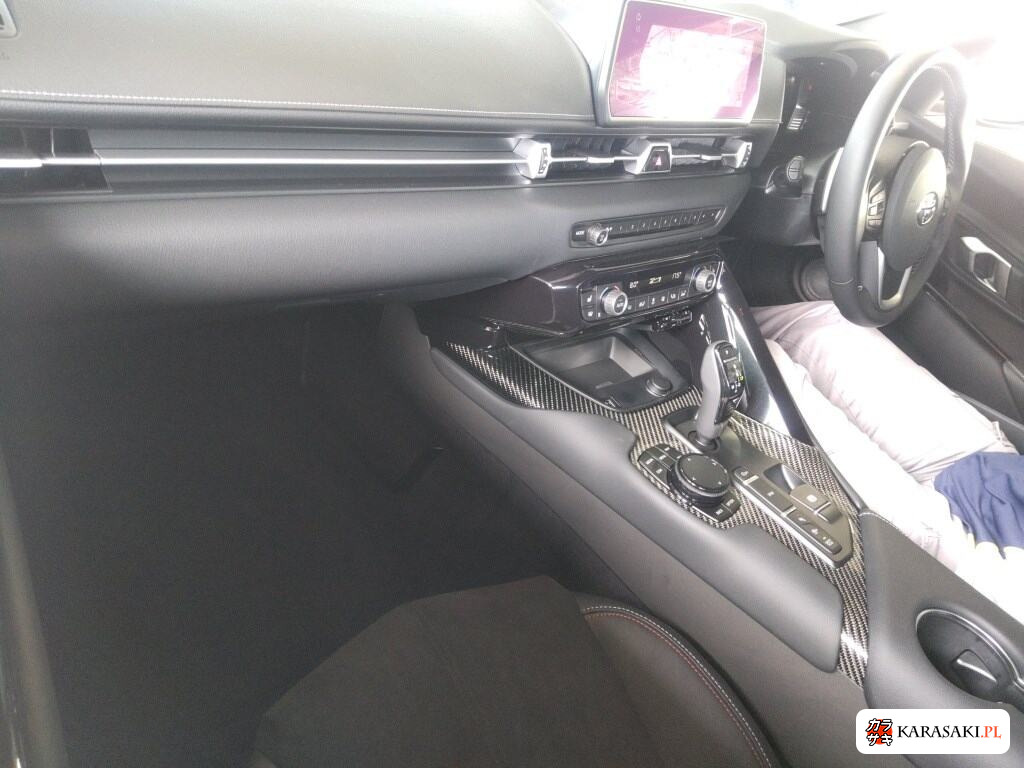
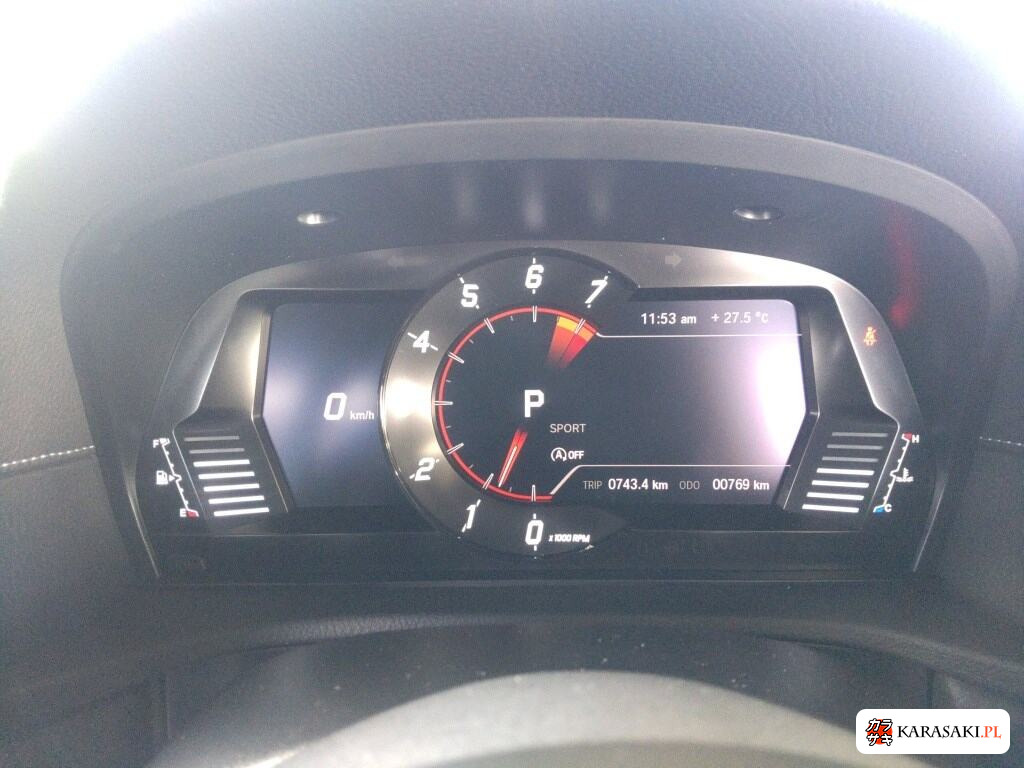
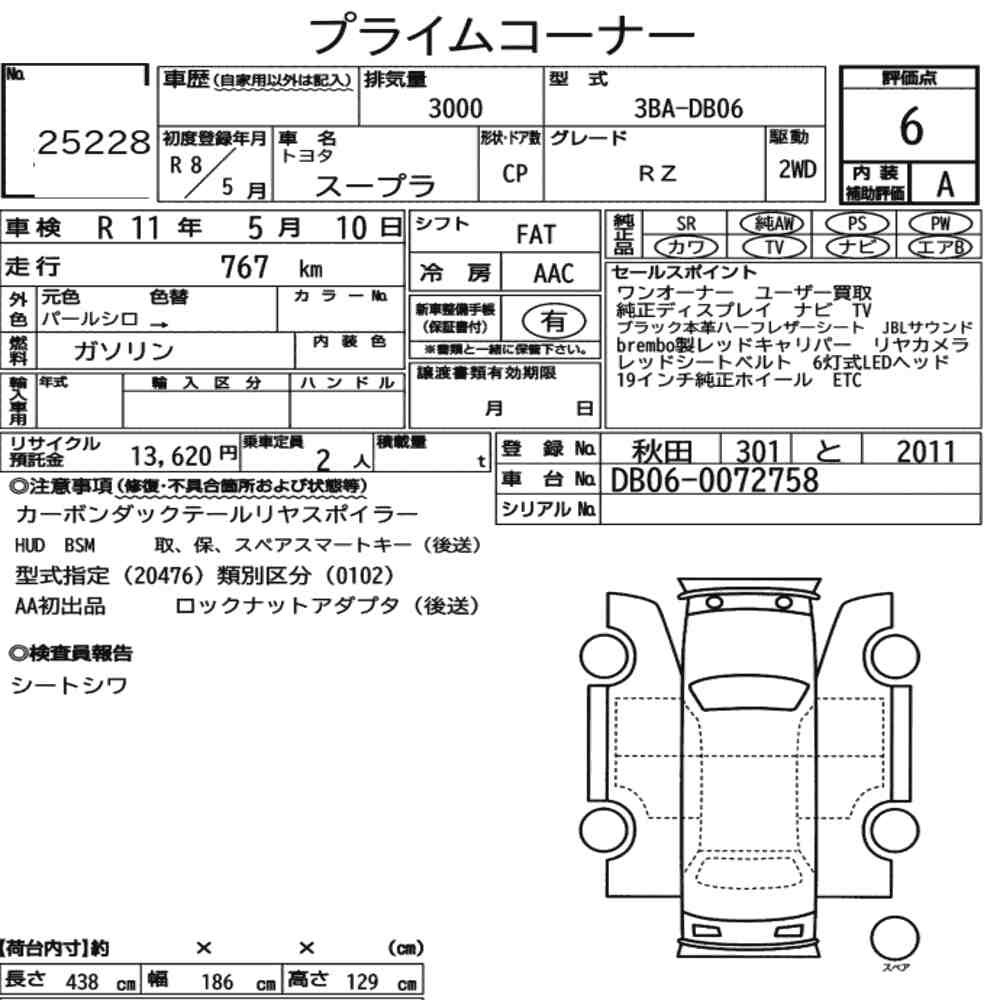

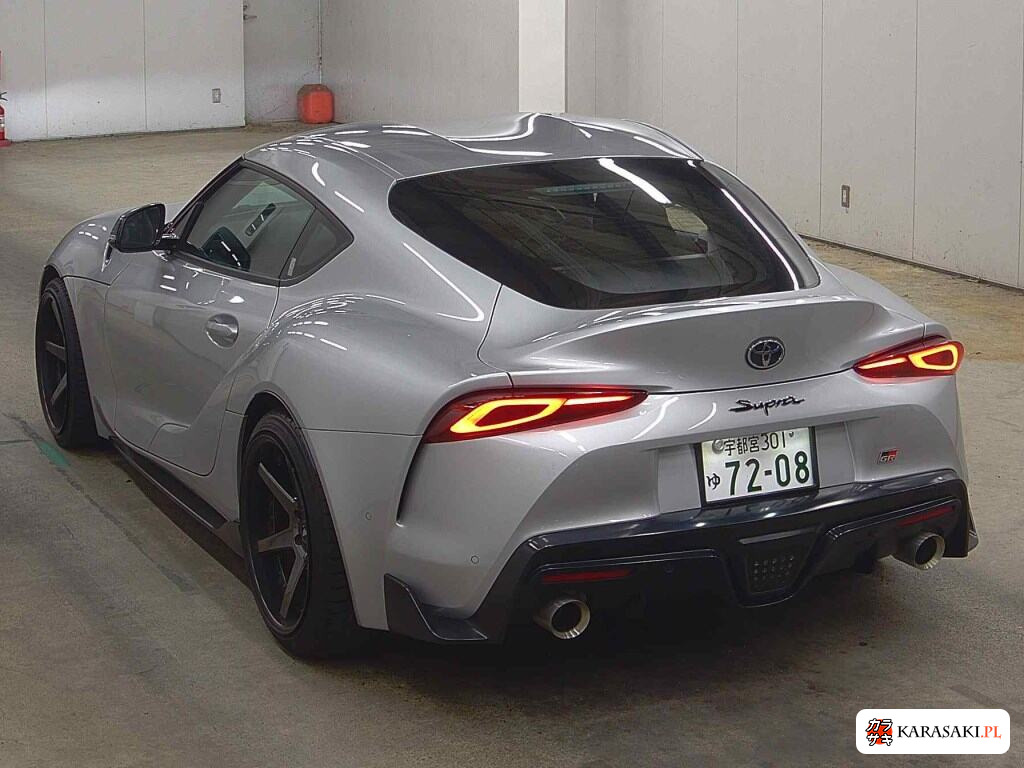
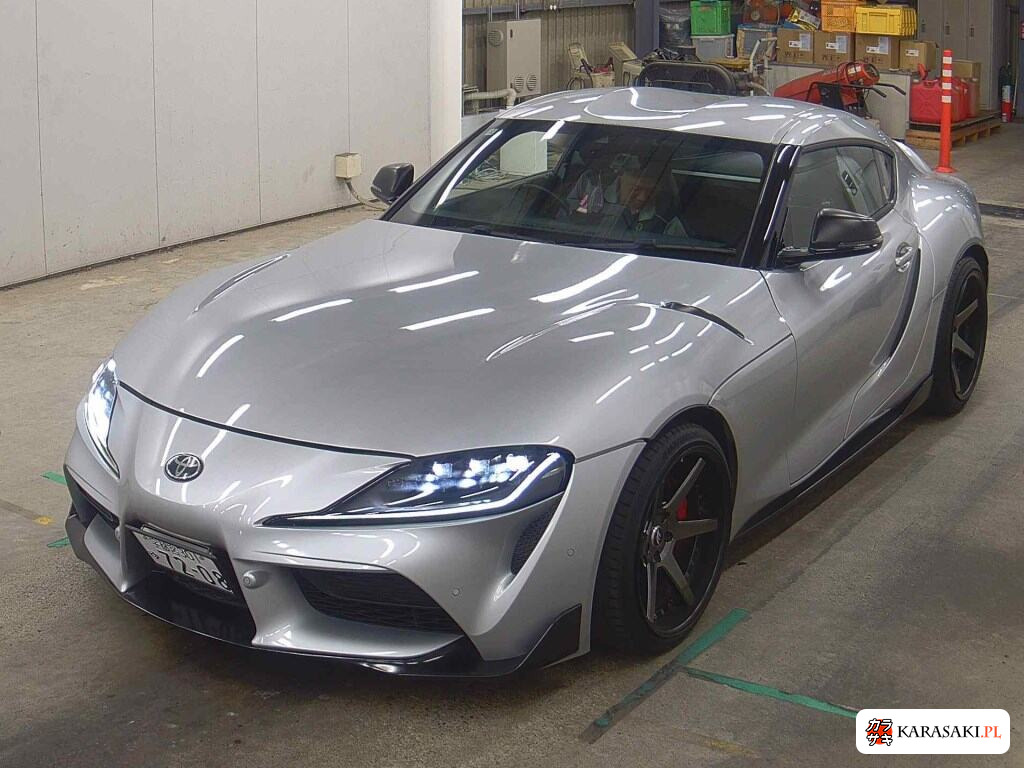
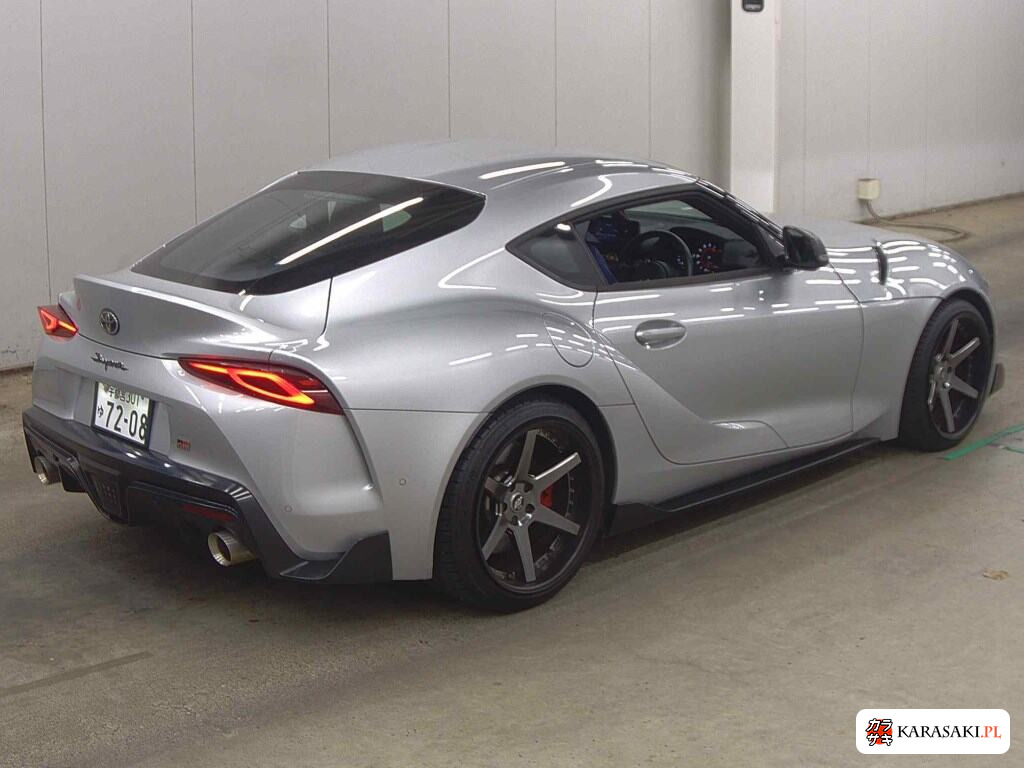
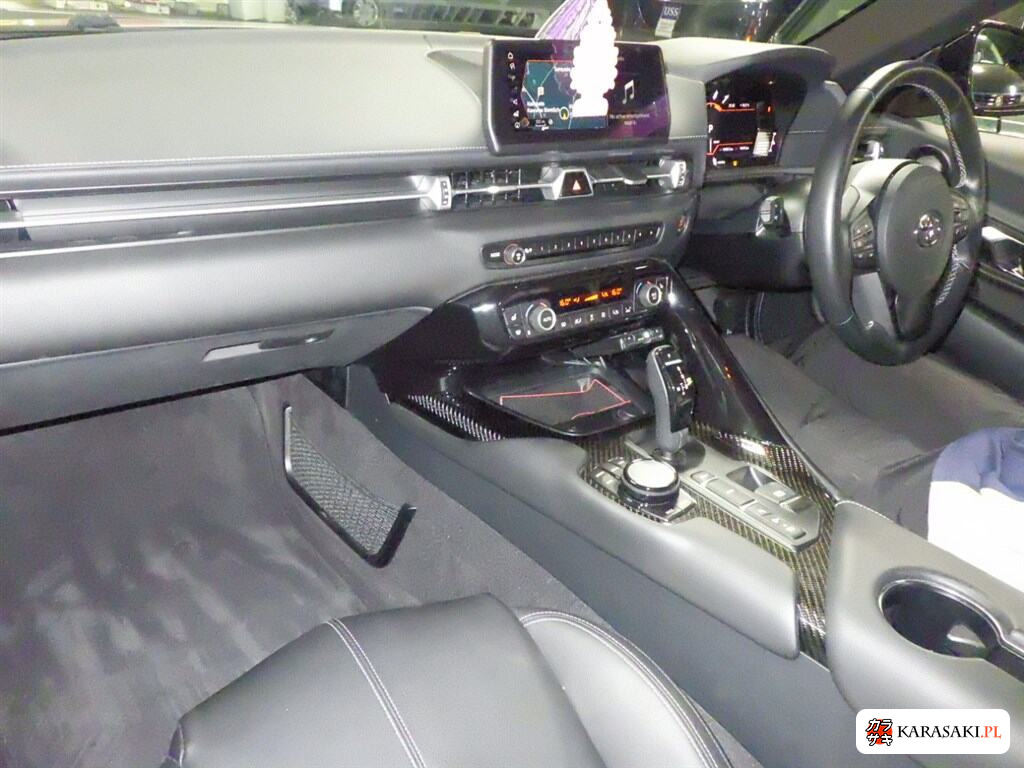
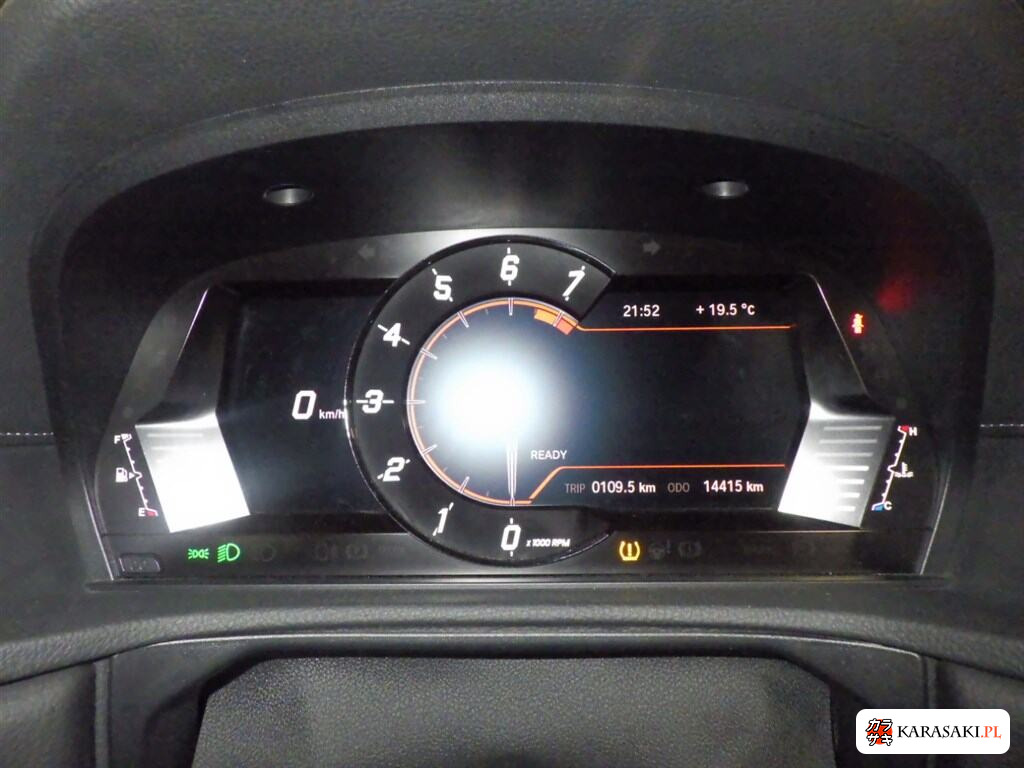
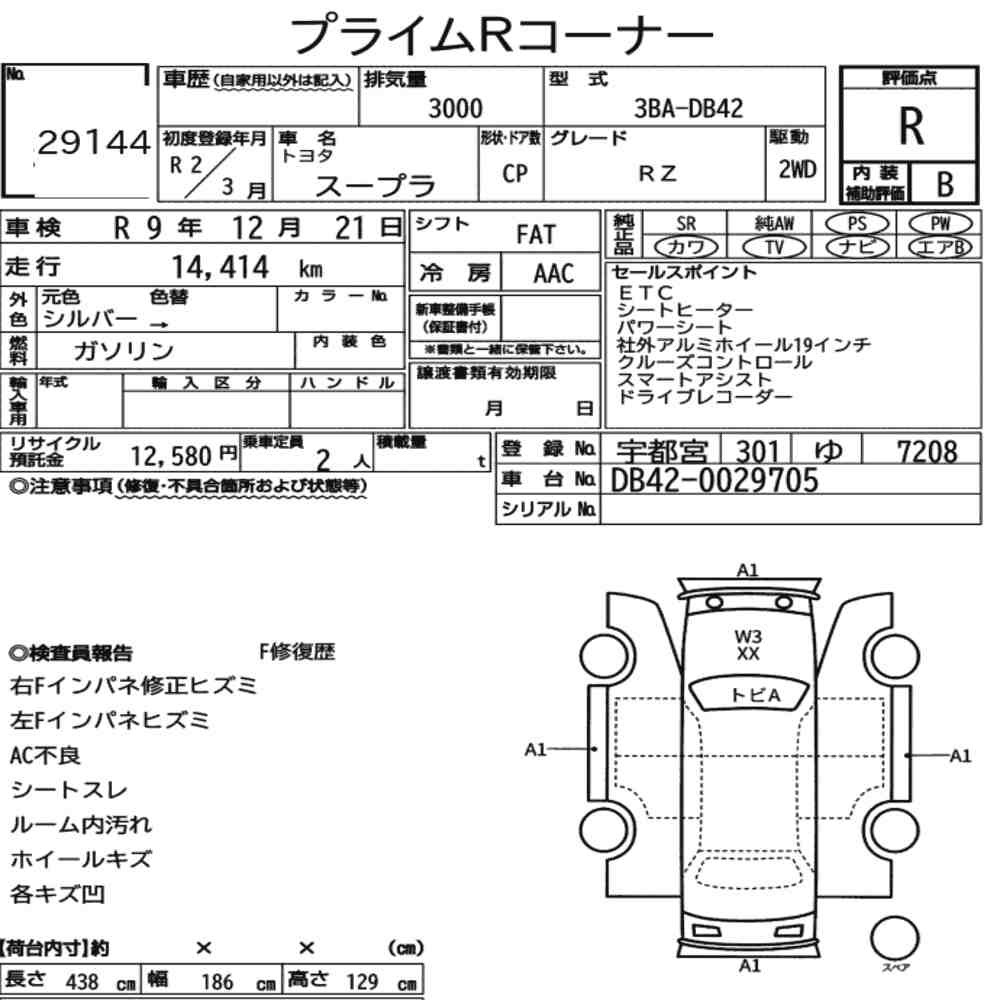

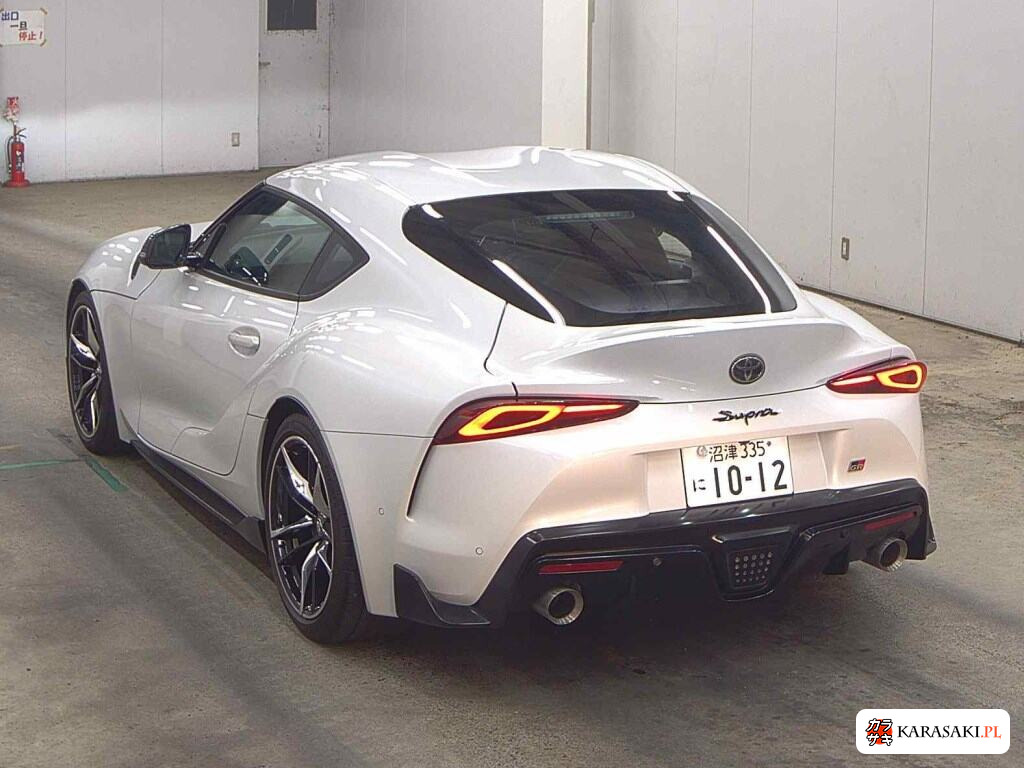
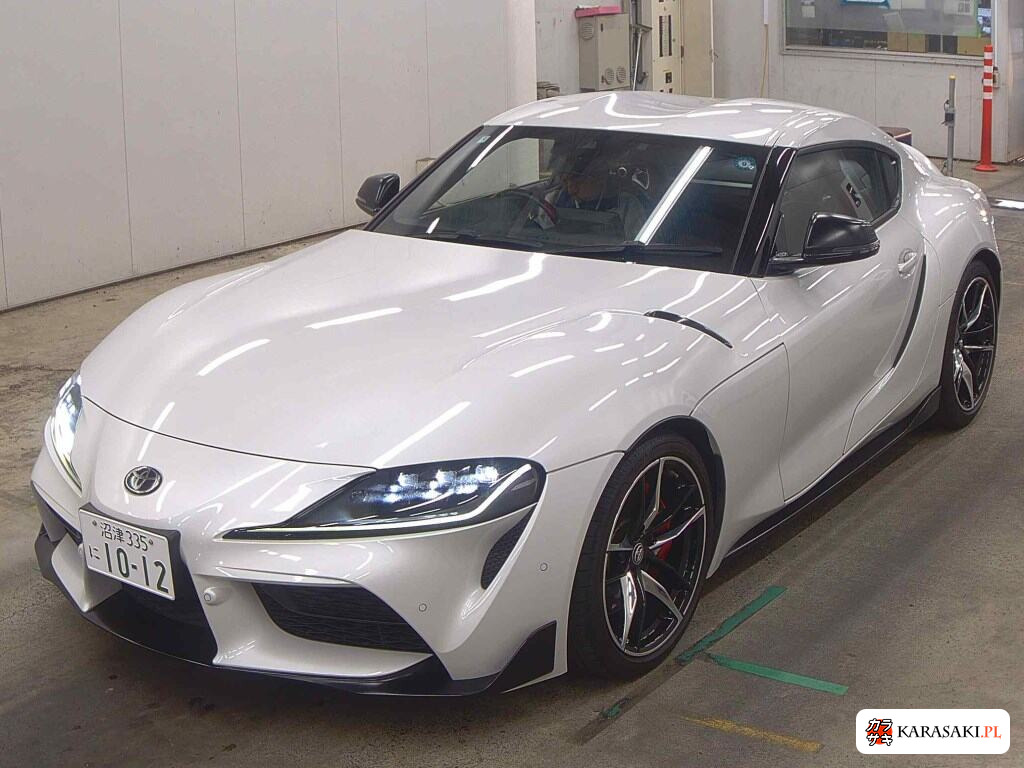
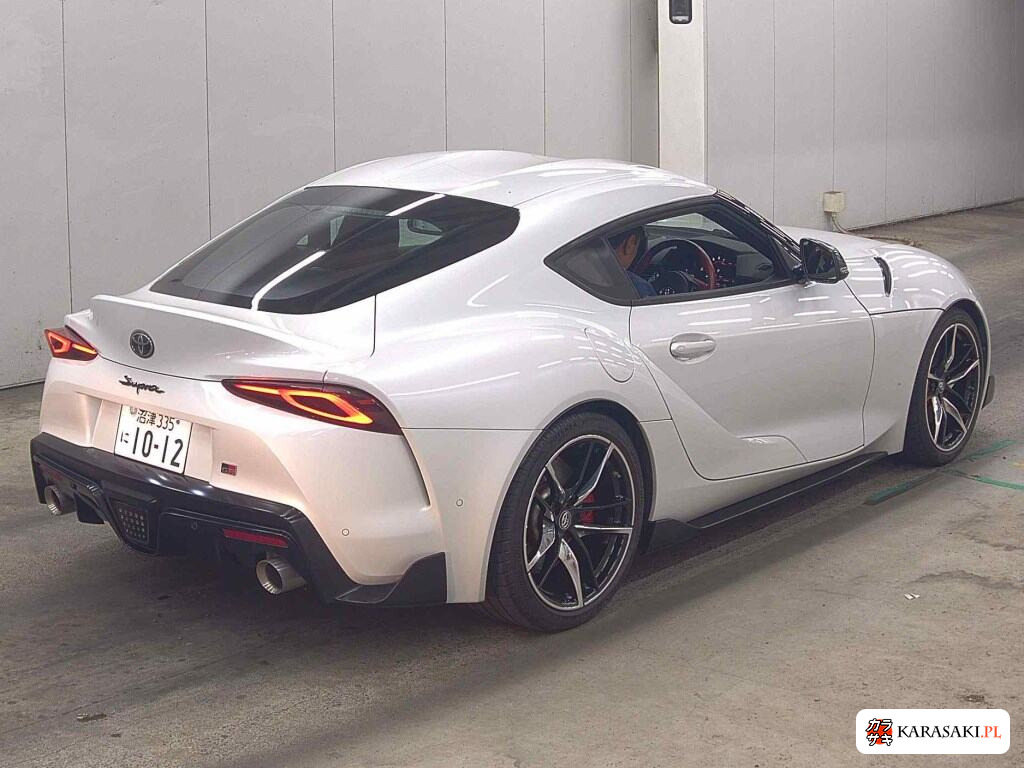
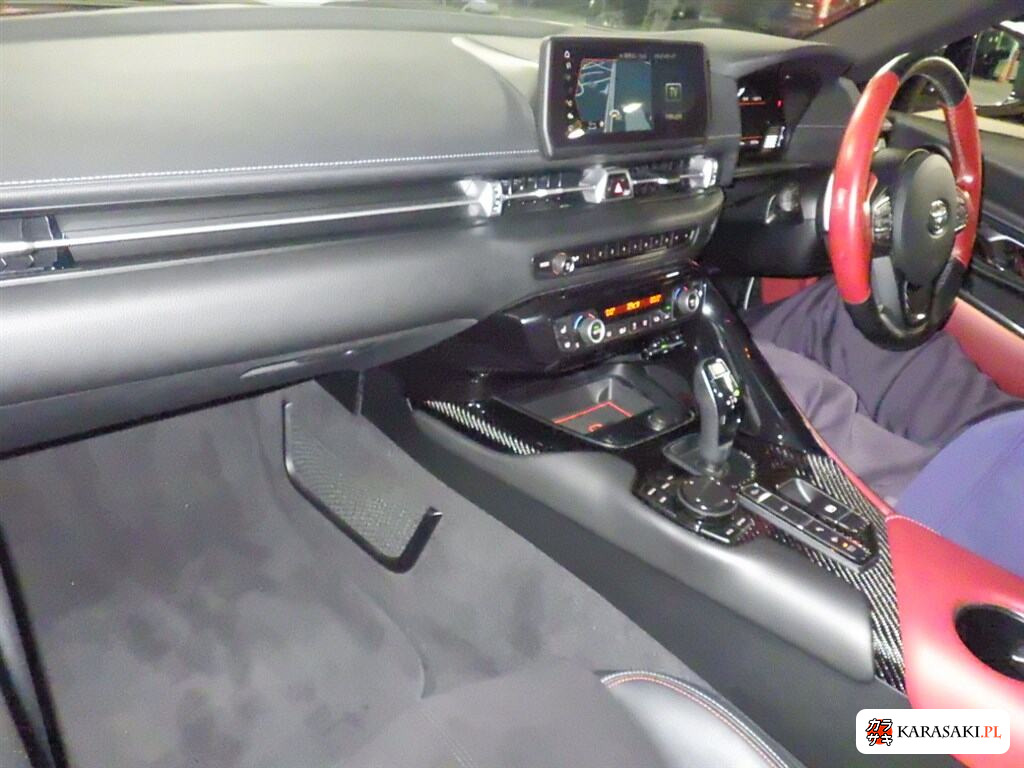
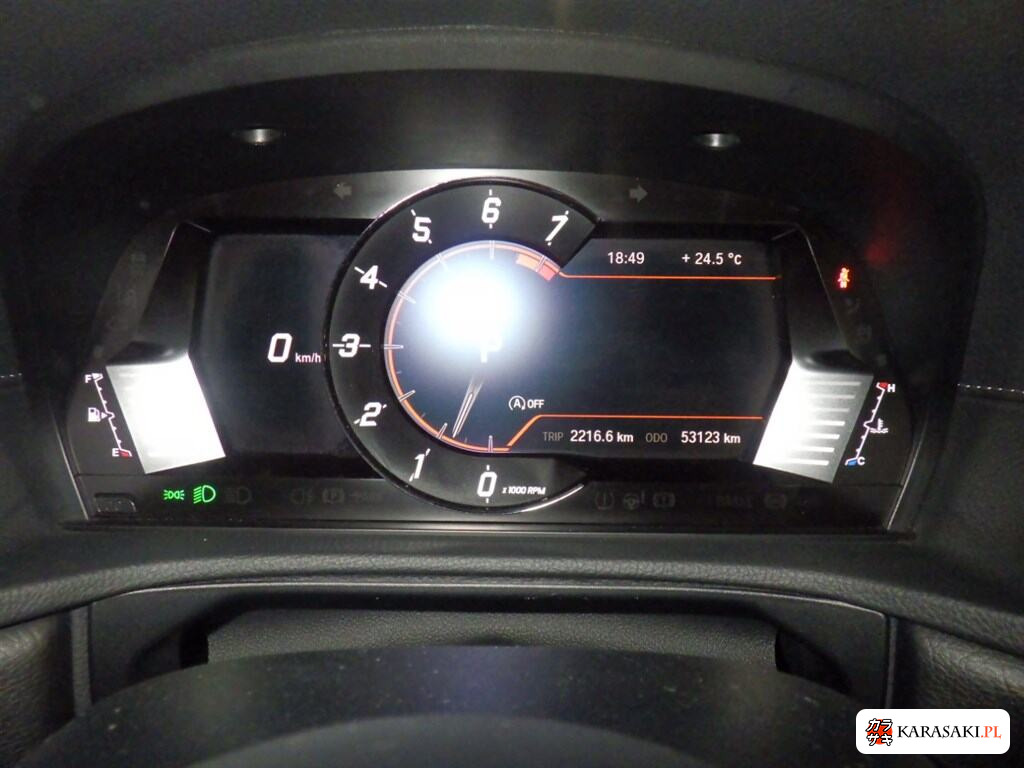
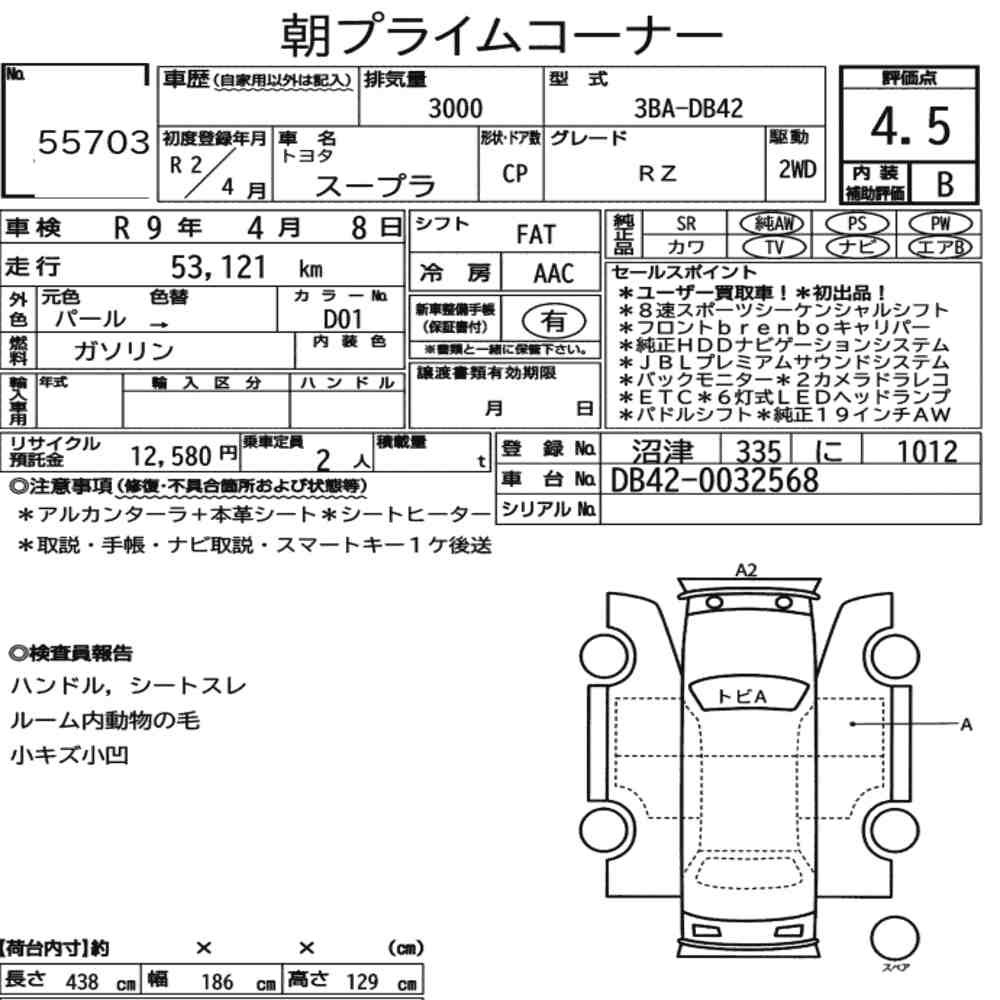

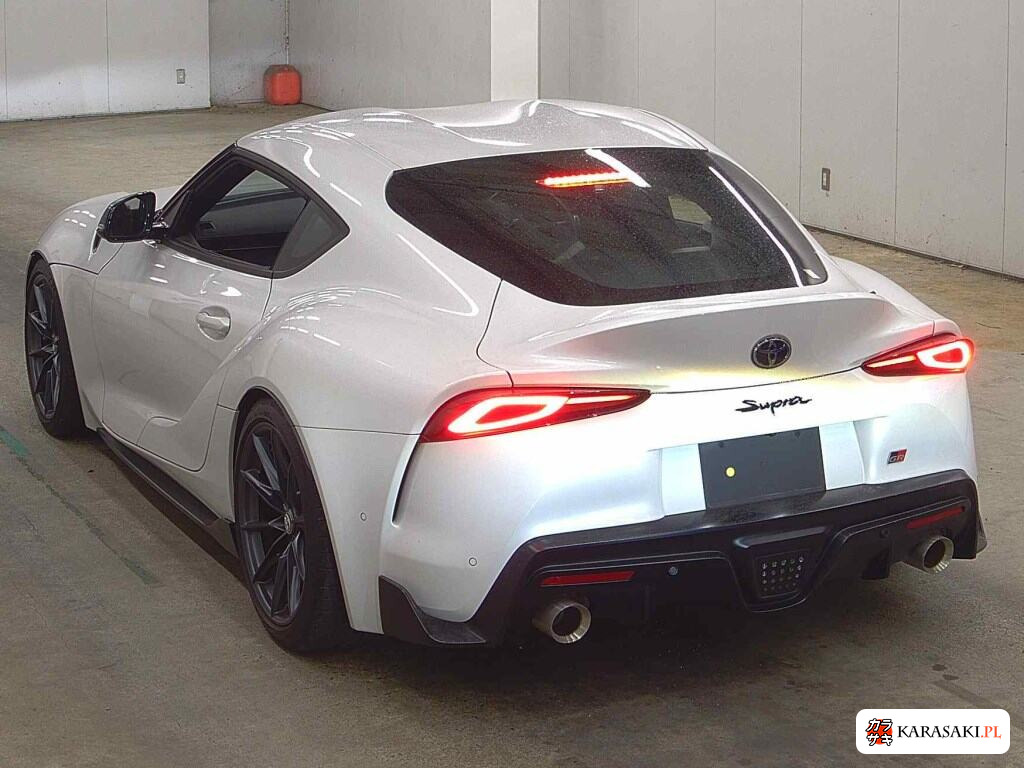
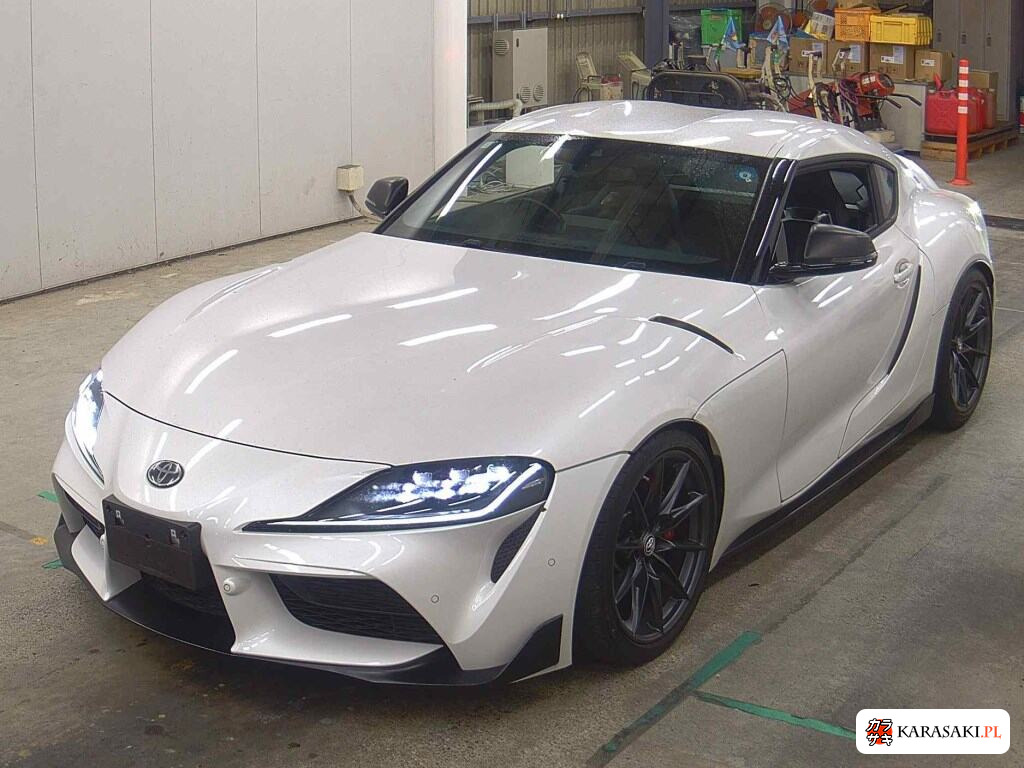
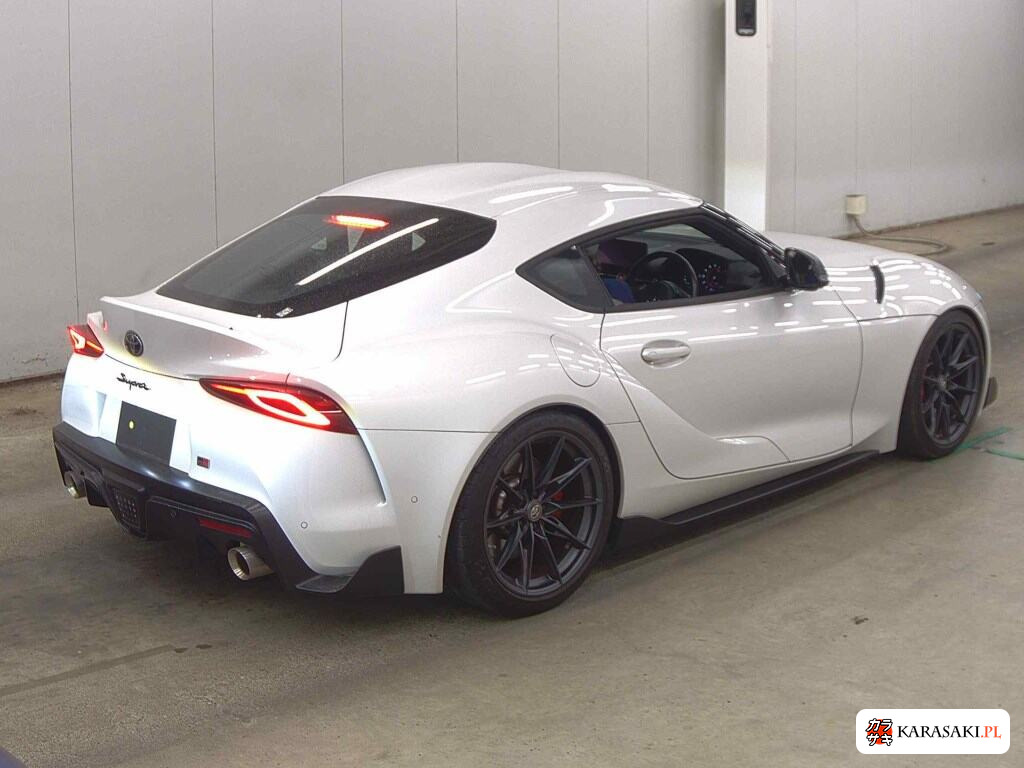
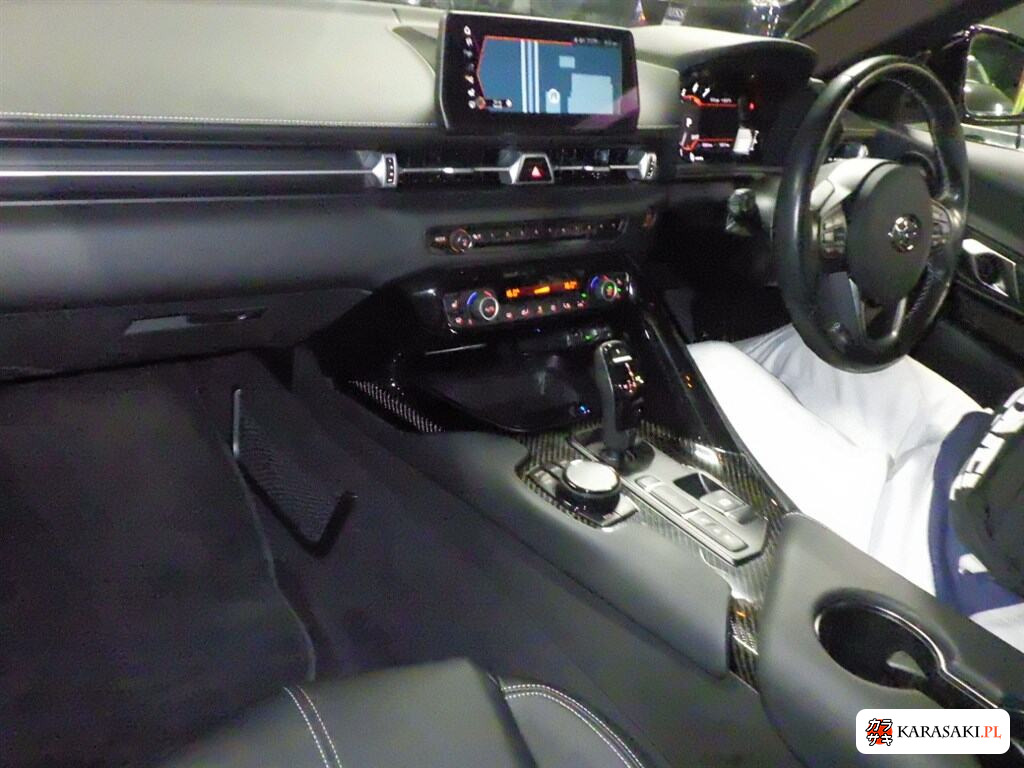
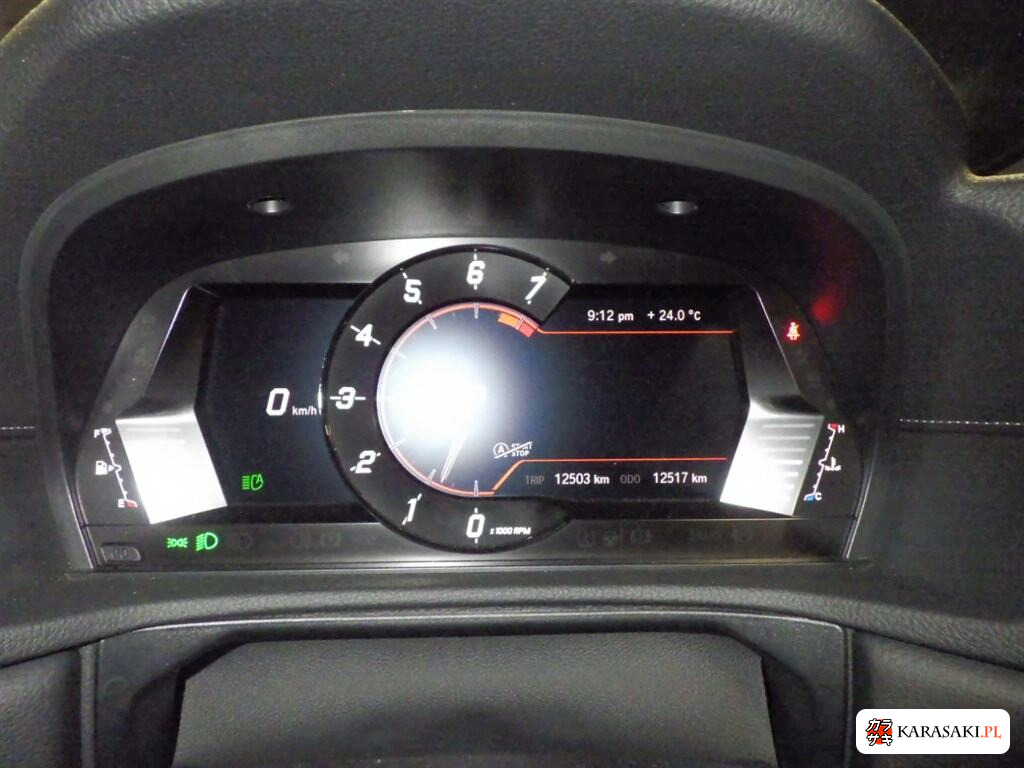
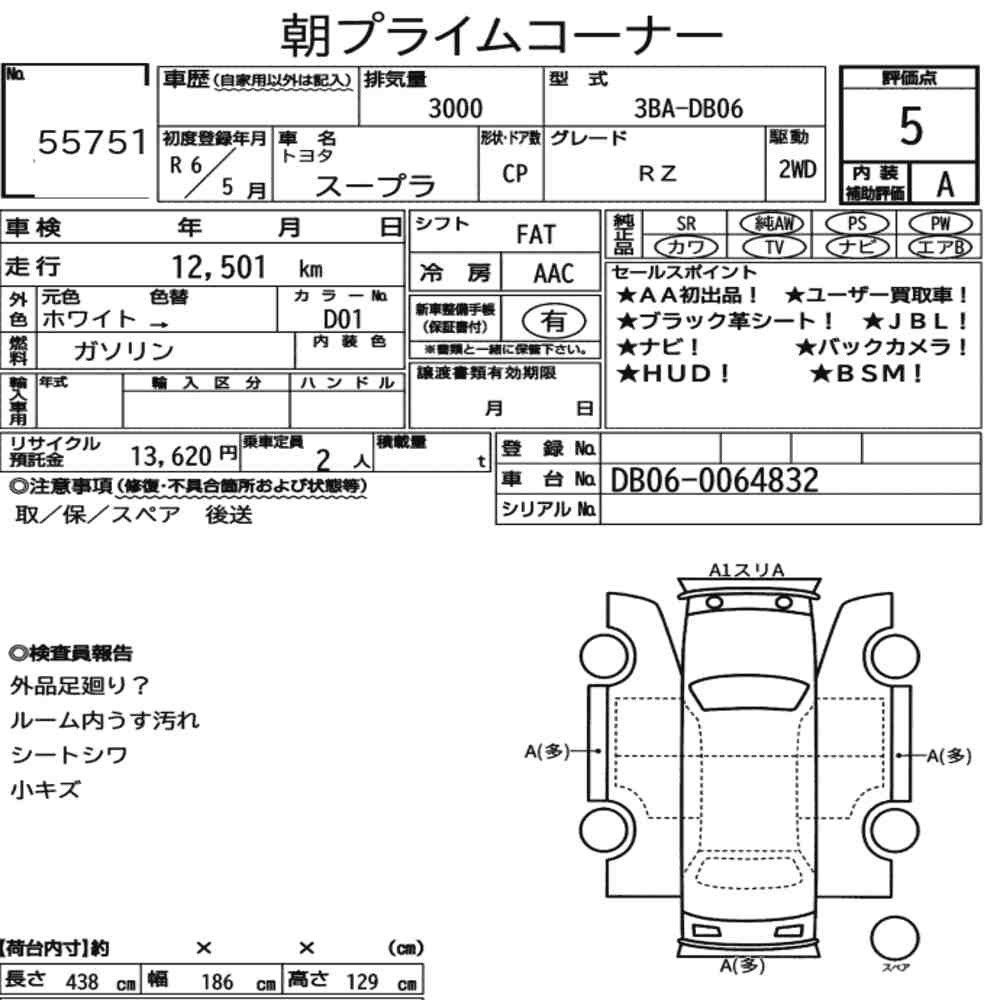
The auction pool turns over every few days. We'll watch these criteria and email you when the next one appears.
Supra auction prices: what our data says
Our catalog holds 392 published Supras, 369 of them with a listed starting price. Every one is right-hand drive, because a left-hand-drive Supra simply does not exist on the Japanese market. We treat that as part of the package: on a Japanese icon, the wheel on the right is a certificate of origin, and we cover registration in the import section. The supply covers every generation: 84 cars from the 1993 to 2002 model years, the A80 era, with a median starting price of 4,500,000 yen and median mileage of 88,000 km, plus 249 examples of the Supra A90. On top of that, 59 older cars from 1988 to 1992, mostly the A70 generation, with a median of just 880,000 yen, the cheapest route to a classic Supra.
Within the A90, the gap between versions is bigger than one name suggests. The three-litre RZ, of which we hold 182, opens bidding at a median of 5,490,000 yen with a median mileage of 11,000 km, effectively showroom condition. The two-litre SZ and SZ-R, 67 cars together, start at a median of 3,280,000 yen. Then come the limited runs, visible in our data directly: 14 examples of the RZ Horizon Blue Edition, 5 of the RZ Plasma Orange 100 Edition and 2 of the RZ Matte White Edition. All the figures below are starting prices, the opening points of bidding, not sale prices: the auction data available to us covers, in most cases, only the opening price, so we honestly report what we can see.
The collector market keeps pushing the top of this pyramid higher. In January 2026, at the Mecum auction in Kissimmee, a factory-original 1998 A80 Turbo with a manual gearbox and 6,080 miles, under 10,000 km, sold for $242,000 including fees, more than double its pre-sale estimate of $115,000 to $130,000. There is no better proof that what sets an A80's value today is originality, not horsepower.
What to watch for: modifications, mileage, engine history
With the A80 the ground rule is: you are buying the car's history, not its engine. Mechanically the 2JZ is close to indestructible, but the vast majority of cars on the market have been through tuning, and the untouched ones are the most valuable. Check whether the car had an amateur single-turbo conversion, and whether someone later reversed it, because cut looms and non-factory vacuum control surface only months in. The classic checkpoints are corrosion in the sills, rear arches and boot floor, the degrading rubber turbo oil line, whose replacement with a braided-steel one is considered mandatory, and worn second and third gear synchros in the V160 gearbox, whose parts keep getting dearer and harder to find. Hazed headlight lenses give away a car kept outdoors, and on any Supra it is worth verifying the mileage against export documents and the auction house condition sheet.
The A90 is a different conversation: its faults are inherited from BMW, and none of them appears to be common. Owners and workshops list high-pressure fuel pump failures, valve cover leaks and charge pipes cracking under boost, and around the 2021 model year some cars were reported burning oil. The ZF automatic is considered very durable. You only need to accept that in servicing terms this is a car from the BMW ecosystem: parts, diagnostics and workshop knowledge come from there, so running costs sit closer to a German coupe than to a typical Toyota.
Importing a Supra from Japan: costs and paperwork
We run the numbers the usual way, as a cascade: duty is charged on the customs value, the car's price plus transport to the EU border, excise on the sum including duty, and VAT on the whole lot. The B58 engine displaces 2,998 cc, so excise is 18.6%; the current rates are published by podatki.gov.pl. Below is a worked example for a three-litre A90 RZ at 5,490,000 yen, exactly the median starting price of that version in our catalog, at the National Bank of Poland rate of 14 August 2026.
| Item | Amount (yen) | In PLN |
|---|---|---|
| Car price | 5,490,000 | approx. 128,600 PLN |
| Transport to the EU border | 350,000 | approx. 8,200 PLN |
| Customs value | 5,840,000 | approx. 136,800 PLN |
| Duty 10% | 584,000 | approx. 13,700 PLN |
| Excise 18.6% | 1,194,864 | approx. 28,000 PLN |
| VAT 23% | 1,752,339 | approx. 41,100 PLN |
| Total at customs | 9,371,203 | approx. 219,500 PLN |
The 2,000 cc threshold really bites here. A two-litre SZ-R at its median of 3,280,000 yen pays 3.1% excise, around 2,900 PLN instead of 28,000, and comes out of customs at around 118,600 PLN. A classic A80 at its median of 4,500,000 yen comes to around 182,300 PLN at customs. We break down how this levy works in our article on excise duty on a car from Japan, and the full cost mechanics in the guide to how much importing a car from Japan costs. On top of each of these comes our fee of 8,000 PLN net, 9,840 PLN gross, payable only after the car is delivered, plus paperwork and registration. Treat the figures as a floor, because bidding usually ends above the starting price.
When it comes to duty, the two generations diverge in an interesting way. The A80 was built in Japan, so it is covered by the EU-Japan trade agreement, which gives zero duty from February 2026, provided you hold a statement on origin; for a thirty-year-old car that document can be hard to obtain, which is why our tables assume 10% to stay on the safe side, but with every car we do our best to secure origin paperwork, because it cuts the A80 bill from around 182,300 to around 165,700 PLN. The A90 is not covered by that preference at all: the car was built in Graz, Austria, and the agreement applies to goods originating in Japan, so the standard 10% applies. For A80s from 1993 to 1996, now past thirty years old, there is also a separate customs heading for collector vehicles; it requires original condition and the customs authority decides, so for such a car ask a customs agency before you buy.
Right-hand drive is a question you settle before bidding, not after. The Polish technical-conditions regulation admits such a car for registration only if it was previously registered in another EU member state or first registered before 1985, and no A80 or A90 fits that second exception by age. There is also the option of converting the car to left-hand drive, costly and dependent on a reliable specialist. We set out the paths and their conditions in a separate piece on registering a right-hand-drive car, and for any specific car we always settle the route individually before you place your first bid.
On the other side of the equation sit Polish classifieds. When we counted the listings on 14 August 2026, Otomoto carried 29 Supra ads across all generations: A90s from 225,000 PLN for a 2024 car with 32,000 km, through 238,900 PLN for a 2022, up to 270,000 PLN and beyond for the first model years, and only the odd A80, for example a 1996 car with 86,000 km at 145,000 PLN. We compare the import cost against asking prices, which can usually be negotiated, and the fair conclusion is this: importing an A90 at the median starting price comes out roughly level with Polish asking prices, but wins on selection, because you bid on a car picked from over 180 examples with a median mileage of 11,000 km rather than from a dozen ads. With the A80 it is simpler: clean, original cars are practically absent from Poland, so Japan is not the cheaper route, it is often the only one.
What buying with us looks like
We built this process so that you risk as little as possible. You pay our fee only once the Supra is parked outside your home, not before the auction. The deposit, 10% of the starting price with an 8,000 PLN minimum, is fully refundable if we do not win the car. Sea transport from Japan usually takes four to eight weeks, followed by customs clearance and registration.
You will not see the car in person before the auction, but you are not buying blind. Every car carries an independent condition sheet from the Japanese auction house, and we read hundreds of them weekly, rejecting cars with crash repairs, corrosion or a wound-back odometer before you ever see them. On a model this deep in tuning culture that filter counts double, because it weeds out cars that have led a hard life on track. If you want to go through your first purchase with someone who bids on these auctions daily, write to us before you pick a car.
Frequently asked questions about the Supra
How much does a Toyota Supra MK5 cost?
The price of a Toyota Supra depends on the generation. On Otomoto, A90 asking prices started at around 225,000 PLN in August 2026. Importing from Japan, the median starting price of the three-litre RZ is 5,490,000 yen, around 219,500 PLN after customs, and bidding usually ends above the starting price.
How much power does the Supra MK5 have?
The three-litre A90 made an even 340 PS in the 2019 and 2020 model years, and 387 PS from 2021 on. The limited 2025 Final Edition got around 440 PS, and the Japanese two-litre SZ and SZ-R versions make 197 and 258 PS respectively.
What is the most expensive Supra?
The record belongs to the orange A80 from The Fast and the Furious, driven by Paul Walker, which sold in 2021 for $550,000. Among factory-original cars the record is $242,000, paid for a 1998 A80 Turbo at the Mecum auction in January 2026.
Does the Supra have a BMW engine?
Yes. The A90 uses BMW's B58 3.0 straight-six and the B48 2.0 four-cylinder, and was built at the Magna Steyr plant in Graz alongside the BMW Z4. Toyota itself tuned the suspension and the car's character. One import side effect: the preferential zero duty for goods from Japan does not cover this car.
Summary
The Supra today is two different purchases under one name. You buy an A80 like an asset: what counts is an original, untouched twin-turbo manual car, and records like $242,000 for a factory-stock example show where the top of that market is heading. You buy an A90 to drive: ideally a 2021 or later car with 387 PS, knowing the pool of examples closed for good in March 2026. In both cases, Japanese auctions offer what the Polish market does not: a choice of hundreds of cars, low mileages and an independent condition sheet instead of a seller's assurances.
You can see the current examples on the model page: Toyota Supra. For more on what Japanese domestic market cars are, see our guide to what JDM means.
This cost breakdown is for information only and is based on the rates in force in August 2026 and the exchange rate on the publication date. The final amounts of duty, excise and VAT, and the vehicle's classification, should be confirmed with a customs agency or tax adviser for the specific car.


